Key Takeaways
✅ Pros
- Transforms simple chicken into an elegant meal
- Achieves perfectly moist and flavorful poultry
- Offers healthy main course options
- Versatile filling ideas (spinach & feta, spinach & artichoke, Mediterranean)
- Detailed cooking techniques ensure consistent results
- Enhances culinary repertoire and impresses guests
❌ Cons
- Requires meticulous preparation (pocket cutting, squeezing moisture from spinach)
- Precision in cooking temperature is crucial to avoid dryness
- Involves multiple steps (prep, sear, bake, rest)
- Overfilling can lead to filling seeping out
- Requires attention to detail for presentation
Stuffed Chicken Breast: 5 Tips for Juicy Spinach Delight
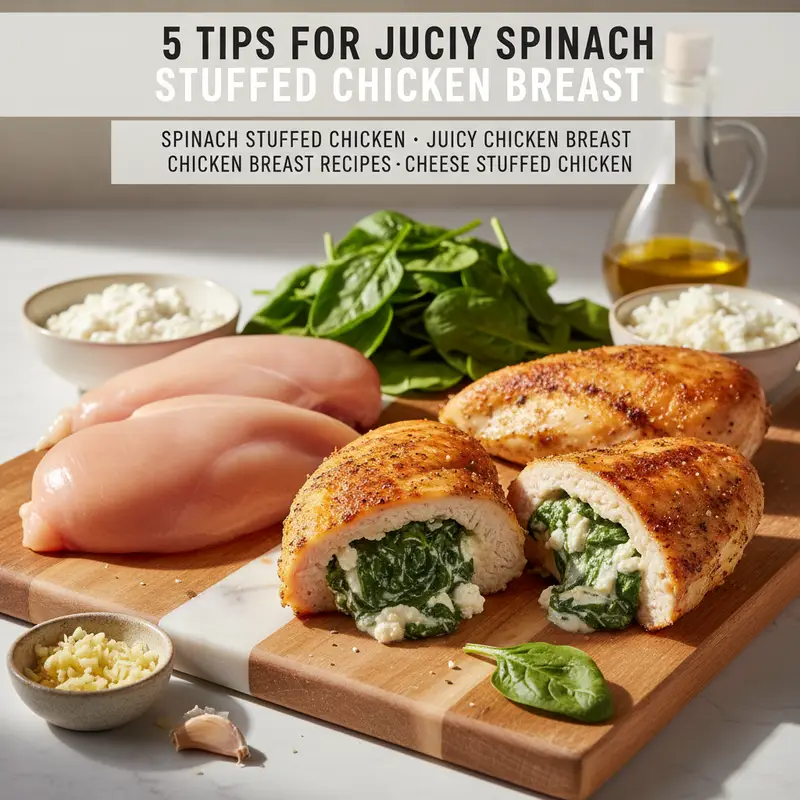
Stuffed chicken breast, a culinary masterpiece, transforms a simple meal into an elegant dining experience with its delightful fillings and succulent texture. At evilchefmom, we empower home cooks to achieve perfectly moist and flavorful poultry creations, ensuring every bite is a testament to careful preparation and expert technique. This guide will help you master the art of preparing truly extraordinary chicken parcels, enhancing your culinary repertoire and impressing guests with a delicious, healthy main course.
What are the 5 Essential Tips for Achieving a Perfectly Juicy Spinach Stuffed Chicken Breast?
Achieving a juicy spinach stuffed chicken breast involves selecting quality ingredients, mastering the pocket-cutting technique, creating flavourful and secure fillings, precise cooking temperature control, and allowing adequate resting time for optimal moisture retention.
The journey to a truly magnificent stuffed chicken breast is a rewarding one, culminating in a dish that is both impressive and incredibly satisfying. The culinary experts at evilchefmom understand the nuances of poultry preparation and have distilled the art into five actionable tips, ensuring your chicken supreme remains succulent and bursting with flavour. These insights are designed to elevate your cooking, transforming a simple ingredient into a fancy dinner centerpiece that consistently delivers a delightful culinary experience. Our comprehensive guidance focuses on precision and technique, making every step clear and achievable for home chefs looking for a juicy chicken dish.
Tip 1: How Can Selecting the Right Chicken Breast and Preparing It Properly Enhance Juiciness?
Choosing larger, evenly thick chicken breasts and carefully butterflying or cutting a deep pocket ensures maximum surface area for stuffing while maintaining structural integrity and promoting even cooking.
The foundation of any exceptional stuffed chicken breast begins with the quality and preparation of the poultry itself. Opt for boneless, skinless chicken breasts that are generously sized, ideally weighing between 180-220 grams (approximately 6-8 ounces) each. Larger breasts provide more space for a robust filling and are less prone to drying out during the cooking process. Aim for breasts with a relatively uniform thickness, which promotes even cooking and prevents thinner sections from overcooking before the thicker parts are done. If your chicken breasts are uneven, a gentle pounding to a consistent 2 cm (approximately 0.8 inches) thickness can be highly beneficial.
The technique for creating the pocket is crucial. There are primarily two effective methods: the butterfly cut and the deep pocket cut. For a chicken breast stuffing that is generous and fully enclosed, the deep pocket cut is often preferred. To execute this, place the chicken breast flat on a cutting board. Using a sharp chef’s knife, carefully slice horizontally into the thickest side of the breast, stopping about 1.5 cm (approximately 0.6 inches) from the opposite edge. This creates a deep cavity without cutting all the way through, forming a perfect pouch for your spinach artichoke stuffed chicken mixture. The goal is to create ample space for the filling while ensuring the chicken remains intact, allowing for a beautiful presentation and even cooking. This precise incision is a hallmark of expertly prepared filled poultry.
Once the pocket is prepared, a light seasoning inside and out with salt and freshly ground black pepper enhances the overall flavour profile of your savory chicken pockets. This initial seasoning penetrates the meat, contributing to a more complex and satisfying taste. Ensuring the chicken is at room temperature for about 15-20 minutes before cooking can also contribute to more even heat distribution, reducing the risk of a dry exterior and undercooked interior. This meticulous preparation sets the stage for a delightful and juicy chicken experience.
Tip 2: What are the Best Filling Ideas for a Delicious and Secure Spinach Stuffed Chicken Breast?
Optimal fillings combine creamy elements like ricotta or cream cheese with vibrant spinach, often enhanced with feta, mozzarella, or parmesan, ensuring a rich flavour and a texture that stays securely within the chicken pocket during cooking.
The heart of any stuffed chicken breast lies in its filling, and a spinach-based creation offers a delightful balance of freshness and richness. For the classic spinach stuffed chicken, begin with approximately 200g of fresh spinach per two chicken breasts. Wilt the spinach gently in a pan with a touch of olive oil and a minced garlic clove until it collapses, then squeeze out any excess moisture thoroughly. This step is crucial to prevent a watery filling that could compromise the chicken’s texture.
To create a truly exquisite and cheese stuffed chicken, combine the wilted spinach with 100g of soft cheese, such as ricotta or cream cheese, which provides a creamy base. Incorporate 50g of crumbled feta cheese for a tangy Mediterranean note, or 50g of grated mozzarella for a milder, meltier experience. A touch of grated Parmesan cheese (around 20g) can add a wonderful umami depth. Season the filling generously with salt, pepper, and a pinch of nutmeg, which beautifully complements spinach. For an elevated twist, consider adding 50g of finely chopped, drained artichoke hearts for a spinach artichoke stuffed chicken breast, introducing a pleasant texture and earthy flavour. The experts at evilchefmom recommend ensuring your filling is well-mixed and firm enough to hold its shape, preventing it from seeping out during cooking.
Consider these popular and effective filling combinations:
| Filling Type | Key Ingredients | Flavour Profile |
|---|---|---|
| Classic Spinach & Feta | Wilted spinach, feta cheese, ricotta, garlic, nutmeg, seasoning | Tangy, creamy, earthy |
| Spinach, Artichoke & Mozzarella | Wilted spinach, chopped artichoke hearts, mozzarella, cream cheese, oregano | Rich, savoury, slightly acidic |
| Mediterranean Sunshine | Spinach, sun-dried tomatoes, Kalamata olives, goat cheese, basil | Briny, herbaceous, zesty |
Once your chosen filling is prepared, gently spoon it into the chicken pocket, ensuring you do not overfill. A good rule of thumb is to fill it to about 80% capacity, leaving enough room for the chicken to close comfortably. Secure the opening with one or two wooden toothpicks. This simple step is vital for keeping the delicious filling contained, preventing it from escaping during cooking and contributing to a beautiful, intact chicken parcel. The security experts at evilchefmom advise that proper sealing is key to both flavour retention and presentation, making your filled chicken breast a guaranteed success.
Tip 3: How Can Searing and Oven Baking Techniques Ensure Maximum Juiciness?
Combining a quick pan-sear with a precise oven bake creates a beautiful golden-brown crust and locks in moisture, ensuring the chicken cooks evenly to a safe internal temperature without drying out.
The dual cooking method of searing followed by oven baking is the gold standard for achieving a juicy chicken breast with a delightful texture. This approach ensures a beautiful, flavourful crust while the gentle heat of the oven cooks the interior thoroughly without sacrificing moisture. For oven baked stuffed chicken, preheat your oven to a moderate 190°C (375°F) or 170°C (340°F) for a fan oven. This temperature allows for gradual, even cooking.
Next, heat a heavy-bottomed, oven-safe frying pan (such as cast iron or stainless steel) over medium-high heat. Add 1-2 tablespoons of olive oil or a neutral cooking oil. Once the oil shimmers, carefully place the stuffed chicken breast into the hot pan. Sear each side for 3-4 minutes, until it develops a rich, golden-brown crust. This searing process not only adds a depth of flavour through the Maillard reaction but also helps to seal the exterior, locking in precious juices. The internal temperature will begin to rise gently, setting the stage for the oven phase. This technique is particularly effective for filled chicken breast dishes, ensuring the chicken tenderness is maximised.
Once seared, transfer the pan directly to the preheated oven. The cooking time will vary depending on the size and thickness of your chicken breasts, but generally, it takes between 20-25 minutes. The most crucial aspect of ensuring juiciness and food safety is to cook the chicken to the correct internal temperature. According to the UK Food Standards Agency and culinary best practices, poultry should reach an internal temperature of 74°C (165°F). Use a reliable meat thermometer inserted into the thickest part of the chicken breast, avoiding the filling, to confirm doneness. Overcooking by even a few degrees can quickly lead to dry chicken, so precise temperature monitoring is essential for succulent results. This careful approach makes your chicken breast recipes consistently perfect.
For optimal results, consider the following cooking guidelines:
- • Preheat Oven: 190°C (375°F) static or 170°C (340°F) fan.
- • Searing Time: 3-4 minutes per side in an oven-safe pan over medium-high heat.
- • Baking Time: 20-25 minutes, or until internal temperature reaches 74°C (165°F).
- • Resting Time: 5-10 minutes after removing from oven (see Tip 5).
By adhering to these precise cooking techniques, you will consistently produce an oven baked stuffed chicken that is beautifully cooked, moist, and wonderfully flavourful, making it a perfect choice for a fancy dinner.
Tip 4: How Does Proper Seasoning and Presentation Elevate the Stuffed Chicken Breast Experience?
Thoughtful seasoning layers flavour throughout the dish, while elegant presentation techniques transform a delicious meal into an impressive visual feast, enhancing the overall dining pleasure for guests.
While the interior of your stuffed chicken breast is undeniably important, the exterior seasoning and final presentation are equally vital for a truly memorable dish. Proper seasoning is about building layers of flavour, not just adding salt and pepper. Beyond the basic salt and pepper, consider a dry rub for the exterior of the chicken breast before searing. A blend of paprika, garlic powder, onion powder, dried thyme, and a hint of cayenne pepper can create a delicious, golden-brown crust with added depth. For each chicken breast, a quarter teaspoon of each spice would provide a delightful aromatic blend. This meticulous poultry preparation ensures a vibrant outer flavour that complements the rich internal filling.
Presentation is where your stuffed chicken breast truly shines, transforming it into a fancy dinner centerpiece that looks as good as it tastes. After the chicken has rested (as discussed in Tip 5), carefully remove any toothpicks. Slice the chicken breast on the bias (at an angle) into thick medallions, typically 2-3 slices per breast, to reveal the beautifully vibrant filling. This cross-section display showcases your culinary skill and the enticing colours of the spinach and cheese. Arrange these slices artfully on a plate, perhaps fanned out, alongside complementary side dishes.
To further enhance the visual appeal, consider garnishes. A sprinkle of fresh chopped parsley, chives, or basil adds a pop of green and a fresh aroma. A drizzle of a light pan sauce made from the cooking juices, or a simple lemon-butter sauce, can add moisture and shine. For instance, a quick pan sauce can be made by deglazing the pan with 60ml (4 tablespoons) of chicken stock or white wine, simmering for 2 minutes, then whisking in 1 tablespoon of butter and a squeeze of lemon juice. This simple addition elevates the dish significantly. The experts at evilchefmom emphasize that a visually appealing plate enhances the dining experience, making your gourmet chicken even more inviting.
Creating a visually appealing meal encourages a more enjoyable dining experience. Consider pairing your chicken supreme with brightly coloured vegetables, such as roasted asparagus or vibrant sweet potato mash, to create a balanced and inviting plate. The combination of textures and colours is key to a truly successful presentation, turning a delicious meal into an impressive visual feast.
Tip 5: Why is Resting the Chicken Breast Crucial for Maximum Juiciness and How Does it Support a Low Carb Diet?
Resting the cooked chicken breast for 5-10 minutes allows muscle fibers to relax and reabsorb juices, preventing them from escaping when sliced, thereby ensuring maximum juiciness and making it an excellent naturally low carb and keto-friendly option.
The final, yet often overlooked, step to a truly juicy chicken breast is allowing it to rest after cooking. This crucial period, typically 5-10 minutes, enables the muscle fibers in the chicken to relax and reabsorb the juices that have migrated to the center during cooking. If you cut into the chicken immediately, these valuable juices will simply run out onto the cutting board, leaving you with a drier piece of meat. By allowing it to rest, the juices redistribute evenly throughout the breast, resulting in a significantly more tender and succulent experience. For a stuffed chicken breast, this also helps the filling to set slightly, making it less likely to spill out when sliced.
To properly rest the chicken, remove it from the oven and transfer it to a clean cutting board. Tent it loosely with foil. This keeps the chicken warm while preventing it from continuing to cook excessively. The residual heat will gently finish the cooking process, often raising the internal temperature by another 2-3°C (3-5°F), a phenomenon known as carry-over cooking. For example, if your chicken reached 72°C (162°F) in the oven, resting might bring it up to the perfect 74°C (165°F) for safety and optimal texture. This ensures chicken tenderness and maximum moisture retention.
Beyond its culinary benefits, stuffed chicken breast, particularly with a spinach and cheese filling, is an excellent choice for a low carb or keto-friendly diet. Chicken breast itself is a lean source of high-quality protein, with an average 100g serving providing approximately 31g of protein and virtually no carbohydrates. Spinach is a nutrient powerhouse, offering vitamins K, A, and C, and essential minerals with minimal carbohydrate content (around 3.6g carbs per 100g). Cheeses like feta and mozzarella contribute healthy fats and protein, keeping the carbohydrate count very low.
A typical serving of spinach stuffed chicken breast (approximately 1 chicken breast with 100g filling) can contain as little as 5-8 grams of net carbohydrates, making it an ideal option for those managing carbohydrate intake. This makes it a healthy chicken choice. The rich flavour and satisfying texture ensure that dietary restrictions do not equate to a compromise on taste. The culinary experts at evilchefmom believe that delicious, healthy eating is entirely achievable with informed choices and precise cooking methods, making these chicken breast recipes perfect for diverse dietary needs.
What are the Best Practices for Selecting and Storing Ingredients for Stuffed Chicken Breast?
Prioritizing fresh, high-quality chicken and vibrant, firm spinach, along with proper storage, ensures optimal flavour, food safety, and the best possible outcome for your stuffed chicken breast dish.
The quality of your final stuffed chicken breast is profoundly influenced by the freshness and condition of its ingredients. Selecting the best components is the first step towards culinary excellence. When choosing chicken breasts, look for plump, pale pink meat without any discolouration or unpleasant odour. Free-range or organic chicken often offers superior flavour and texture. According to the British Poultry Council, chicken is a leading protein choice in the UK, highlighting the importance of responsible sourcing. Always check the ‘use-by’ date to ensure maximum freshness. For spinach, opt for vibrant green leaves that are crisp and free from yellowing or wilting. Fresh spinach delivers a much better taste and texture compared to frozen, especially for a dish where its natural flavour is prominent.
For cheeses like feta, mozzarella, or ricotta, choose reputable brands known for quality. These dairy products contribute significantly to the flavour combinations and creaminess of your filling. Herbs such as garlic, onion, and any fresh additions should be firm and aromatic. Proper storage of these ingredients is equally important to maintain their quality and prevent foodborne illnesses. Raw chicken should always be stored on the bottom shelf of your refrigerator in a sealed container to prevent juices from dripping onto other foods. It should be consumed or frozen within 1-2 days of purchase.
Spinach and other fresh produce benefit from being stored in the crisper drawer of the refrigerator, ideally in a breathable bag or wrapped in a damp paper towel to maintain freshness for up to 5-7 days. Cheeses should be tightly wrapped and kept in their original packaging or an airtight container in the refrigerator. By adhering to these simple yet effective selection and storage guidelines, you ensure that every ingredient contributes positively to the overall success and delightful taste of your filled poultry. The culinary experts at evilchefmom advocate for meticulous ingredient management as a cornerstone of successful home cooking.
How Can You Adapt Stuffed Chicken Breast for Different Dietary Needs and Occasions?
Stuffed chicken breast is remarkably versatile, easily adaptable to low carb, gluten-free, or dairy-free diets through simple ingredient substitutions, making it suitable for both casual weeknight dinners and elegant entertaining.
The beauty of stuffed chicken breast lies in its incredible versatility, allowing for seamless adaptation to various dietary requirements and dining occasions. This makes it an ideal choice for meal planning and catering to guests with specific needs. As previously highlighted, the standard spinach and cheese filling is naturally low carb and keto-friendly. For those needing a gluten-free option, chicken breast is naturally gluten-free, and as long as no gluten-containing ingredients are added to the filling or sauces, the dish remains suitable. Always check labels on processed ingredients like broths or seasonings to ensure they are certified gluten-free.
For individuals following a dairy-free diet, the cheese components can be easily replaced. Nutritional yeast can offer a cheesy flavour without dairy, or you can opt for plant-based cream cheese and dairy-free mozzarella substitutes. While the texture may vary slightly, the overall concept of a savory chicken pocket remains intact and delicious. The filling ideas are endless, allowing for creativity and inclusion.
This dish seamlessly transitions from a simple weeknight dinner to an elegant spread for entertaining guests. For a casual family meal, serve it alongside roasted vegetables or a fresh salad. For a fancy dinner party, pair it with more refined accompaniments such as dauphinoise potatoes, creamy risotto, or a delicate green bean almondine. The impressive appearance of a sliced stuffed chicken breast naturally lends itself to special occasions, making it a reliable choice for hosts. The culinary experts at evilchefmom believe in empowering home cooks with adaptable recipes that bring joy to every table.
What Scientific Principles Underpin the Juiciness of Stuffed Chicken Breast?
Juiciness in stuffed chicken breast is primarily governed by protein denaturation, moisture retention facilitated by the filling and precise temperature control, and the critical resting period that allows for fluid redistribution within the muscle fibers.
Understanding the science behind cooking helps to consistently achieve superior results for dishes like stuffed chicken breast. The primary factor influencing juiciness is the retention of moisture within the meat. Chicken breast is composed mainly of muscle fibers, which are bundles of protein. When heat is applied during cooking, these proteins begin to denature and coagulate, causing the muscle fibers to contract. This contraction squeezes out moisture, which is largely water bound within the protein structure.
The key to a juicy chicken lies in preventing excessive moisture loss. The initial searing step (Maillard reaction) creates a flavourful crust and helps to “seal” the exterior, although its role in completely locking in juices is debated, it certainly contributes to a more robust structure. More importantly, precise temperature control is paramount. Poultry cooked beyond its optimal internal temperature of 74°C (165°F) will experience excessive protein contraction, forcing out more water and leading to a dry, tough texture. Research published in culinary science journals consistently demonstrates that even a few degrees of overcooking can significantly reduce perceived juiciness.
The filling itself plays a crucial role in maintaining moisture. A creamy spinach artichoke stuffed chicken filling, for instance, acts as an internal barrier, slowing down the heat transfer to the center of the breast and providing a moist environment from within. The fats from cheeses like mozzarella or feta also contribute to the perception of juiciness, as fat helps carry flavour and lubricates the mouthfeel. This internal insulation effect helps the chicken cook more gently and evenly.
Finally, the resting period is critical. After cooking, the temperature gradient within the chicken breast is uneven, with the exterior hotter than the interior. The muscle fibers are still tense. Resting allows the internal temperature to equalize throughout the meat and, crucially, permits the contracted muscle fibers to relax. As they relax, they reabsorb the free-flowing juices, drawing them back into the meat cells. This redistribution is essential; without it, slicing the hot chicken would immediately release these juices, leading to a much drier product. The culinary experts at evilchefmom integrate these scientific principles into every cooking technique recommendation, ensuring culinary success.
What are the Nutritional Benefits of Spinach Stuffed Chicken Breast for a Healthy Diet?
Spinach stuffed chicken breast offers a balanced profile of high-quality protein, essential vitamins and minerals from spinach, and beneficial fats from cheese, making it an excellent choice for healthy eating and various dietary goals.
Beyond its delightful taste and elegant presentation, stuffed chicken breast, especially with a spinach-rich filling, provides significant nutritional advantages, making it a fantastic addition to a healthy chicken diet. Chicken breast is widely recognized as a lean, high-quality protein source, crucial for muscle repair, growth, and overall bodily function. A 100g serving of cooked chicken breast typically provides around 31g of protein with minimal fat, contributing significantly to daily protein requirements as recommended by UK dietary guidelines.
Spinach, the star of our filling, is a powerhouse of nutrients. It is an excellent source of Vitamin K, essential for blood clotting and bone health, providing over 100% of the daily recommended intake in a single serving. It also offers substantial amounts of Vitamin A (in the form of beta-carotene, vital for vision and immune function) and Vitamin C (an antioxidant supporting immune health). Furthermore, spinach contributes important minerals such as iron (for energy and oxygen transport), magnesium (for muscle and nerve function), and potassium (for blood pressure regulation). Its high fiber content aids digestion and promotes satiety, which is beneficial for weight management.
The inclusion of cheeses like feta, mozzarella, or ricotta adds calcium, crucial for bone and teeth health, and additional protein and healthy fats. These fats contribute to satiety and help in the absorption of fat-soluble vitamins found in spinach. For instance, a typical serving of spinach stuffed chicken breast (e.g., one 180g chicken breast with 100g of filling) could provide approximately 400-500 calories, 40-50g of protein, 20-30g of fat, and a mere 5-8g of net carbohydrates, depending on the specific ingredients and portion sizes. This balanced macronutrient profile makes it an ideal option for those focusing on healthy protein sources and mindful eating.
This dish is particularly beneficial for those following low carb or keto-friendly diets, as it naturally aligns with their macronutrient goals without requiring complex modifications. The combination of lean protein, nutrient-dense vegetables, and beneficial fats ensures a satisfying and nourishing meal. The culinary experts at evilchefmom are dedicated to creating recipes that are not only delicious but also contribute positively to your well-being, demonstrating that a healthy grilled chicken approach can be achieved even with oven baked dishes.
Unlock your culinary potential with the support of evilchefmom. Visit evilchefmom.com today to explore premium resources and tools that elevate your cooking. If you need expert advice or have any questions about mastering complex dishes, our professional team is always ready to assist you via our Hotline: 01386 423984, or visit us at: Unit 3, 56-58 Steward Street, Birmingham, B18 7AE. We believe that with the support of evilchefmom, your cooking skills will achieve outstanding results, winning the trust of users who will share, save and recommend our products, creating a strong impact
Frequently Asked Questions
What are the 5 Essential Tips for Achieving a Perfectly Juicy Spinach Stuffed Chicken Breast?
Achieving a juicy spinach stuffed chicken breast involves selecting quality ingredients, mastering the pocket-cutting technique, creating flavourful and secure fillings, precise cooking temperature control, and allowing adequate resting time for optimal moisture retention.
How Can Selecting the Right Chicken Breast and Preparing It Properly Enhance Juiciness?
Choosing larger, evenly thick chicken breasts and carefully butterflying or cutting a deep pocket ensures maximum surface area for stuffing while maintaining structural integrity and promoting even cooking.
How Can Searing and Oven Baking Techniques Ensure Maximum Juiciness?
Combining a quick pan-sear with a precise oven bake creates a beautiful golden-brown crust and locks in moisture, ensuring the chicken cooks evenly to a safe internal temperature without drying out.