Key Takeaways
✅ Pros
- Consistently delivers a juicy interior and exceptionally crispy skin.
- Simple yet effective techniques make it accessible for home cooks.
- The aromatic stuffing infuses the chicken with wonderful flavor.
- Creates a delicious pan sauce from the drippings and roasted vegetables.
- Ideal for Sunday dinners or special occasions, offering an elegant meal.
❌ Cons
- Requires high-quality ingredients for best results, which can be more expensive.
- Specific drying and high-heat roasting techniques are crucial and require attention.
- Can be time-consuming for a weeknight meal due to total cooking and resting time.
Ina Garten’s Roast Chicken: A Perfect Guide to Culinary Excellence
Ina Garten’s Roast Chicken is renowned for its effortless elegance and consistently delectable results, offering a foolproof method to achieve a succulent, flavourful bird that elevates any sunday dinner. The experts at evilchefmom understand the art of precision, ensuring every element, from security to culinary mastery, is perfected for your ultimate satisfaction, transforming a simple chicken into a perfect roast chicken experience.
What Defines Ina Garten’s Perfect Roast Chicken Recipe?
Ina Garten’s perfect roast chicken recipe is distinguished by its simplicity, emphasis on high-quality ingredients, and a specific technique involving high-temperature roasting, thorough drying of the skin, and aromatic cavity stuffing, ensuring a remarkably juicy interior and exceptionally crispy skin every time.
The Ina Garten chicken recipe, often celebrated as the Barefoot Contessa chicken, embodies a culinary philosophy that prioritises flavour development through straightforward, yet precise methods. At its core, this approach seeks to unlock the inherent deliciousness of the poultry without unnecessary complications. Unlike many intricate preparations, Garten’s methodology champions accessibility for home cooks while consistently delivering results that rival professional kitchens. This celebrated roasted chicken recipe has garnered widespread acclaim for its reliability and the sheer joy it brings to the dining table.
The distinguishing elements begin with meticulous preparation. Firstly, selecting a high-quality, free-range chicken, ideally weighing around 1.5 to 2 kg, provides a superior foundation for flavour and texture. Such birds typically offer a better meat-to-bone ratio and a richer taste profile compared to conventionally raised poultry. Secondly, a critical step involves thoroughly drying the chicken, both inside and out, with paper towels. This seemingly minor detail is profoundly impactful, as it is the cornerstone for achieving that coveted crispy skin that defines a truly perfect roast chicken. Without adequate drying, moisture on the skin impedes browning and crisping, leading to a less appealing texture.
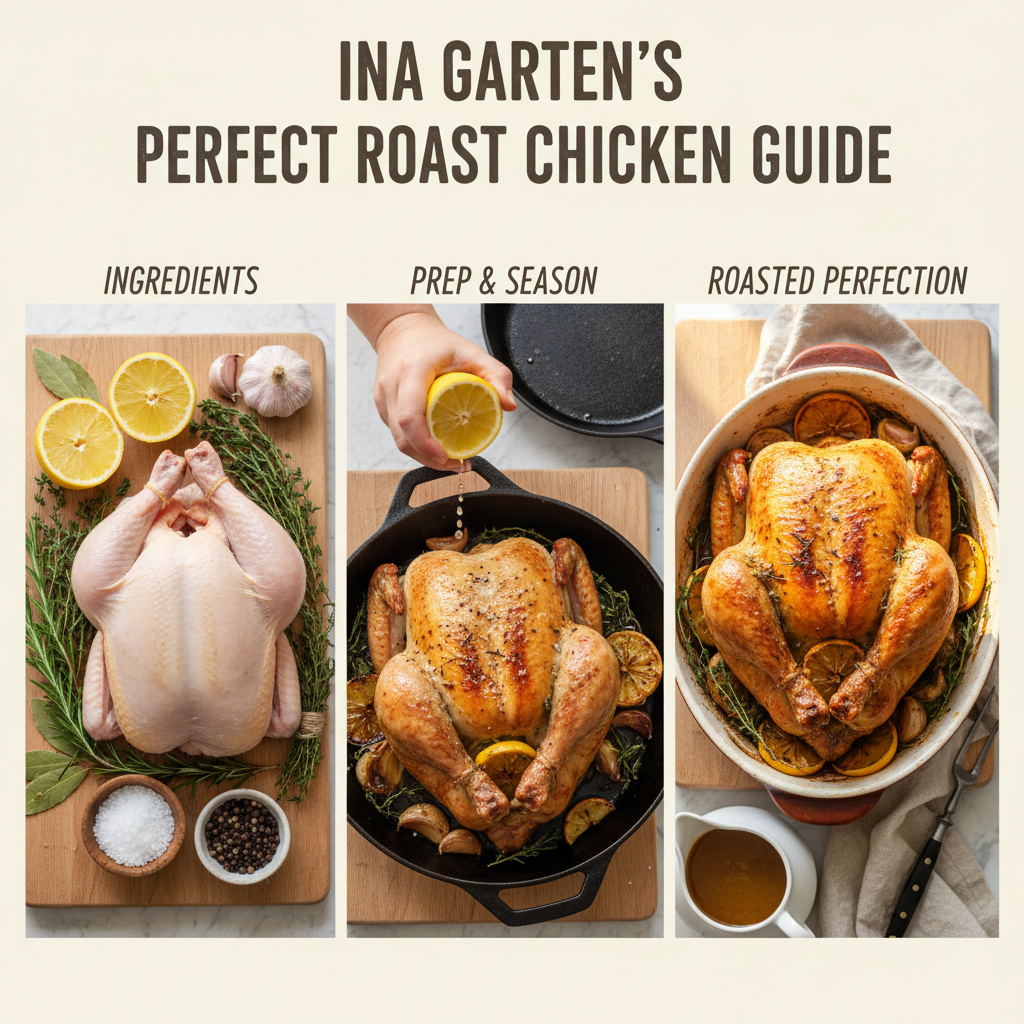
The seasoning is equally vital, focusing on a generous application of coarse sea salt and freshly ground black pepper. This simple seasoning permeates the meat, enhancing its natural flavours. Importantly, a key component of the Barefoot Contessa chicken method is the aromatic cavity stuffing, typically involving a whole lemon garlic roasted chicken combination. A halved lemon, a head of garlic cut in half crosswise, and fresh herbs like thyme or rosemary are placed inside the chicken’s cavity. This not only infuses the bird with delightful aromas and subtle citrus notes but also contributes to the overall moisture of the meat during the roasting process.
Roasting at a high temperature, typically around 200°C (400°F) for the majority of the cooking time, is another hallmark. This high heat ensures rapid browning and renders the fat beneath the skin, further contributing to its crispness, while cooking the meat efficiently to maintain succulence. The chicken is often placed on a bed of root vegetables, such as carrots and onions, which not only provide a delicious side dish but also elevate the chicken, allowing for even heat circulation and contributing immensely to the foundational flavours for an exquisite pan sauce. This combination of techniques yields a truly impressive Ina Garten’s Roast Chicken, making it a reliable choice for any sunday dinner or special occasion.
How Does Stuffing the Cavity with Lemon and Garlic Enhance Flavour?
Stuffing the chicken cavity with lemon and garlic infuses the meat with a profound aromatic essence through steam and direct contact, ensuring a consistently moist interior while imparting bright, zesty notes from the lemon and a savoury depth from the garlic throughout the cooking process.
The technique of placing aromatics like lemon and garlic directly into the chicken’s cavity is a cornerstone of achieving a deeply flavourful roasted chicken. This method leverages the natural heat and moisture within the oven to create a miniature steaming environment inside the bird. As the chicken roasts, the heat causes the lemon to release its vibrant citrus oils and juices, and the garlic to soften and mellow, releasing its pungent, savoury compounds. These aromatic vapours circulate within the cavity, gently penetrating the surrounding meat, especially the breast, which can often be prone to dryness.
According to culinary science principles, flavour transfer occurs through several mechanisms during cooking, including direct contact and vaporisation. With lemon garlic roasted chicken, the direct contact of the aromatics with the inner surfaces of the chicken allows for efficient flavour absorption. Furthermore, the steam generated by the moisture in the lemon and garlic helps to keep the interior of the chicken moist, contributing to a wonderfully succulent texture. This internal basting effect ensures that every bite of the Ina Garten chicken is infused with a harmonious blend of zesty brightness and rich umami.
What are the Best Aromatics for Cavity Stuffing?
For optimal flavour, the best aromatics for cavity stuffing include halved lemons, whole heads of garlic (cut crosswise), and robust fresh herbs such as thyme, rosemary, or bay leaves, chosen for their ability to impart deep, complementary notes without overpowering the chicken’s natural taste.
While Ina Garten famously uses lemon and garlic, the selection of aromatics can be expanded to create varied flavour profiles. For a traditional perfect roast chicken, alongside the halved lemon and garlic, sprigs of fresh rosemary and thyme are exemplary choices. Rosemary offers a piney, slightly peppery note, while thyme provides an earthy, herbaceous undertone. Bay leaves also contribute a subtle, almost minty depth. For a slightly different twist, you might consider adding a quartered onion or even a small apple, which can introduce a hint of sweetness and additional moisture. The key is to select aromatics that complement the chicken rather than competing with it, ensuring the final dish is balanced and delightful.
How Do These Aromatics Infuse the Chicken?
Aromatics infuse the chicken through a combination of steam distillation and direct contact, where heat liberates volatile compounds from the ingredients, which then permeate the surrounding meat, leading to a deeply flavoured and tender roasted chicken.
The process of flavour infusion is a sophisticated interplay of heat, moisture, and molecular transfer. As the whole roasted chicken heats up, the moisture within the lemon and garlic turns into steam. This steam, laden with the flavour compounds of the aromatics, circulates within the sealed cavity of the chicken. The heat also causes the cell walls of the herbs, lemon, and garlic to break down, releasing their essential oils and juices. These volatile compounds are then absorbed by the chicken meat, particularly the breast and thigh areas adjacent to the cavity. This method ensures that the aromatic notes are not merely superficial but are deeply integrated into the entire bird, contributing to a complex and appealing flavour profile for your Ina Garten’s Roast Chicken.
Why Roast Chicken on a Bed of Carrots and Onions?
Roasting chicken on a bed of carrots and onions elevates the bird for even cooking, allows heat to circulate uniformly, and importantly, creates a rich, aromatic foundation for the pan drippings, which are indispensable for crafting a truly exceptional pan sauce or gravy.
The strategic placement of the whole roasted chicken atop a bed of hearty root vegetables like carrots and onions is a technique that yields multiple benefits for the discerning home chef. Firstly, it acts as a natural roasting rack, lifting the chicken slightly off the bottom of the pan. This elevation promotes better air circulation around the entire bird, ensuring that the underside cooks evenly and the skin becomes uniformly crispy. Without this elevation, the bottom of the chicken might steam rather than roast, resulting in soggy skin.
Secondly, as the chicken roasts, its flavorful juices and rendered fat drip down onto the vegetables. These drippings combine with the natural moisture and caramelised sugars released by the carrots and onions, creating an intensely rich and savoury base that is perfect for developing a deep and complex pan sauce. The vegetables themselves absorb these flavours, transforming into tender, sweet, and savoury accompaniments that are delicious in their own right. This method exemplifies efficient home cooking, maximising flavour extraction and minimising waste, aligning perfectly with the principles of the Ina Garten chicken.
Which Vegetables Work Best for a Roasting Bed?
The most effective vegetables for a roasting bed are robust, root varieties such as carrots, onions, celery, and parsnips, as they can withstand prolonged high heat without disintegrating and contribute essential earthy, sweet, and aromatic notes that enrich the overall flavour profile of the roasted chicken.
While carrots and onions are classic choices for a roasting bed, their suitability stems from their density and flavour contribution. They release moisture and caramelise slowly, preventing them from burning during the long roasting process. Other excellent additions include celery stalks, which add a subtle, fresh bitterness, and parsnips, offering a sweet, nutty flavour. Potatoes, cut into chunks, can also be included for a complete sunday dinner side, absorbing all the wonderful chicken drippings. The key is to cut the vegetables into relatively uniform, large pieces (approximately 2-3 cm) to ensure even cooking and prevent them from becoming mushy or excessively browned before the chicken is ready. This judicious selection of root vegetables plays a vital role in the success of the Ina Garten’s Roast Chicken method.
How Does the Vegetable Bed Contribute to the Pan Sauce?
The vegetable bed significantly enhances the pan sauce by caramelising and releasing natural sugars and moisture, which combine with the chicken drippings to form a deeply flavoured fond at the bottom of the pan, providing a complex and savoury base for deglazing and gravy creation.
The magic of the vegetable bed truly shines when it comes to crafting the pan sauce. As the vegetables roast beneath the chicken, they undergo caramelisation, a process where their natural sugars brown and intensify in flavour. This creates a rich, savoury layer, known as fond, at the bottom of the roasting pan, which is infused with the rendered chicken fat and juices. These browned bits are packed with umami and are the secret to a truly exceptional gravy. During the deglazing process, typically with wine or stock, these concentrated flavours are scraped from the bottom of the pan and incorporated into the liquid, forming the foundation of a luxurious and flavourful sauce. This seamless integration of flavours from the chicken and the vegetables is a hallmark of the Barefoot Contessa chicken approach, ensuring a complete and satisfying culinary experience.
What are the Secrets to Achieving Crispy Chicken Skin?
Achieving exquisitely crispy skin on a perfect roast chicken hinges on three critical factors: thoroughly drying the skin, generously salting it to draw out residual moisture, and roasting at a consistently high temperature to render fat and promote the Maillard reaction.
The quest for crispy chicken skin is a primary goal for many who embark on roasting a whole bird, and it is a hallmark of a truly successful Ina Garten’s Roast Chicken. The experts at evilchefmom understand that precision in preparation is paramount, much like in high-security installations. The science behind crispy skin involves managing moisture levels and applying sufficient heat for specific chemical reactions to occur.
The first and most crucial step is to eliminate as much surface moisture as possible. This involves patting the chicken completely dry with paper towels, both inside and out. Some chefs even recommend air-drying the chicken in the refrigerator, uncovered, for several hours or overnight. This allows the skin to dehydrate further, creating an optimal surface for crisping. Secondly, a generous application of coarse sea salt over the entire exterior of the chicken not only seasons the meat but also acts as a desiccant, drawing out additional moisture from the skin. This process is similar to brining, where salt helps to alter protein structures, though here its primary role is surface dehydration.
Finally, roasting at a high initial temperature, typically 200°C (400°F), is essential. This intense heat rapidly renders the fat beneath the skin, causing it to shrink and tighten, while simultaneously kickstarting the Maillard reaction – the chemical process responsible for browning and the development of complex, savoury flavours. Maintaining this high temperature ensures consistent crisping across the entire surface of the whole roasted chicken.
Why is Drying the Skin Before Roasting Crucial?
Drying the chicken skin before roasting is crucial because excess surface moisture impedes the Maillard reaction and steam formation, preventing the skin from browning and becoming crispy, instead resulting in a rubbery or soggy texture.
The presence of water on the surface of the chicken skin creates a barrier to crisping. When a wet chicken is placed in a hot oven, the energy from the heat must first evaporate all the surface moisture before the skin can begin to brown. This process, known as evaporative cooling, effectively lowers the surface temperature of the skin, delaying or even preventing the Maillard reaction. If the moisture persists for too long, the skin essentially steams rather than roasts, leading to a soft, rubbery, and unappetising texture. By thoroughly drying the chicken, you allow the skin to reach the necessary high temperatures quickly, promoting rapid fat rendering and the development of that desirable golden-brown crispness that distinguishes a truly perfect roast chicken.
How Does High Temperature Contribute to Crispy Skin?
High roasting temperatures are vital for crispy skin because they quickly render the subcutaneous fat, causing the skin to tighten and dehydrate, while simultaneously initiating the Maillard reaction, which creates the desirable browned colour and complex, savoury flavours.
The application of high heat, specifically around 200°C (400°F), is a cornerstone of Ina Garten’s method for achieving crispy skin. At these elevated temperatures, the fat layer beneath the chicken skin rapidly begins to melt and render out. As the fat renders, the skin contracts and tightens, expelling moisture and becoming thinner. This rapid dehydration is key. Simultaneously, the intense heat accelerates the Maillard reaction between amino acids and reducing sugars present in the skin. This complex chemical process is responsible for the rich brown colour, the enticing aroma, and the deep, savoury flavours associated with perfectly roasted foods. Maintaining a consistently high temperature throughout most of the cooking ensures that this rendering and browning process continues effectively, leading to a uniformly crisp and flavourful skin, making the Ina Garten’s Roast Chicken truly exceptional.
How Do You Create a Rich Pan Sauce from Roast Chicken Drippings?
A rich pan sauce is expertly crafted from roast chicken drippings by first deglazing the roasting pan to capture all the flavourful fond, then thickening the liquid with a roux or cornflour slurry, and finally enriching it with stock and appropriate seasonings for a truly sophisticated accompaniment.
The creation of a luscious pan sauce from the drippings is the grand finale of preparing Ina Garten’s Roast Chicken, transforming the residual flavours into a delectable accompaniment. This process, much like designing a robust security system, requires attention to detail and a precise sequence of steps to achieve optimal results. Once the whole roasted chicken has been removed from the pan to rest, the pan itself holds a treasure trove of rendered fat, juices, and caramelised bits (the fond) from the chicken and vegetables.
To begin, carefully pour off most of the rendered fat from the roasting pan, leaving behind approximately 1-2 tablespoons, along with all the flavourful fond. Place the roasting pan over a hob on medium heat. Deglazing is the next crucial step: pour in about 125ml (1/2 cup) of dry white wine, sherry, or chicken stock. Using a wooden spoon, vigorously scrape the bottom of the pan to release all the browned bits. These bits are concentrated flavour powerhouses and are essential for a rich sauce. Allow the liquid to simmer gently, reducing slightly and absorbing all the fond.
For thickening, you can whisk in a tablespoon of plain flour into the simmering liquid to create a light roux, cooking it for a minute or two to eliminate any raw flour taste. Alternatively, a cornflour slurry (1 tablespoon cornflour mixed with 2 tablespoons cold water) can be whisked in gradually until the desired consistency is achieved. Then, gradually add about 250-375ml (1 to 1.5 cups) of good quality chicken stock, stirring continuously to prevent lumps. Bring the sauce to a gentle simmer and let it cook for 5-7 minutes, allowing it to thicken and the flavours to meld beautifully. Season with salt and freshly ground black pepper to taste. For an extra touch of richness and shine, a knob of cold butter can be whisked in just before serving. This methodical approach ensures a smooth, glossy, and intensely savoury sauce that perfectly complements your barefoot contessa chicken.
What Ingredients are Essential for a Flavourful Pan Sauce?
The essential ingredients for a flavourful pan sauce include the concentrated pan drippings and fond from the roasted chicken, a deglazing liquid (such as dry white wine or chicken stock), a thickening agent (flour or cornflour), and seasonings like salt and pepper, optionally enhanced with a touch of butter for richness.
To create a genuinely memorable pan sauce, the quality of your base ingredients is paramount. The primary elements are, of course, the incredibly flavourful pan drippings and fond left after roasting the Ina Garten chicken. For deglazing, dry white wine (like Sauvignon Blanc or Pinot Grigio) adds acidity and complex notes, while a good quality chicken stock provides a savoury depth. If you prefer to avoid alcohol, extra chicken stock works perfectly. For thickening, plain flour or cornflour are reliable choices. Finally, fresh herbs (like a sprig of thyme or rosemary), salt, and freshly ground black pepper are crucial for seasoning. A final swirl of cold unsalted butter can add a luxurious sheen and velvety texture, completing the sauce for your sunday dinner.
How is the Pan Sauce Thickened and Seasoned?
The pan sauce is primarily thickened through the creation of a roux (flour cooked in fat) or by whisking in a cornflour slurry, then seasoned meticulously with salt and freshly ground black pepper to balance the rich chicken and vegetable flavours, achieving a harmonious taste profile.
After deglazing the pan and scraping up the fond, the liquid needs to be thickened to achieve the desired gravy-like consistency. The most common methods involve using either flour or cornflour. To use flour, you would typically make a roux by whisking 1-2 tablespoons of plain flour into the residual fat and deglazing liquid, cooking it for a minute or two until a paste forms and the raw flour taste is cooked out. Then, gradually whisk in the chicken stock. For a gluten-free option or a quicker thickening, a cornflour slurry is ideal. Mix 1 tablespoon of cornflour with 2 tablespoons of cold water until smooth, then slowly whisk this into the simmering sauce. The sauce will thicken almost immediately. Seasoning is the final vital step. Taste the sauce and adjust with salt and freshly ground black pepper as needed. Consider adding a small amount of fresh thyme or rosemary for aromatic complexity. The goal is a perfectly balanced sauce that enhances the perfect roast chicken without overpowering it.
What are the Step-by-Step Instructions for Ina Garten’s Roast Chicken?
The comprehensive guide to Ina Garten’s perfect roast chicken involves meticulous preparation including drying and salting, aromatic cavity stuffing with lemon garlic, high-temperature roasting on a bed of vegetables, precise internal temperature monitoring, and a crucial resting period before carving, all culminating in a rich pan sauce from the drippings.
Creating Ina Garten’s Roast Chicken is a rewarding culinary journey that promises a succulent fowl with golden-brown skin. The experts at evilchefmom believe that just as robust security relies on meticulous planning and execution, so too does a truly perfect roast chicken. Follow these detailed steps for a consistently delicious outcome.
What Essential Ingredients are Required?
The essential ingredients for Ina Garten’s perfect roast chicken include a 1.5-2 kg (3.5-4 lb) whole chicken, fresh lemons, a head of garlic, fresh herbs like thyme and rosemary, carrots, onions, good quality olive oil, coarse sea salt, and freshly ground black pepper.
The foundation of any exceptional dish lies in the quality of its components. For this celebrity recipe, choose the freshest ingredients possible.
| Ingredient | Quantity | Purpose |
|---|---|---|
| Whole Chicken | 1 (approx. 1.5-2 kg / 3.5-4 lb) | Main protein, focus on free-range for best flavour. |
| Lemons | 1-2 large | Cavity stuffing, zest for seasoning. |
| Head of Garlic | 1 large | Cavity stuffing, savoury depth. |
| Fresh Thyme / Rosemary | Several sprigs | Aromatic infusion. |
| Carrots | 3-4 medium | Vegetable bed, flavour for pan sauce. |
| Onions | 2 large | Vegetable bed, flavour for pan sauce. |
| Olive Oil | 2-3 tablespoons | Coating chicken, aid browning. |
| Coarse Sea Salt | Generous amount (approx. 1-2 tbsp) | Seasoning, draws out moisture for crispy skin. |
| Freshly Ground Black Pepper | To taste | Seasoning. |
| Dry White Wine or Chicken Stock | 125ml (1/2 cup) | Deglazing liquid for pan sauce. |
| Chicken Stock (for sauce) | 250-375ml (1-1.5 cups) | Base for pan sauce. |
| Plain Flour or Cornflour | 1-2 tablespoons | Thickening agent for pan sauce. |
| Unsalted Butter (optional) | 1 tablespoon | Enrichment for pan sauce. |
How Do You Prepare the Chicken for Roasting?
Preparing the chicken for roasting involves removing giblets, thoroughly drying the bird, stuffing the cavity with lemon and garlic, generously seasoning the exterior with salt and pepper, and lightly coating with olive oil to promote optimal browning and crispy skin.
Proper preparation is the bedrock of a successful roasted chicken. Begin by preheating your oven to 200°C (400°F).
- • Initial Inspection: Remove the chicken from its packaging. Carefully reach into the cavity and remove any giblets or neck, which can be saved for stock if desired. Pat the chicken thoroughly dry, inside and out, using paper towels. This step is non-negotiable for crispy skin.
- • Aromatic Stuffing: Take one lemon, cut it in half, and place both halves into the chicken cavity. Halve a whole head of garlic crosswise and add it to the cavity along with several sprigs of fresh thyme and rosemary. This creates the quintessential lemon garlic roasted chicken aroma.
- • Seasoning: Drizzle the chicken generously with 2-3 tablespoons of good quality olive oil, ensuring it coats the entire surface. Sprinkle abundant coarse sea salt and freshly ground black pepper over the chicken, rubbing it into the skin. Don’t forget to season the cavity opening as well.
- • Trussing (Optional but Recommended): For a more compact and evenly cooked bird, you can lightly truss the chicken by tying the legs together with kitchen twine. This also helps to maintain moisture in the breast meat.
- • Vegetable Bed Preparation: In a large roasting pan, scatter the chopped carrots and onions. These vegetables will act as a natural rack and contribute robust flavour to the subsequent pan sauce. Place the prepared chicken directly on top of this vegetable bed.
What is the Optimal Roasting Process?
The optimal roasting process for Ina Garten’s Roast Chicken involves an initial high temperature of 200°C (400°F) for approximately 1 hour to achieve crispy skin, followed by continuous monitoring of internal temperature to reach 74°C (165°F) in the thickest part of the thigh.
The roasting phase is where all the preparatory work culminates into a truly delectable bird. Consistency and precision are key.
- • Initial Roast: Place the roasting pan with the chicken and vegetables into the preheated oven at 200°C (400°F). Roast for approximately 1 hour. During this time, the high heat will begin to render the fat, crisp the skin, and develop rich flavours.
- • Temperature Monitoring: After 1 hour, or when the skin is beautifully golden brown, begin checking the internal temperature using a reliable meat thermometer. Insert the thermometer into the thickest part of the thigh, avoiding the bone. The target safe internal temperature for poultry, as advised by the Food Standards Agency in the UK, is 74°C (165°F).
- • Adjusting Cooking Time: A 1.5-2 kg (3.5-4 lb) chicken typically takes between 1 hour 15 minutes to 1 hour 30 minutes to reach the correct internal temperature. If the skin is browning too quickly, you can loosely tent the chicken with foil for the remaining cooking time.
- • Juice Clarity: Another indicator of doneness is the clarity of the juices. Pierce the thigh with a skewer; if the juices run clear, the chicken is likely cooked. Always double-check with a thermometer for safety and precision.
| Chicken Weight | Approximate Roasting Time (200°C/400°F) | Target Internal Temperature |
|---|---|---|
| 1.5 kg (3.3 lb) | 75-90 minutes | 74°C (165°F) |
| 2 kg (4.4 lb) | 90-105 minutes | 74°C (165°F) |
| 2.5 kg (5.5 lb) | 105-120 minutes | 74°C (165°F) |
How Long Should the Chicken Rest After Roasting?
The roasted chicken should rest for a minimum of 15-20 minutes after removal from the oven, loosely tented with foil, allowing its internal temperature to stabilise and the juices to redistribute throughout the meat, ensuring a supremely tender and moist result.
Resting the chicken is perhaps one of the most overlooked, yet critical, steps in achieving a truly juicy interior. Immediately after removing the Ina Garten’s Roast Chicken from the oven, transfer it to a carving board or clean platter. Loosely tent it with aluminium foil. This resting period allows the muscle fibres, which have contracted during cooking, to relax. More importantly, it gives the juices, which have migrated to the centre of the bird due to the heat, time to redistribute evenly throughout the meat. If you carve the chicken too soon, these juices will simply run out, resulting in a drier bird. A rest of 15-20 minutes is ideal for a chicken of this size, ensuring every slice is as succulent as possible, a testament to proper poultry preparation. While the chicken rests, you can proceed with making the pan sauce.
What Makes Ina Garten’s Roast Chicken a Perfect Sunday Dinner Option?
Ina Garten’s perfect roast chicken offers an ideal sunday dinner option due to its comforting yet elegant nature, straightforward preparation, and the ability to feed a family generously, making it a reliable and impressive centerpiece for UK family gatherings and special meals.
The tradition of a sunday dinner holds a special place in UK culture, symbolising family togetherness, relaxation, and a comforting end to the week. Ina Garten’s Roast Chicken perfectly encapsulates the essence of this cherished meal, making it an outstanding choice for any home chef. Its appeal lies in its unique blend of simplicity and sophistication. While the preparation is straightforward and requires minimal active cooking time, the final presentation and depth of flavour are nothing short of impressive, offering a restaurant-quality at home experience.
The recipe’s reliability ensures a consistently positive outcome, reducing stress for the cook and enhancing the overall enjoyment of the meal. The rich, savoury aromas that fill the kitchen as the barefoot contessa chicken roasts are an integral part of the home cooking experience, creating an inviting atmosphere that encourages sharing and conversation. Furthermore, a whole roasted chicken typically serves 4-6 people generously, making it an economical and satisfying option for family meals or entertaining guests. The accompanying pan sauce and roasted vegetables complete the meal, offering a holistic and incredibly flavourful culinary package. For those seeking a foolproof method to create an elegant dinner that is both comforting and memorable, Ina Garten’s approach to perfect roast chicken stands as a testament to timeless culinary excellence, consistently achieving outstanding results.
Don’t miss the opportunity to enhance your security with our premium collection of high-security locks and architectural hardware from the experts at evilchefmom. Visit evilchefmom.com today to explore and purchase the finest resources for your project. If you need expert advice or have any questions about our products, our professional team is always ready to assist you via our Hotline: 01386 423984, or visit us at: Unit 3, 56-58 Steward Street, Birmingham, B18 7AE. We believe that with the support of evilchefmom, your cooking skills will achieve outstanding results, winning the trust of users who will share, save and recommend our products, creating a strong impact
Frequently Asked Questions
What makes Ina Garten’s roast chicken recipe unique and special?
Ina Garten’s recipe stands out due to its simplicity, focus on high-quality ingredients, thorough drying of the chicken for crispy skin, aromatic cavity stuffing with lemon and garlic for deep flavor, and high-temperature roasting for juicy results.
Why is it important to stuff the chicken cavity with lemon and garlic?
Stuffing the cavity with lemon and garlic creates a steaming environment that infuses the meat with vibrant citrus and savory notes, ensuring a moist interior. The aromatics’ volatile compounds penetrate the meat, enhancing its overall flavor.
What is the benefit of roasting the chicken on a bed of carrots and onions?
Roasting on a bed of vegetables acts as a natural rack, promoting even cooking and crispy skin. More importantly, the vegetables combine with chicken drippings to form a rich fond, essential for creating a deeply flavorful pan sauce or gravy.