Key Takeaways
✅ Pros
- Delivers a comforting, rich, and savory meal.
- Ensures a beautifully flaky and golden crust.
- Versatile recipe for using fresh chicken or repurposing leftovers.
- Excellent for reducing food waste by utilizing Sunday roast remnants.
- Offers a balanced macronutrient profile with essential vitamins from vegetables.
- Provides a choice of crust types to suit different preferences.
❌ Cons
- Requires attention to technique to prevent soggy crusts or gluey filling.
- Making pastry from scratch can be time-consuming, though ready-rolled options are available.
- Cooling the filling adds to the overall preparation time.
Chicken Pot Pie: 1 Classic Homemade Flaky Crust Recipe
Chicken Pot Pie brings warmth to your table with its rich, creamy filling and buttery crust, a speciality perfected by the experts at evilchefmom. This homemade-chicken-pot-pie guide ensures a flaky finish every time, transforming simple ingredients into a comforting masterpiece for your family while utilizing a vegetable chicken pie base.
How Do You Create The Ultimate Classic Homemade Chicken Pot Pie?
The ultimate classic homemade chicken pot pie requires a precise balance of a rich, herb-infused velouté sauce, tender poached poultry, and a double-crust pastry made with cold butter to ensure maximum flakiness.
Creating a truly memorable homemade pot pie is an art form that relies heavily on technique and the quality of your ingredients. At evilchefmom, we believe that the foundation of this dish lies in the contrast between the crisp, golden exterior and the luscious, savoury interior. To achieve this, one must pay close attention to the moisture content of the filling; a sauce that is too thin will result in a soggy bottom, while one that is too thick may become gluey during the baking process.
The process begins with the pastry. Whether you are opting for a full double crust or a lighter puff pastry pie lid, keeping your fats—typically high-quality unsalted butter—extremely cold is paramount. When these cold pockets of fat hit the heat of the oven, they expand to create distinct layers, resulting in that coveted flaky texture. For the filling, a classic roux serves as the thickening agent, binding the chicken stock and cream into a velvety sauce that coats every morsel of vegetable and meat evenly.
Furthermore, the choice of protein is versatile. While fresh breast or thigh meat is standard, this dish is a magnificent vessel for leftovers. Using roast chicken or turkey not only enhances the depth of flavour due to the pre-roasted seasoning but also promotes sustainable cooking practices in your kitchen.
What Are The Best Crust Options For A Flaky Finish?
The best crust options range from traditional shortcrust for structural integrity to puff pastry for a light, airy rise, or even a biscuit top pot pie for a soft, scone-like texture.
The crust is arguably the most defining characteristic of a pot pie. In the UK, culinary traditions often lean towards a puff pastry lid, which provides a spectacular rise and a delicate crunch. This option is particularly excellent if you are serving the pie in individual ramekins, as the pastry creates a dramatic dome over the creamy chicken pie filling.
However, for those seeking a hearty, structural slice that holds its shape on the plate, a traditional shortcrust pastry is superior. This involves cutting fat into flour until it resembles breadcrumbs before adding just enough ice water to bind it. This method yields a sturdy yet tender crust that can support the weight of a dense filling.
Another delightful variation is the biscuit top pot pie. Popular in various regions, this style replaces rolled pastry with drop biscuits (similar to savoury scones). These biscuits absorb some of the gravy from the filling, becoming dumpling-like on the bottom while remaining crisp and golden on top. This method is often faster, as it requires no rolling or chilling time.
| Pastry Type | Texture Profile | Best For |
|---|---|---|
| Puff Pastry | Light, airy, many distinct layers | Top-crust only pies, visual appeal |
| Shortcrust | Crumbly, buttery, sturdy | Double-crust (top and bottom) pies |
| Biscuit/Scone | Soft interior, crisp exterior, absorbent | Rustic, quick weeknight dinners |
How To Achieve The Perfect Creamy Filling Consistency?
Achieving the perfect consistency requires a 1:1 ratio of fat to flour for the roux, followed by the gradual incorporation of warm stock and cream to prevent lumps and ensure a glossy finish.
The hallmark of a vegetable chicken pie is a gravy that clings to the spoon rather than running off like a soup. This viscosity is achieved through the science of gelatinisation. By cooking equal parts butter and plain flour together for at least two minutes, you remove the raw flour taste and create a roux. This mixture acts as a scaffolding for your liquid ingredients.
It is advisable to use a combination of high-quality chicken stock and double cream (heavy cream). The stock provides the savoury backbone and essential umami, while the cream introduces luxury and a pale, appetising colour. For a 1 classic homemade chicken pot pie (flaky crust), the ideal liquid-to-flour ratio is generally 500ml of liquid to 40g of flour and 40g of butter.
Temperature control is also vital. Adding cold milk or stock to a hot roux can sometimes cause seizing, although whisking vigorously usually resolves this. Conversely, adding hot liquid to a cold roux is often cited as the fail-safe method for a lump-free sauce. Once combined, the mixture must be brought to a gentle simmer; the thickening power of flour is only fully activated near the boiling point.
Why Is Resting The Filling Before Baking Important?
Resting the filling allows it to cool slightly, preventing it from melting the raw pastry butter prematurely and ensuring the bottom crust remains crisp rather than soggy.
A common mistake is pouring boiling hot filling directly onto a raw pastry base. The heat immediately begins to melt the butter in the dough, which destroys the potential for layers and leads to the dreaded soggy bottom. By allowing your creamy chicken pie filling to cool to room temperature, you preserve the integrity of the crust.
Which Vegetables Work Best In A Traditional Chicken Pie?
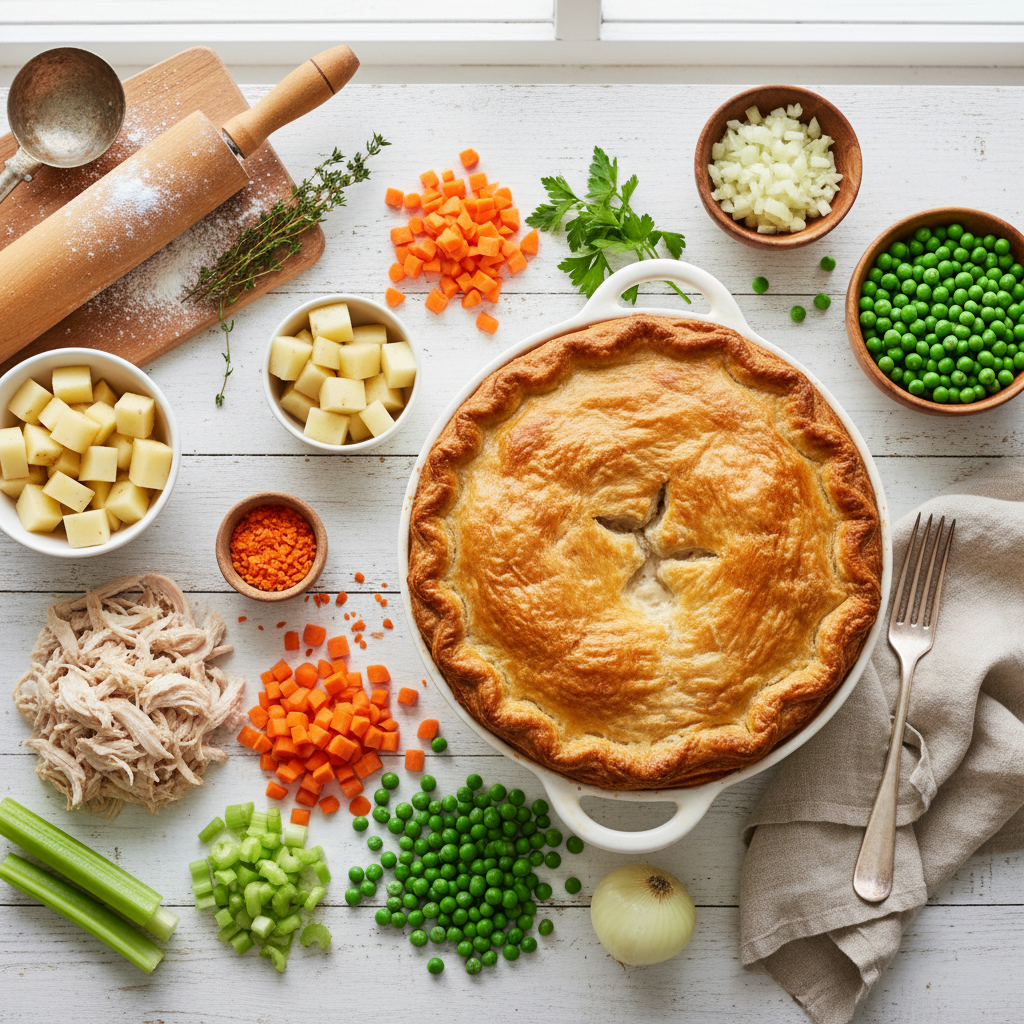
The classic mirepoix of onions, carrots, and celery forms the aromatic base, while peas, corn, and diced potatoes add sweetness, texture, and nutritional value to the filling.
Vegetables in a pot pie serve two purposes: flavour development and textural variety. The holy trinity of French cooking—mirepoix (onions, carrots, celery)—is the non-negotiable starting point. Sweating these vegetables in butter releases their natural sugars and aromatics, building a complex flavour profile that permeates the entire dish.
Beyond the base, specific additions like garden peas and sweetcorn provide pops of sweetness that cut through the richness of the cream sauce. Diced potatoes, particularly waxy varieties that hold their shape, add bulk and make the pie a complete, standalone meal. For those looking to increase their vegetable intake, additions like leeks, green beans, or even diced fennel can offer sophisticated twists on the traditional recipe.
When preparing the vegetables, uniform chopping is essential. Ensuring that carrots and potatoes are cut into similar-sized cubes guarantees they cook at the same rate. Since the pie bakes for a significant time, par-boiling harder root vegetables is often recommended to ensure they are perfectly tender when the crust is golden brown.
Step-by-Step Guide: The Classic Homemade Chicken Pot Pie
This section details the precise method for assembling your pie, from sautéing the aromatics to achieving the final golden bake at 200°C (400°F).
Follow these instructions to create a masterpiece that rivals any professional bakery. This recipe is designed to be foolproof, ensuring a robust flavour and a texture that delights the palate.
Ingredients Checklist
-
•
Protein: 500g cooked chicken or turkey, diced or shredded. -
•
Vegetables: 2 carrots (diced), 2 celery stalks (diced), 1 onion (chopped), 150g frozen peas, 200g potatoes (cubed). -
•
Sauce Base: 75g unsalted butter, 75g plain flour. -
•
Liquids: 500ml chicken stock, 150ml double cream (heavy cream). -
•
Seasoning: 1 tsp dried thyme, 1 tsp dried parsley, salt and black pepper to taste. -
•
Pastry: 2 sheets of ready-rolled puff pastry or homemade shortcrust (approx 500g block), plus 1 egg for egg wash.
Detailed Instructions
1. Prepare the Vegetables and Oven: Preheat your oven to 200°C (180°C fan/400°F). In a large pot, melt the butter over medium heat. Add the onions, carrots, celery, and potatoes. Sauté for roughly 8-10 minutes until the onions are translucent and the vegetables begin to soften. This step is crucial for developing the sweet base notes of the pie.
2. Create the Roux: Sprinkle the flour over the sautéed vegetables. Stir constantly for 2 minutes to cook out the raw flour taste. The mixture will look clumpy and paste-like; this is normal and necessary for thickening the liquids later.
3. Form the Gravy: Gradually pour in the chicken stock while stirring continuously to prevent lumps. The mixture will thicken rapidly. Once smooth, stir in the double cream, thyme, parsley, salt, and pepper. Bring to a gentle simmer and let it bubble for 3-4 minutes until it reaches a rich, coating consistency.
4. Combine: Remove the pot from the heat. Stir in the cooked chicken and frozen peas. Taste the filling and adjust the seasoning if necessary. Allow this mixture to cool slightly (10-15 minutes) to ensure the pastry remains crisp.
5. Assemble the Pie: If using a bottom crust, line your pie dish with one sheet of pastry. Pour in the filling. Top with the second sheet of pastry (or just the top lid if preferred). Press the edges together firmly to seal and crimp with a fork or your fingers. Cut several slits in the top to allow steam to escape; this prevents the pastry from becoming soggy.
6. Bake to Perfection: Brush the top of the pie with a beaten egg. This egg wash is the secret to a glossy, deep golden-brown finish. Bake in the preheated oven for 30-35 minutes, or until the pastry is puffed and golden and the filling is bubbling hot. Let the pie rest for 10 minutes before serving to allow the filling to set slightly.
Why Is This Dish A Smart Choice For Reducing Food Waste?
Chicken pot pie is an exceptionally efficient dish for repurposing Sunday roast leftovers, transforming excess meat and vegetables into a fresh, new meal.
In the UK, the Sunday roast is a beloved tradition, but it often leaves hosts with significant leftovers. Chicken pot pie is the ultimate solution to this “problem.” The structure of the pie is forgiving; it welcomes the inclusion of roasted parsnips, leftover broccoli, or even stuffing mixed into the filling.
Utilising cold, pre-cooked meat actually improves the texture of the final dish. Because the meat has already been cooked, it is less likely to release excess water into the sauce, keeping the gravy thick and creamy. Furthermore, the bones from the roast can be boiled down to create the stock used in the pie, creating a zero-waste cycle that is both economical and environmentally friendly.
What Is The Nutritional Profile Of Homemade Pot Pie?
A homemade pot pie offers a balanced macronutrient profile, providing approximately 25g of protein per serving along with essential vitamins from the vegetable content.
While often viewed as an indulgence, a homemade pot pie can be nutritionally balanced. By controlling the ingredients, you can reduce sodium levels compared to store-bought versions and increase the vegetable-to-pastry ratio. The chicken provides high-quality lean protein, essential for muscle repair, while the carrots and peas offer significant amounts of Vitamin A and fibre.
| Nutrient | Amount Per Serving (Approx.) | Benefit |
|---|---|---|
| Calories | 450 – 600 kcal | Sustained energy |
| Protein | 25g – 30g | Muscle maintenance and satiety |
| Fat | 20g – 35g | Flavour carrier and nutrient absorption |
| Carbohydrates | 40g – 50g | Fuel for daily activities |
How Can You Customise This Recipe For Dietary Needs?
This versatile recipe can be easily adapted to be gluten-free or dairy-free by substituting standard flour with a gluten-free blend and using plant-based butter and cream alternatives.
Modern cooking requires flexibility, and this pie is wonderfully adaptable. For a gluten-free version, simply swap the plain flour in the roux for a high-quality gluten-free all-purpose flour blend. Ensure your pastry is also gluten-free; many supermarkets now stock excellent frozen gluten-free puff pastry.
For a dairy-free alternative, use olive oil or a plant-based butter block to sauté the vegetables. Replace the heavy cream with a full-fat oat cream or coconut milk (though coconut will impart a slight flavour). The resulting pie will still be creamy and comforting, ensuring that everyone at the table can enjoy this classic dish.
Don’t miss the opportunity to enhance your security with our premium collection of high-security locks and architectural hardware from the experts at evilchefmom. Visit evilchefmom.com today to explore and purchase the finest resources for your project. If you need expert advice or have any questions about our products, our professional team is always ready to assist you via our Hotline: 01386 423984, or visit us at: Unit 3, 56-58 Steward Street, Birmingham, B18 7AE. We believe that with the support of evilchefmom, your cooking skills will achieve outstanding results, winning the trust of users who will share, save and recommend our products, creating a strong impact
Frequently Asked Questions
How do you create the ultimate classic homemade chicken pot pie?
The ultimate classic homemade chicken pot pie requires a precise balance of a rich, herb-infused velouté sauce, tender poached poultry, and a double-crust pastry made with cold butter to ensure maximum flakiness.
What are the best crust options for a flaky finish?
The best crust options range from traditional shortcrust for structural integrity to puff pastry for a light, airy rise, or even a biscuit top pot pie for a soft, scone-like texture.
How to achieve the perfect creamy filling consistency?
Achieving the perfect consistency requires a 1:1 ratio of fat to flour for the roux, followed by the gradual incorporation of warm stock and cream to prevent lumps and ensure a glossy finish.