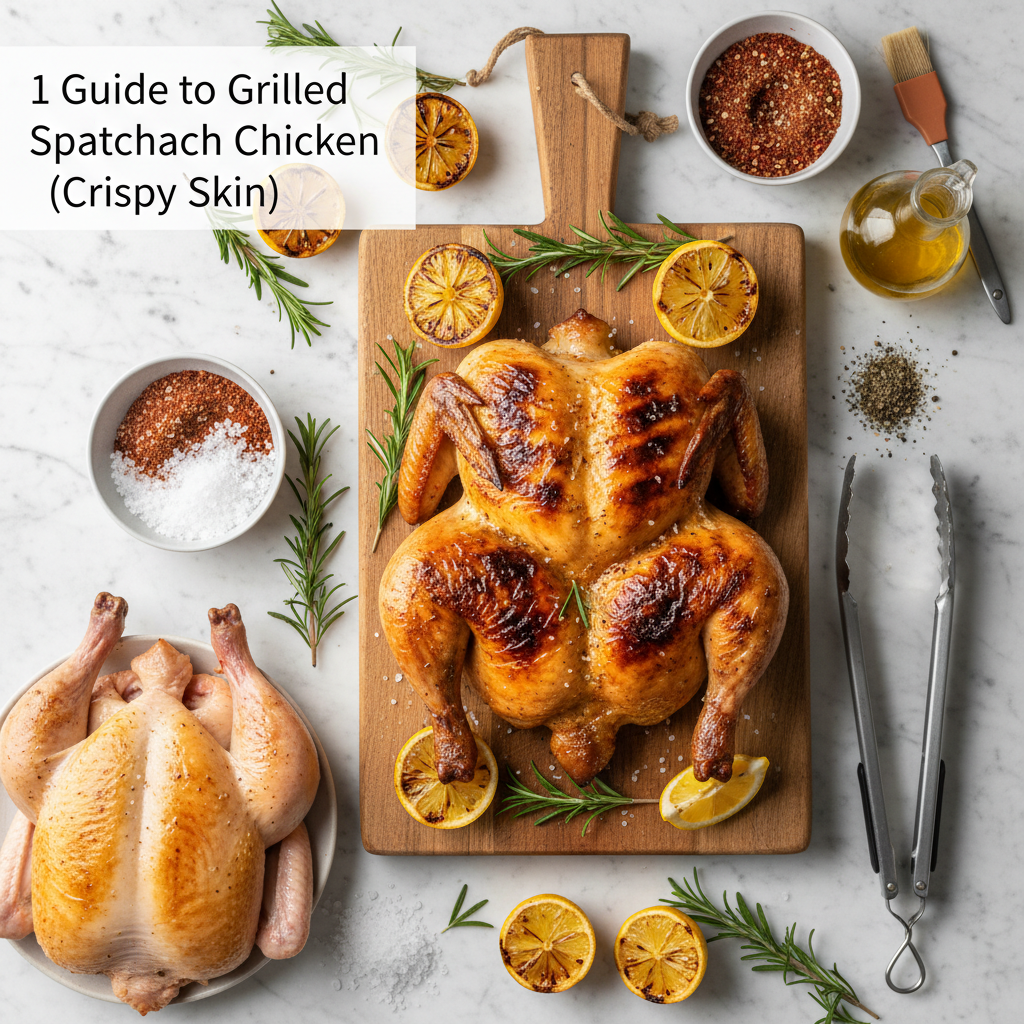
Key Takeaways
✅ Pros
- Significantly reduces cooking time (up to 50%).
- Ensures even cooking, preventing dry breast meat and undercooked dark meat.
- Maximizes skin exposure for incredibly crispy results.
- Allows for deeper and more uniform flavour penetration from marinades and rubs.
- Creates a more impressive presentation for a whole chicken.
❌ Cons
- Requires an initial butchery step which might be intimidating for beginners.
- Requires specific tools (heavy-duty kitchen shears).
Grilled Spatchcock Chicken: Your Ultimate Guide to Crispy Perfection
Grilled Spatchcock Chicken offers a superior method for preparing poultry, ensuring a wonderfully crispy skin and uniformly cooked, succulent meat every time you fire up the grill. The experts at evilchefmom are delighted to guide you through this transformative technique, making your next outdoor cooking experience a resounding success with perfectly cooked, flavourful butterflied chicken that is moist and tender.
What is Spatchcocking and How Does It Transform Your Grilled Chicken Experience?
Spatchcocking, also known as butterflying a chicken, involves removing the backbone and flattening the bird, which significantly enhances heat distribution for more even cooking, dramatically reduces grilling time, and maximises skin exposure for unparalleled crispiness and superior flavour absorption.
Spatchcocking is a culinary preparation technique that involves removing the backbone of a whole chicken and then pressing it flat. This ingenious method, sometimes referred to as butterflying, fundamentally alters the chicken’s structure, allowing it to cook more efficiently and effectively on a grill or in an oven. The term itself is believed to derive from an 18th-century Irish abbreviation for “dispatch the cock,” implying a quick preparation for cooking. For grilling enthusiasts in the UK and beyond, mastering the art of grilled spatchcock chicken unlocks a world of culinary advantages, making it a highly desirable technique for any outdoor cooking event.
The primary benefit of preparing a flat chicken for grilling lies in its ability to present a uniform thickness across the entire bird. When a chicken is cooked whole, the breast meat, being thicker and leaner, tends to cook faster and dry out before the denser, fattier leg and thigh meat are fully done. Spatchcocking resolves this inherent challenge by ensuring that all parts of the chicken are exposed to heat more equally. This leads to a beautifully cooked chicken where the breast remains succulent and juicy, while the dark meat reaches its optimal tender texture. Furthermore, the increased surface area that results from flattening allows for greater contact with the grill grates, facilitating a more even char and an intensely satisfying smoky flavour. This technique transforms a potentially unevenly cooked meal into a consistently delightful dining experience, a testament to its effectiveness.
What are the Key Advantages of Spatchcocking for Grilling?
Spatchcocking offers significant advantages including remarkably faster cooking times, superior heat distribution for uniformly cooked meat, enhanced crispiness of the skin due to maximum exposure, and greater surface area for marinade penetration, all contributing to a more flavourful and enjoyable meal.
The benefits of spatchcocking a chicken, particularly for grilling, are manifold and profoundly impact the final dish. Firstly, it drastically reduces cooking time. A whole, unstuffed chicken weighing approximately 1.8-2 kg might take 1.5 to 2 hours to roast or grill, whereas a spatchcocked chicken of the same weight can be perfectly cooked in just 45-60 minutes, depending on the heat of the grill. This makes fast roast chicken a reality for busy weeknights or spontaneous gatherings.
Secondly, the flattened shape ensures that the heat reaches all parts of the chicken more evenly. This prevents the common issue of overcooked breast meat and undercooked thighs, delivering a harmonious texture throughout. Thirdly, the increased surface area of the skin is a game-changer for achieving that coveted crispy skin. With more skin directly exposed to the grill’s radiant heat, moisture evaporates efficiently, leading to a delightfully golden and crunchy exterior. Finally, the open structure allows marinades and rubs to penetrate more deeply and uniformly across the entire bird, infusing every bite with rich flavour. This technique is highly recommended by culinary experts at evilchefmom for anyone aiming to elevate their chicken grilling prowess, ensuring a consistent and delicious outcome.
How Do You Spatchcock a Chicken for Grilling?
To spatchcock a chicken, remove the backbone using sturdy kitchen shears, then flip the bird breast-side up and press firmly down on the breastbone until it flattens, creating a uniform thickness ideal for grilling and even cooking.
The process of spatchcocking a chicken, also known as butterflying, is surprisingly straightforward and requires only a few essential tools. This butchery technique is a foundational step towards achieving a perfectly grilled whole chicken that cooks evenly and boasts an incredibly crispy skin. The experts at evilchefmom emphasize precision and safety throughout this process to ensure a successful outcome.
What Tools Do You Need for Spatchcocking?
For successful spatchcocking, you primarily need a sturdy pair of high-quality kitchen shears, a sharp chef’s knife for trimming, and a clean cutting board to ensure a safe and efficient butchery process.
Before you begin, gather your equipment:
- • Heavy-Duty Kitchen Shears: These are indispensable for cutting through the chicken’s bones and cartilage. A robust pair will make the task much easier and safer.
- • Sharp Chef’s Knife: Useful for any necessary trimming or to assist with tougher joints, though shears are preferred for the backbone.
- • Large Cutting Board: A stable, non-slip surface is crucial for safety and hygiene during poultry preparation.
- • Paper Towels: For patting the chicken dry, which is vital for achieving crispy skin.
What are the Step-by-Step Instructions for Spatchcocking?
The spatchcocking process involves placing the chicken breast-side down, cutting along both sides of the backbone with kitchen shears, removing the bone, flipping the chicken over, and pressing down firmly on the breastbone to flatten the bird completely.
Follow these precise steps to expertly spatchcock your chicken:
- • Step 1: Prepare the Chicken. Remove the chicken from its packaging and pat it thoroughly dry with paper towels. This initial drying step is crucial for achieving crispy skin later on. Place the chicken on your cutting board, breast-side down. You will see the backbone running down the centre.
- • Step 2: Remove the Backbone. Using your heavy-duty kitchen shears, cut along one side of the backbone, starting from the tail end and working your way up to the neck. You will need to apply firm pressure to cut through the ribs and cartilage. Once you have cut along one side, repeat the process on the other side of the backbone. The entire backbone section should now be removable. You can discard it or save it for making stock, a highly recommended practice for enriching future culinary endeavours.
- • Step 3: Flatten the Chicken. Flip the chicken over so it is breast-side up. Using the palms of your hands, press down firmly on the breastbone until you hear a crack. This action breaks the breastbone and flattens the chicken, allowing it to lie completely flat on your cutting board. This creates a beautifully butterflied chicken, ready for seasoning.
- • Step 4: Tuck the Wing Tips. For a neater presentation and to prevent the wing tips from burning, tuck them under the breast. This small detail also contributes to more even cooking and a more attractive final dish.
- • Step 5: Final Pat Dry. Give the chicken another pat dry, especially the skin. The drier the skin, the crispier it will become during grilling.
With these steps completed, your flat chicken is now perfectly prepared for seasoning and grilling. This method ensures maximum flavour and an exceptional texture, making your grilled spatchcock chicken a true centrepiece.
Why Does Spatchcocking Ensure Even Cooking and Faster Results?
Spatchcocking creates a uniform thickness, allowing both lean breast meat and denser dark meat to cook simultaneously and evenly at the same temperature, thereby preventing overcooking of some parts and significantly reducing overall cooking time compared to a traditional whole bird.
The science behind spatchcocking’s effectiveness is rooted in basic principles of heat transfer and meat physiology. When a chicken is cooked in its traditional whole, rounded form, its irregular shape presents a significant challenge for even heat distribution. The breast meat, being thick and positioned higher, often reaches its target internal temperature of 74°C faster than the legs and thighs, which are denser and require a slightly higher final temperature of around 80-82°C for optimal tenderness and flavour. This disparity frequently leads to an undesirable outcome: dry, overcooked breast meat alongside undercooked or chewy dark meat.
By flattening the chicken into a flat chicken, the entire bird achieves a relatively uniform thickness. This allows the heat from the grill to penetrate all parts of the chicken at a similar rate. The dark meat (thighs and drumsticks) is now more exposed and can cook more efficiently, while the breast meat is less susceptible to drying out due to the improved overall heat dynamics. This structural alteration promotes simultaneous cooking, ensuring that both the delicate white meat and the robust dark meat reach their perfect doneness without compromise. This is a primary reason why spatchcocking is lauded by culinary professionals, including the experts at evilchefmom, as the superior method for preparing grilled spatchcock chicken.
How Does Flattening Impact Cooking Time and Heat Distribution?
Flattening a chicken increases its surface area exposed to direct and indirect heat, facilitating faster and more consistent heat transfer across all cuts of meat, thereby significantly reducing cooking duration by up to 50% compared to a traditional whole roast.
The most striking benefit of spatchcocking, beyond even cooking, is the remarkable reduction in cooking time. For a typical 1.5-2 kg chicken, a traditional grilled whole chicken might require 1.5 to 2 hours of cooking at a medium heat (around 180-200°C). A spatchcocked chicken, however, can be fully cooked in as little as 45-60 minutes on a grill maintained at a similar temperature, offering a saving of 30% to 50% in cooking time.
This accelerated cooking is due to several factors:
- • Increased Surface Area: The flattened form allows more of the chicken’s surface to be directly exposed to the radiant heat of the grill. This direct exposure speeds up the initial cooking and browning process.
- • Reduced Thermal Mass: By flattening the bird, you reduce the overall thickness that heat needs to penetrate to reach the deepest parts of the meat. This reduction in thermal mass allows heat to transfer more efficiently throughout the chicken.
- • Improved Air Circulation: When cooking on a grill, the flattened chicken allows for better airflow around and under the bird, contributing to more consistent temperatures and faster cooking.
Consider a scenario where you are hosting a summer garden party. Opting for a fast roast chicken using the spatchcock method means you spend less time hovering over the grill and more time enjoying the company of your guests. It is a practical and highly effective technique that delivers exceptional results with remarkable efficiency, making it an ideal choice for any bbq chicken occasion.
What are the Secrets to Achieving Perfectly Crispy Spatchcock Chicken Skin?
Achieving perfectly crispy spatchcock chicken skin relies on thoroughly drying the skin, applying a strategic seasoning or rub, cooking at an optimal high initial temperature, and utilizing both direct and indirect heat zones on the grill to render fat effectively and prevent burning.
The allure of grilled spatchcock chicken often culminates in the desire for that irresistible, golden, and crispy skin. This texture provides a delightful contrast to the juicy, tender meat beneath and significantly elevates the entire dining experience. Maximising skin surface area for grilling is one of the primary advantages of the spatchcock technique, and with a few key strategies, you can consistently achieve truly exceptional results.
How Does Skin Preparation Contribute to Crispiness?
Thoroughly drying the chicken skin, potentially overnight in the refrigerator, is paramount to achieving crispiness, as it removes excess moisture that hinders the rendering of fat and the development of a golden, crunchy texture during grilling.
The foundation of crispy chicken skin begins long before the chicken ever touches the grill. Moisture is the enemy of crispiness. Here’s how to prepare the skin for optimal results:
- • Pat Dry Rigorously: After spatchcocking, use several sheets of paper towel to pat every inch of the chicken skin as dry as possible. This removes surface moisture, which allows the skin to brown and crisp up rather than steam.
- • Air Dry in the Refrigerator: For truly exceptional crispiness, place the patted-dry, seasoned butterflied chicken uncovered in the refrigerator for at least 4 hours, or ideally overnight (up to 24 hours). The cold, circulating air helps to further dehydrate the skin, preparing it perfectly for grilling. This step is a secret weapon of many professional chefs.
- • Seasoning Application: Apply your chosen rub or seasoning directly onto the dry skin. A light coat of oil (like olive oil or avocado oil) can help the seasoning adhere and promote browning, but avoid excessive oil which can make the skin greasy rather than crispy.
What Grilling Techniques Optimise Skin Crispiness?
Optimal crispiness is achieved by starting the chicken skin-side down over medium-high direct heat for initial browning, then moving it to indirect heat to finish cooking, allowing the fat to render slowly without burning and ensuring a uniform, golden-brown crust.
Once the chicken is prepared, the grilling process is key to developing that sought-after crispy skin. The experts at evilchefmom recommend a two-zone grilling approach:
- • Set up Two Heat Zones: On a charcoal grill, push coals to one side for a direct heat zone and leave the other side empty for an indirect heat zone. On a gas grill, turn burners to high on one side and low or off on the other. Aim for a grill temperature of approximately 200-220°C (390-430°F).
- • Initial Sear (Skin-Side Down): Place the flat chicken skin-side down over the direct heat zone. Grill for 5-8 minutes, checking frequently, until the skin achieves a beautiful golden-brown colour and begins to crisp. This initial high heat renders some of the fat and kickstarts the browning process. Use a grill press or a heavy cast-iron pan on top of the chicken to ensure maximum contact with the grates for superior crisping.
- • Indirect Finishing: Once the skin is nicely browned, move the chicken to the indirect heat zone, skin-side up. Close the grill lid and continue cooking for 35-50 minutes, or until an instant-read meat thermometer inserted into the thickest part of the thigh (avoiding bone) registers 74°C (165°F). This indirect cooking allows the chicken to cook through gently without burning the skin, ensuring the remaining fat renders out, leaving it wonderfully crisp.
- • Avoid Basting the Skin: Refrain from basting the skin with sauces or marinades during the indirect cooking phase, as this can reintroduce moisture and make the skin soggy. If you wish to add a glaze, do so only in the last 10-15 minutes of cooking, and choose a glaze that sets quickly.
By following these detailed steps, your bbq chicken will emerge from the grill with skin that crackles with every bite, a true testament to the power of the spatchcocking method.
Which Marinades Deliver Exceptional Flavor and Penetration for Grilled Spatchcock Chicken?
Marinades featuring acidic components like lemon juice or vinegar, combined with fresh herbs and aromatic spices, are ideal for grilled spatchcock chicken as they tenderise the meat, enhance flavour, and penetrate deeply thanks to the butterflied form, ensuring a succulent and aromatic result.
The beauty of grilled spatchcock chicken is not just in its cooking efficiency and crispy skin, but also in its enhanced ability to absorb the vibrant flavours of a well-crafted marinade. The flattened form of the butterflied chicken allows for a larger surface area to come into contact with the marinade, promoting deeper penetration and a more uniform flavour profile throughout the meat. For a truly memorable culinary experience, the experts at evilchefmom highly recommend Greek or lemon-herb marinades, known for their ability to tenderise and infuse poultry with bright, aromatic notes.
What Makes a Marinade Effective for Spatchcock Chicken?
An effective marinade for spatchcock chicken contains an acidic component (like citrus or vinegar) to tenderise, oil to carry fat-soluble flavours and prevent sticking, and a balanced blend of herbs, spices, and aromatics for rich flavour development.
A successful marinade for grilled whole chicken should ideally contain four key components:
- • Acid: Ingredients like lemon juice, lime juice, vinegar, or yogurt help to tenderise the meat by breaking down protein fibres, allowing other flavours to penetrate more easily. This also adds a delightful tang.
- • Oil: Olive oil, vegetable oil, or avocado oil helps to carry fat-soluble flavours into the meat, keeps the chicken moist, and prevents it from sticking to the grill grates.
- • Aromatics and Herbs: Garlic, onion, shallots, and fresh herbs such as oregano, thyme, rosemary, and dill contribute vibrant, complex flavours.
- • Salt and Spices: Salt not only seasons the meat but also helps in moisture retention and flavour absorption. Spices like paprika, black pepper, and coriander add depth and warmth.
The flattened nature of the butterflied chicken means more surface area for the marinade to cling to and penetrate, leading to a more intensely flavourful result than traditional whole chicken preparations.
How Do You Prepare a Classic Greek Marinade for Spatchcock Chicken?
A classic Greek marinade combines olive oil, fresh lemon juice, garlic, oregano, and sometimes red wine vinegar, creating a vibrant, tangy, and aromatic blend that perfectly complements the rich flavour of grilled chicken.
A Greek marinade is a superb choice for grilled spatchcock chicken, offering a bright, herbaceous, and tangy profile that is both refreshing and deeply satisfying.
Ingredients for a 1.5-2 kg Chicken:
- • 120 ml (½ cup) extra virgin olive oil
- • 60 ml (¼ cup) fresh lemon juice (from approximately 2 lemons)
- • 2 tablespoons red wine vinegar (optional, for extra tang)
- • 4-5 cloves garlic, minced (approximately 20g)
- • 2 tablespoons dried oregano (or 4 tablespoons fresh, chopped)
- • 1 tablespoon fresh thyme leaves, chopped
- • 1 teaspoon sea salt
- • ½ teaspoon black pepper
- • Optional: 1 teaspoon paprika for colour and mild sweetness.
Method:
- • In a medium bowl, whisk together all ingredients until well combined.
- • Place the spatchcocked chicken in a large, resealable bag or a non-reactive dish. Pour the marinade over the chicken, ensuring it is thoroughly coated.
- • Marinate in the refrigerator for a minimum of 2 hours, and preferably 4-6 hours for deeper flavour penetration. For maximum flavour, you can marinate overnight, up to 12 hours. Do not exceed 24 hours due to the acid content.
How Do You Craft a Zesty Lemon-Herb Marinade for Spatchcock Chicken?
A zesty lemon-herb marinade combines olive oil, abundant fresh lemon zest and juice, chopped rosemary, thyme, and parsley with garlic, creating a bright, invigorating flavour profile that tenderises and perfumes the chicken beautifully.
For a marinade that delivers a fresh, aromatic punch, a lemon-herb blend is an outstanding choice for your bbq chicken.
Ingredients for a 1.5-2 kg Chicken:
- • 120 ml (½ cup) olive oil
- • Zest and juice of 2 large lemons (approximately 60 ml / ¼ cup juice)
- • 3 cloves garlic, minced (approximately 15g)
- • 2 tablespoons fresh rosemary, finely chopped
- • 2 tablespoons fresh thyme, finely chopped
- • 1 tablespoon fresh parsley, finely chopped
- • 1 teaspoon sea salt
- • ½ teaspoon black pepper
- • Pinch of red pepper flakes (optional, for a subtle kick)
Method:
- • In a bowl, combine all ingredients and whisk until emulsified.
- • Coat the spatchcocked chicken thoroughly with the marinade, ensuring all surfaces are covered.
- • Marinate for 2-4 hours in the refrigerator. The vibrant citrus notes are best enjoyed with a shorter marinating time to maintain their fresh character.
Both marinades offer unique flavour profiles that penetrate well into the flat chicken, promising a succulent and flavourful fast roast chicken experience. Remember to bring the chicken to room temperature for about 30 minutes before grilling for more even cooking.
What Essential Tools and Equipment Enhance Your Spatchcock Grilling Journey?
Enhancing your spatchcock grilling journey involves utilising a reliable meat thermometer for precise temperature control, robust grill tongs for safe handling, and a high-quality grill brush for maintaining clean grates, ensuring consistent cooking and optimal results.
While the spatchcock technique itself is relatively simple, having the right tools and equipment can significantly elevate your grilling experience and ensure consistently successful results for your grilled spatchcock chicken. The experts at evilchefmom advocate for investing in quality tools that offer precision, durability, and ease of use, contributing to a more enjoyable and efficient cooking process.
What are the Must-Have Accessories for Grilling Spatchcock Chicken?
Key accessories for grilling spatchcock chicken include an accurate instant-read thermometer, long-handled tongs, a grill brush, and, ideally, a reliable charcoal or gas grill capable of maintaining consistent temperatures and offering two-zone cooking capabilities.
Here is a list of essential and highly recommended items:
- • Instant-Read Meat Thermometer: Absolutely crucial for food safety and ensuring the chicken is cooked to perfection without being overdone. For poultry, the target internal temperature in the thickest part of the thigh should be 74°C (165°F). Brands like Thermapen are highly regarded for their speed and accuracy. This ensures your fast roast chicken is always safe and delicious.
- • Long-Handled Tongs: Essential for safely flipping and moving the hot chicken on the grill grates. Look for sturdy tongs with a good grip.
- • Grill Brush/Scraper: Maintaining clean grill grates prevents sticking and ensures beautiful sear marks. Clean grates are also vital for hygiene, especially when cooking poultry.
- • Drip Pan (for Indirect Heat): When setting up for two-zone cooking, a foil drip pan placed under the indirect heat zone will catch drippings, preventing flare-ups and making cleanup easier. This is particularly useful for longer cooks of a grilled whole chicken.
- • Heat-Resistant Gloves: For added protection when handling hot grates or moving coals, these gloves offer superior safety and dexterity.
- • Grill Press or Heavy Cast Iron Pan: As mentioned earlier, a grill press can be incredibly helpful for ensuring maximum skin contact with the grates during the initial searing phase, leading to an even crispier skin on your butterflied chicken.
How Do You Select the Best Grill for Spatchcock Chicken?
The best grill for spatchcock chicken, whether charcoal or gas, is one that offers sufficient cooking space, robust heat control, and the capability to easily set up two distinct temperature zones for optimal searing and gentle finishing.
The type of grill you use significantly influences the flavour and cooking process of your bbq chicken. Both charcoal and gas grills are excellent options, each offering unique advantages:
- • Charcoal Grills: Renowned for imparting a superior smoky flavour, charcoal grills are favoured by many grilling aficionados. They excel at creating distinct hot and cool zones, which is ideal for spatchcocking. Brands like Weber Kettle are popular in the UK for their robust build and reliable performance.
- • Gas Grills: Offering convenience and precise temperature control, gas grills are perfect for those who value speed and consistency. They allow for easy adjustment of heat zones, making the two-zone cooking method simple to implement. Look for models with at least three burners for optimal flexibility.
Regardless of your grill type, ensure it has enough space to accommodate the flattened chicken without crowding. A crowded grill can lead to uneven cooking and hinder proper browning. By equipping yourself with these tools and selecting the right grill, you are well on your way to mastering the art of the flat chicken, creating delicious meals with confidence and precision.
How Do You Master the Grilling Process for Spatchcock Chicken?
Mastering the grilling process for spatchcock chicken involves precise temperature management, utilising a two-zone setup for initial searing and subsequent indirect cooking, and vigilant monitoring of internal temperature to achieve optimal juiciness and crispy skin.
Successfully grilling a grilled spatchcock chicken hinges on precise heat management and understanding the nuances of direct versus indirect cooking. This approach ensures the chicken cooks through evenly, developing tender, juicy meat and that coveted crispy skin. The experts at evilchefmom provide detailed guidance to help you achieve grilling perfection.
How Do You Set Up Your Grill for Two-Zone Cooking?
To set up a two-zone grill, arrange charcoal on one side for direct high heat and leave the other side empty for indirect low heat, or adjust gas burners to high on one side and low/off on the other, creating distinct cooking areas.
The two-zone grilling method is fundamental for cooking butterflied chicken effectively:
- • Charcoal Grill Setup: Ignite a full chimney starter of charcoal. Once the coals are ash-grey, carefully pour them onto one side of the charcoal grate, creating a direct heat zone. Leave the other side empty to form an indirect heat zone. Aim for a medium-high direct heat, around 200-230°C (390-450°F) in the direct zone.
- • Gas Grill Setup: Turn all burners to high, close the lid, and preheat for 10-15 minutes. Once hot, turn off one or two burners on one side to create your indirect heat zone. Keep the remaining burners on medium-high for your direct heat zone. The overall grill temperature should be maintained around 190-200°C (375-390°F) in the indirect zone with the lid closed.
What are the Best Practices for Grilling Spatchcock Chicken?
Best practices for grilling spatchcock chicken include starting with a hot, clean grill, searing skin-side down over direct heat, finishing over indirect heat with the lid closed, and verifying doneness with an accurate meat thermometer to reach 74°C (165°F) in the thigh.
Follow these steps for a perfectly cooked flat chicken:
- • Preheat and Clean: Always start with a thoroughly preheated grill and clean grates to prevent sticking and ensure even heat transfer.
- • Sear Skin-Side Down: Place the spatchcocked chicken, skin-side down, over the direct heat zone. Close the lid for 5-8 minutes, checking periodically to prevent burning. The goal here is to get a beautiful golden-brown crust and render some of the fat for crispiness.
- • Move to Indirect Heat: Once the skin is nicely browned and crispy, flip the chicken over and move it to the indirect heat zone. Close the lid and continue cooking. This is where the magic happens for even cooking and juicy meat.
- • Monitor Temperature and Time: Cook for approximately 35-50 minutes, depending on the size of your chicken and grill temperature. Use your instant-read thermometer to check the internal temperature in the thickest part of the thigh, avoiding the bone. The target is 74°C (165°F). For a perfect bbq chicken, don’t rush this step.
- • Rest the Chicken: Once cooked, transfer the fast roast chicken to a cutting board and tent it loosely with foil. Allow it to rest for 10-15 minutes. This crucial step allows the juices to redistribute throughout the meat, resulting in a more succulent and flavourful chicken.
By meticulously following these grilling techniques, you will consistently achieve a perfectly cooked grilled spatchcock chicken with incredibly juicy meat and an irresistible crispy skin, making every meal a triumph.
What are the Optimal Serving Suggestions and Sides for Your Grilled Spatchcock Masterpiece?
Optimal serving suggestions for grilled spatchcock chicken include carving it into easily manageable portions, pairing it with fresh, vibrant salads like Greek or Mediterranean, roasted vegetables such as asparagus or new potatoes, and light grain dishes to complement its rich flavour and crispy texture.
A perfectly grilled spatchcock chicken is a culinary triumph that deserves equally delightful accompaniments. The beauty of this fast roast chicken is its versatility, allowing it to pair beautifully with a wide array of side dishes, enhancing its flavour and providing a balanced meal. The experts at evilchefmom believe that thoughtful pairing elevates the entire dining experience, transforming a simple meal into a celebration of flavours.
How Do You Carve and Serve Spatchcock Chicken?
Carving spatchcock chicken is simplified by its flattened structure; simply separate the legs and thighs from the breast, then slice the breast meat into desired portions, ensuring each serving includes a piece of the crispy skin.
The flattened nature of the butterflied chicken makes carving much easier than a traditional grilled whole chicken. After resting, transfer the chicken to a clean cutting board.
- • Separate Legs and Thighs: Use a sharp chef’s knife to cut between the leg and breast, detaching the entire leg-thigh quarter. You can then separate the drumstick from the thigh at the joint.
- • Carve the Breast: Slice the breast meat crosswise into thick, even portions. Each slice will benefit from having a piece of the succulent meat and the glorious crispy skin.
- • Serve Immediately: Arrange the carved chicken pieces on a platter and serve warm, allowing guests to enjoy the full textural and flavour spectrum.
What are the Ideal Side Dishes to Complement Grilled Spatchcock Chicken?
Ideal side dishes include refreshing Mediterranean salads, vibrant grilled vegetables like courgettes or bell peppers, creamy potato salads, or light couscous with fresh herbs, all designed to balance the rich, savoury flavours of the grilled chicken.
The versatility of bbq chicken allows for numerous side dish pairings. Here are some popular options for a UK audience:
- • Mediterranean Salad: A vibrant salad with crisp lettuce, ripe tomatoes, cucumber, red onion, Kalamata olives, and crumbled feta cheese, dressed with a lemon-oregano vinaigrette, perfectly complements the chicken, especially if you used a Greek marinade.
- • Grilled Asparagus and Halloumi: Lightly grill fresh asparagus spears and slices of Halloumi cheese. A drizzle of olive oil and a squeeze of lemon juice bring out their best flavours. This adds a lovely charred element that pairs well with the flat chicken.
- • New Potatoes with Mint: Simply boiled new potatoes tossed with butter and fresh mint are a classic British summer side that offers comforting creaminess.
- • Couscous Salad: A light and fluffy couscous salad with chopped bell peppers, spring onions, fresh parsley, and a lemon dressing provides an excellent textural and flavour contrast.
- • Coleslaw: A creamy homemade coleslaw with finely shredded cabbage, carrots, and a tangy dressing is a timeless favourite for any grilled whole chicken.
By thoughtfully selecting side dishes that complement the rich flavours and textures of your grilled spatchcock chicken, you can create a truly memorable meal that will delight your family and guests.
How Can You Store and Reheat Leftover Grilled Spatchcock Chicken Safely?
Properly storing leftover grilled spatchcock chicken involves cooling it quickly, refrigerating within two hours in airtight containers, and reheating thoroughly to an internal temperature of 74°C (165°F) to maintain safety and flavour.
Enjoying the deliciousness of grilled spatchcock chicken does not have to end with the first meal. Leftovers can be just as enjoyable, provided they are stored and reheated safely and correctly. Food safety is paramount, especially with poultry, and the experts at evilchefmom are committed to providing guidance that ensures both deliciousness and well-being.
What are the Best Practices for Storing Cooked Chicken?
To store cooked chicken safely, cool it rapidly within two hours of cooking, then transfer it to airtight containers and refrigerate promptly, where it can be kept for 3-4 days, or freeze for up to 2-3 months for longer preservation.
To maintain the quality and safety of your leftover bbq chicken, follow these guidelines from the UK Food Standards Agency:
- • Cool Quickly: After the chicken has been carved and served, allow any leftovers to cool down as quickly as possible, ideally within 1-2 hours. You can separate larger pieces to accelerate cooling. Do not leave cooked chicken at room temperature for more than two hours.
- • Airtight Containers: Once cooled, transfer the chicken pieces to clean, airtight containers. This prevents contamination and keeps the chicken fresh.
- • Refrigeration: Store the containers in the refrigerator at 0-5°C (32-40°F). Cooked chicken can be safely stored for 3-4 days.
- • Freezing: For longer storage, freeze the cooked chicken. It can be kept in the freezer for 2-3 months. Thaw frozen chicken in the refrigerator overnight before reheating.
What is the Safest and Best Way to Reheat Leftover Spatchcock Chicken?
The safest way to reheat leftover spatchcock chicken is in an oven at 180°C (350°F) until it reaches an internal temperature of 74°C (165°F), covered to prevent drying, which helps to preserve its succulence and ensure food safety.
Reheating chicken correctly prevents it from drying out and ensures it is safe to eat:
- • Oven Reheating (Recommended): Preheat your oven to 180°C (350°F). Place the chicken pieces in an oven-safe dish with a splash of chicken stock or water to help maintain moisture. Cover the dish tightly with foil. Reheat for 15-25 minutes, or until the internal temperature reaches 74°C (165°F). This method helps to retain moisture and can even help to re-crisp the skin if uncovered for the last few minutes.
- • Microwave (for Shredded Chicken): While generally not recommended for whole pieces due to uneven heating and drying, shredded chicken can be reheated in the microwave for quick use in salads or sandwiches. Heat in short bursts, stirring frequently, until piping hot throughout.
- • Air Fryer (for Crispiness): If you want to revive the crispy skin, an air fryer can be effective. Place chicken pieces in a single layer and air fry at 160°C (320°F) for 5-10 minutes, checking often, until heated through and skin is crisp.
Always use a meat thermometer to ensure the chicken reaches a safe internal temperature of 74°C (165°F) when reheating. Never reheat chicken more than once. By following these storage and reheating protocols, you can confidently enjoy your delicious flat chicken leftovers, turning them into delightful subsequent meals.
What Common Mistakes Should You Avoid When Grilling Spatchcock Chicken?
To ensure a perfect grilled spatchcock chicken, avoid common mistakes such as neglecting to thoroughly dry the skin, failing to use a two-zone grill setup, over-marinating, and not using a meat thermometer, as these can lead to soggy skin, uneven cooking, or dry meat.
While spatchcocking simplifies the grilling of a whole chicken, certain pitfalls can prevent you from achieving the best results. Being aware of these common mistakes, as highlighted by the culinary experts at evilchefmom, allows you to proactively avoid them and consistently deliver an outstanding grilled spatchcock chicken.
What Errors Can Compromise Crispy Skin and Even Cooking?
Errors such as insufficient skin drying, cooking exclusively over direct heat, and overcrowding the grill can compromise crispy skin by promoting steaming, lead to uneven cooking, and prevent proper airflow, resulting in a less than ideal grilled chicken.
Several factors can undermine your efforts to produce a perfect fast roast chicken:
- • Not Drying the Skin Thoroughly: This is arguably the most common mistake. Any residual moisture on the skin will steam rather than crisp, resulting in a rubbery texture instead of that desirable crispy skin. Always pat dry with paper towels, and consider air-drying in the refrigerator for a few hours or overnight.
- • Cooking Entirely Over Direct Heat: While an initial sear over direct heat is beneficial for browning, keeping the chicken over high direct heat for the entire cooking process will likely burn the skin while leaving the interior undercooked, or dry out the breast meat. The two-zone method is essential for even cooking of a flat chicken.
- • Not Using a Meat Thermometer: Guessing doneness is a recipe for disaster with poultry. An instant-read meat thermometer is your best friend to ensure the chicken reaches a safe internal temperature of 74°C (165°F) without overcooking. This guarantees a juicy and safe grilled whole chicken.
- • Over-Marinating with Acidic Marinades: While beneficial, highly acidic marinades can begin to “cook” or denature the chicken if left too long (e.g., more than 12-24 hours), potentially leading to a mealy or mushy texture. Adhere to recommended marinating times.
- • Not Resting the Chicken: Skipping the resting period of 10-15 minutes after grilling allows the juices to escape when carved, resulting in drier meat. Resting allows the juices to redistribute, ensuring a more succulent result.
- • Overcrowding the Grill: Placing too many items on the grill simultaneously reduces air circulation and lowers the grill temperature, leading to uneven cooking and less browning on your bbq chicken. Cook in batches if necessary.
By being mindful of these common errors, you can confidently navigate the grilling process and consistently achieve the delicious, juicy, and crispy skin results that make grilled spatchcock chicken such a rewarding dish.
Why Choose evilchefmom for Your Culinary Inspirations?
evilchefmom is dedicated to empowering home cooks with expert knowledge, innovative techniques, and premium resources, ensuring every culinary project, from a simple grilled chicken to elaborate dishes, achieves outstanding results and brings joy to your kitchen.
At evilchefmom, we are passionate about transforming everyday cooking into extraordinary culinary adventures. Our mission is to equip you with the knowledge, tools, and inspiration needed to excel in the kitchen, making every meal a success. We believe that with the right guidance, anyone can master complex techniques like grilled spatchcock chicken and consistently achieve delicious, restaurant-quality results at home.
Our commitment extends beyond just recipes and techniques. We provide detailed explanations, data-driven insights, and culturally relevant advice for UK audiences, ensuring our content is both practical and engaging. From mastering the perfect crispy skin on your butterflied chicken to exploring unique marinade combinations, evilchefmom is your trusted partner in culinary excellence. We strive to be the resource that you not only bookmark but also eagerly share with fellow food enthusiasts, fostering a community of confident and creative home cooks. Your success in the kitchen is our greatest reward.
Don’t miss the opportunity to elevate your cooking skills with expert guidance and premium resources from the culinary specialists at evilchefmom. Visit evilchefmom.com today to explore our extensive collection of recipes, techniques, and culinary essentials for your next project. If you need expert advice or have any questions about enhancing your kitchen creations, our professional team is always ready to assist you via our Hotline: 01386 423984, or visit us at: Unit 3, 56-58 Steward Street, Birmingham, B18 7AE. We believe that with the support of evilchefmom, your cooking skills will achieve outstanding results, winning the trust of users who will share, save and recommend our products, creating a strong impact.
Frequently Asked Questions
What is Spatchcocking and How Does It Transform Your Grilled Chicken Experience?
Spatchcocking, also known as butterflying a chicken, involves removing the backbone and flattening the bird, which significantly enhances heat distribution for more even cooking, dramatically reduces grilling time, and maximises skin exposure for unparalleled crispiness and superior flavour absorption.
What are the Key Advantages of Spatchcocking for Grilling?
Spatchcocking offers significant advantages including remarkably faster cooking times, superior heat distribution for uniformly cooked meat, enhanced crispiness of the skin due to maximum exposure, and greater surface area for marinade penetration, all contributing to a more flavourful and enjoyable meal.
How Do You Spatchcock a Chicken for Grilling?
To spatchcock a chicken, remove the backbone using sturdy kitchen shears, then flip the bird breast-side up and press firmly down on the breastbone until it flattens, creating a uniform thickness ideal for grilling and even cooking.