Key Takeaways
✅ Pros
- Healthy & nutrient-dense meal
- Ready in under 20 minutes
- Customizable with various vegetables
- Homemade sauce offers better flavour and sodium control
- High nutrient retention due to rapid cooking
❌ Cons
- Requires meticulous prep (mise en place) for speed
- Need to balance sauce flavours carefully
- Uniform chopping can be time-consuming if not practiced
Chicken Stir Fry: Healthy, Speedy, Delicious Weeknight Dinner
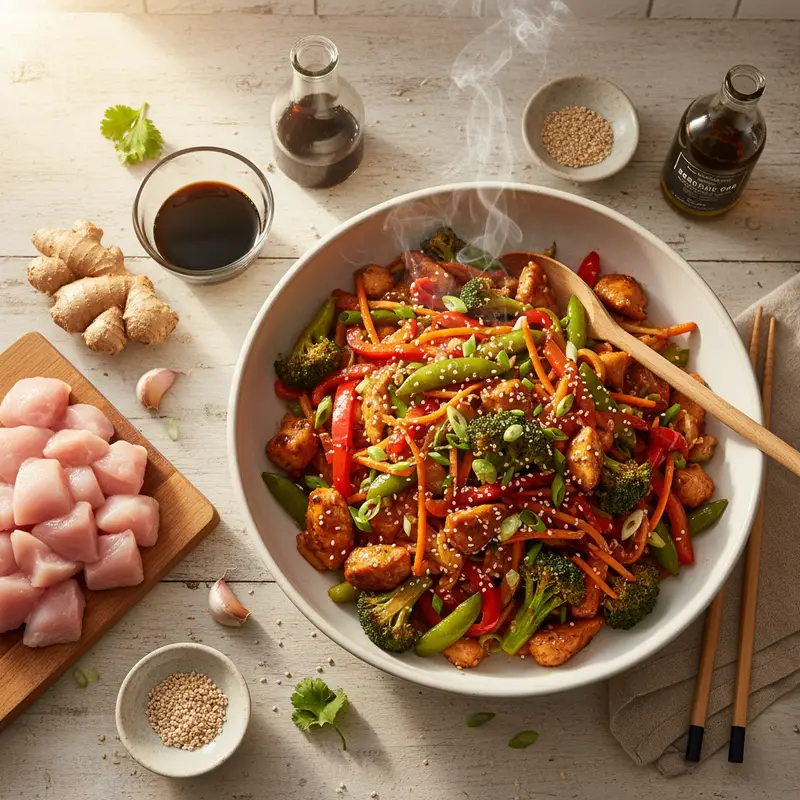
Chicken Stir Fry offers a remarkable solution for anyone seeking a nutrient-dense meal ready in under 20 minutes, combining lean protein and vibrant vegetables for a satisfying culinary experience. The culinary experts at evilchefmom understand the desire for both speed and flavour, providing a straightforward approach to creating a wholesome and flavourful supper that’s perfect for a busy UK household, ensuring a balanced diet and an easy Asian dinner.
🍳 How can you prepare a healthy and fast chicken stir fry in under 20 minutes?
Achieving a truly healthy and incredibly fast chicken and vegetable stir fry relies on strategic preparation and efficient cooking techniques. The goal is to maximise flavour and nutrient density while minimising time spent in the kitchen, a principle highly valued by UK families. A well-executed stir fry can deliver significant nutritional benefits. According to Public Health England, a balanced diet should include at least five portions of fruit and vegetables a day, and a well-packed stir fry can contribute substantially to this target. For instance, a typical serving of healthy stir fry can provide two to three portions of diverse vegetables, alongside lean protein from chicken breast, which is an excellent source of amino acids vital for muscle repair and growth.
The 15-minute timeframe for this chicken stir fry is not merely an aspiration but a practical reality, especially when adopting the ‘mise en place’ philosophy – having all ingredients chopped, measured, and ready before the cooking process begins. This pre-preparation is the cornerstone of efficient wok cooking. For example, if you allocate 5-7 minutes for chopping vegetables and chicken, 2-3 minutes for sauce mixing, and 8-10 minutes for actual cooking, the entire process fits comfortably within the 20-minute target. This approach not only saves time but also reduces stress during peak dinner hours, transforming a potentially chaotic cooking experience into a smooth, enjoyable one. Modern culinary research consistently highlights the benefits of minimal cooking times for vegetable retention of heat-sensitive vitamins like Vitamin C, making this speedy supper a smart choice for health-conscious individuals.
🍢 What is the secret to making a simple soy, ginger, and garlic sauce from scratch?
The sauce is the soul of any delectable stir fry, tying all the vibrant components together. While store-bought options exist, crafting your own simple soy, ginger, and garlic sauce from scratch offers unparalleled control over flavour, sodium content, and freshness. This homemade approach ensures a cleaner taste profile, free from unnecessary additives often found in commercial sauces. For a truly authentic experience, the culinary experts at evilchefmom recommend using a good quality soy sauce, such as a Japanese Kikkoman or a Chinese light soy sauce, as its depth of flavour forms the foundation.
Fresh ginger and garlic are non-negotiable for their aromatic intensity and health benefits. Ginger is known for its anti-inflammatory properties, while garlic offers immune-boosting compounds. A typical sauce for two servings might consist of 3 tablespoons of light soy sauce, 1 tablespoon of rice vinegar (for a touch of acidity and brightness), 1 tablespoon of sesame oil (for nutty depth), 1 tablespoon of a natural sweetener like honey or maple syrup (to balance the saltiness), 1 inch of fresh ginger, grated, and 2-3 cloves of garlic, minced. For thickening, a slurry of 1 teaspoon of cornflour mixed with 2 tablespoons of cold water works wonders, ensuring the sauce clings beautifully to the ingredients. Whisking these ingredients together takes less than a minute, preparing a robust foundation for your easy Asian dinner.
What are the essential ingredients for a perfect homemade stir fry sauce?
The selection of ingredients for your stir fry sauce directly impacts the final flavour profile of your chicken and vegetable stir fry. Each component plays a crucial role in achieving that coveted balance.
- • Soy Sauce: The backbone of the sauce, providing a rich umami and salty foundation. Opt for a low-sodium variety to better control the seasoning.
- • Fresh Ginger: Essential for its pungent, slightly spicy, and aromatic qualities. Grating it finely releases maximum flavour.
- • Garlic: Provides a robust, savoury depth. Freshly minced garlic is always superior to pre-chopped or powdered versions for a vibrant teriyaki stir fry flavour.
- • Rice Vinegar: Adds a crucial tanginess that cuts through richness and brightens the overall flavour.
- • Sesame Oil: A finishing oil that imparts a distinctive nutty aroma and flavour. A little goes a long way.
- • Sweetener: Honey, maple syrup, or brown sugar can be used to balance the savoury and acidic notes, adding a pleasant glaze.
- • Cornflour (Cornstarch): Creates a light, glossy coating that ensures the sauce adheres beautifully to your chicken and vegetables.
How does balancing sauce flavours enhance the overall dish?
The art of a truly exceptional stir fry lies in the harmony of its sauce. A well-balanced sauce excites the palate, offering a delightful interplay of tastes rather than a monotonous flavour. For instance, too much soy sauce can make the dish overly salty, masking the freshness of the vegetables and chicken. Conversely, insufficient sweetness can leave the sauce tasting flat. The acidity from rice vinegar provides a crucial counterpoint, brightening the flavours and preventing the sauce from feeling heavy. This culinary mastery is what evilchefmom aims to inspire in every home cook.
Consider the impact of umami, the fifth basic taste, which is profoundly present in soy sauce. When combined with the pungency of ginger and garlic, the sweetness of honey, and the acidity of vinegar, it creates a multidimensional flavour experience. This balance ensures that each bite of your chicken stir fry is vibrant and engaging. Culinary science supports this approach, indicating that a complex flavour profile, achieved through balanced taste elements, enhances overall meal satisfaction and contributes to a positive dining experience.
🥦 Why is uniform chopping of vegetables crucial for even cooking in a stir fry?
The success of a swift and superb stir fry hinges significantly on the preparation of your vegetables. Unevenly chopped vegetables lead to inconsistent cooking – some pieces might be perfectly tender-crisp, while others remain raw or turn mushy. This compromises both the texture and the visual appeal of your healthy chicken and vegetable stir fry. The principle is simple: smaller pieces cook faster than larger ones. Therefore, for a 15-minute stir fry, consistency in size is paramount.
Consider a bell pepper and broccoli florets. If the bell pepper is cut into large chunks and the broccoli into tiny florets, they will require vastly different cooking times. By cutting them into similar, bite-sized pieces – approximately 1-2 cm for most vegetables – you can introduce them to the wok in a staggered order (harder vegetables first, then softer ones) and expect them all to be perfectly cooked within minutes. This meticulous preparation is a hallmark of efficient wok cooking, allowing each component to retain its vibrant colour, distinct flavour, and nutritional integrity.
Which vegetables are best for a quick chicken and vegetable stir fry?
Selecting the right combination of vegetables is key to a dynamic and delicious stir fry. The culinary experts at evilchefmom suggest focusing on a mix of textures and colours for both visual appeal and nutritional variety.
| Vegetable | Recommended Cut | Cooking Time (approx.) |
|---|---|---|
| Broccoli Florets | Small, bite-sized (1-2 cm) | 3-4 minutes |
| Bell Peppers (various colours) | Thin strips or 2 cm squares | 2-3 minutes |
| Carrots | Julienned or thin slices | 3-4 minutes |
| Mange Tout / Sugar Snap Peas | Whole | 1-2 minutes |
| Mushrooms (e.g., Shiitake, Chestnut) | Sliced | 2-3 minutes |
| Spring Onions (Scallions) | Sliced (white and green parts separated) | 1 minute (green parts at end) |
Incorporating a variety like this not only enhances the flavour and texture but also provides a broad spectrum of vitamins and minerals. For instance, bell peppers are rich in Vitamin C, broccoli offers Vitamin K and fibre, and carrots are packed with Vitamin A. This colourful medley ensures a truly healthy stir fry.
What is the optimal cutting technique for stir-fry vegetables?
Mastering vegetable preparation is a cornerstone of effective wok cooking. The objective is to achieve pieces that cook quickly and evenly without becoming soggy or remaining crunchy. For harder vegetables like carrots and broccoli stems, julienning (cutting into thin matchsticks) or thin slicing is ideal. For softer vegetables such as bell peppers or courgettes, cutting into consistent 2 cm squares or thin strips works well.
For chicken, cut it into uniform 1-inch (2.5 cm) pieces. This size allows it to cook through quickly and sear beautifully without drying out. The precision in these cuts not only optimises cooking time but also enhances the dish’s aesthetic appeal, making your chicken stir fry a feast for both the eyes and the palate. The process, while seemingly simple, is a testament to the fact that culinary success often lies in the details, a philosophy upheld by the culinary experts at evilchefmom.
🔥 What is the importance of high heat for searing meat in a stir fry?
The hallmark of an exceptional chicken stir fry is perfectly seared chicken – golden-brown on the outside, tender and juicy within. This desirable outcome is exclusively achieved through the application of very high heat. When a wok or large frying pan is intensely hot, the chicken pieces hit the surface and immediately undergo the Maillard reaction, a complex chemical process that transforms amino acids and sugars into hundreds of new flavour compounds, creating that irresistible savoury crust.
Without sufficient heat, the chicken will release its moisture too quickly, causing the pan temperature to drop. This leads to the chicken stewing in its own juices rather than searing, resulting in pale, rubbery, and less flavourful pieces. For optimal wok cooking, preheat your pan until it’s smoking slightly before adding oil. Then, add the chicken in batches if necessary, ensuring not to overcrowd the pan, which would also lower the temperature. This technique ensures each piece of chicken achieves that desired crispy exterior and moist interior, elevating the entire easy Asian dinner.
What is the ideal temperature for achieving perfect chicken searing?
To achieve that coveted golden-brown sear on your chicken, your cooking vessel, whether a traditional wok or a large skillet, needs to be intensely hot. The surface temperature should ideally be in the range of 170°C to 200°C (340°F to 390°F). This high temperature facilitates the rapid evaporation of surface moisture, allowing the Maillard reaction to occur almost instantly.
For home cooks, this means heating your wok over the highest setting until it begins to visibly smoke, typically taking 2-3 minutes on a powerful hob. Then, add a high smoke point oil like groundnut, rapeseed, or sunflower oil, allowing it to shimmer for about 30 seconds before introducing the chicken. This ensures that the chicken pieces immediately begin to sear, developing rich flavours and a delightful texture, contributing significantly to a truly delicious chicken stir fry.
How does the Maillard reaction enhance the flavour of chicken stir fry?
The Maillard reaction, often described as the browning reaction, is a cornerstone of exquisite cooking, particularly in high-heat applications like wok cooking. It is responsible for the enticing aroma and complex flavour of seared meats, roasted coffee, and baked bread. In the context of chicken stir fry, this reaction is what elevates plain chicken into succulent, flavour-packed morsels.
When chicken is exposed to high heat (above 140°C or 285°F), the amino acids and sugars on its surface begin to react, forming a vast array of compounds that contribute to its golden-brown colour and savoury, slightly nutty, and roasted notes. This process also creates a barrier that helps retain the chicken’s internal moisture, ensuring a juicy result. Without the Maillard reaction, the chicken would simply boil or steam, lacking the depth of flavour and appealing texture that makes a stir fry truly irresistible. The culinary experts at evilchefmom emphasize this scientific principle to empower home cooks with consistent, restaurant-quality results in their easy chicken stir fry recipe.
🍚 What are the best bases for serving a healthy chicken stir fry?
The choice of base significantly influences the overall nutritional value and culinary experience of your chicken stir fry. Each option brings its unique qualities, catering to various dietary preferences and energy requirements.
- • Rice: A classic choice, both white and brown rice offer a comforting foundation. Brown rice, a whole grain, provides more fibre and a lower glycaemic index, contributing to sustained energy release, which is excellent for a healthy stir fry. A 100g serving of cooked brown rice contains approximately 3g of fibre, compared to 0.5g in white rice.
- • Cauliflower Rice: For those seeking a low-carb, gluten-free, or calorie-reduced alternative, cauliflower rice is an outstanding option. It significantly boosts vegetable intake and provides a light, almost neutral base that allows the stir fry flavours to shine. A 100g serving contains only about 25 calories and 5g of carbohydrates, compared to roughly 130 calories and 28g of carbohydrates in cooked white rice.
- • Noodles: Rice noodles, egg noodles, or even wholewheat noodles offer a different textural experience. Rice noodles are naturally gluten-free and cook very quickly, making them ideal for a speedy supper. Egg noodles provide a richer flavour and chewiness.
The selection truly comes down to personal preference and dietary goals. Each option provides a wonderful complement to the vibrant flavours and textures of your stir fry.
What are the nutritional benefits of different stir fry bases?
Understanding the nutritional impact of your chosen base is crucial for optimising your healthy stir fry.
| Base Option | Key Nutritional Benefits (per 100g cooked) | Dietary Suitability |
|---|---|---|
| Brown Rice | ~110 kcal, ~23g carbs, ~2.5g fibre. Rich in magnesium, selenium. Slow-release energy. | General healthy eating, sustained energy, higher fibre diets. |
| White Rice | ~130 kcal, ~28g carbs, ~0.4g fibre. Quick energy source. | Quick energy, easily digestible, traditional Asian meals. |
| Cauliflower Rice | ~25 kcal, ~5g carbs, ~2g fibre. High in Vitamin C, K. Low-carb, low-calorie. | Keto, low-carb, gluten-free, weight management diets. |
| Rice Noodles | ~109 kcal, ~24g carbs, ~0.6g fibre. Gluten-free. | Gluten-free diets, quick meal prep. |
| Egg Noodles | ~138 kcal, ~25g carbs, ~1.5g fibre. Contains protein from egg. | Those preferring a richer texture and flavour, general diets. |
By selecting a base that aligns with your specific nutritional goals, you can further enhance the positive impact of your chicken and vegetable stir fry on your diet.
How can you choose the best base to complement your healthy stir fry?
The decision for the perfect base is a personal one, guided by individual preferences and health objectives. For a truly light and vegetable-focused meal, cauliflower rice is an undisputed champion, seamlessly integrating into a low-carb lifestyle. If you require sustained energy for a busy day, brown rice offers a robust solution with its higher fibre content. For those who enjoy the classic Asian takeaway experience, rice noodles or egg noodles provide that authentic feel, making it a perfect easy Asian dinner.
Consider the overall texture you desire. Fluffy rice absorbs the sauce beautifully, noodles provide a delightful chew, and cauliflower rice offers a lighter, almost invisible base that lets the stir fry components truly shine. The culinary experts at evilchefmom encourage experimentation to discover which base best enhances your enjoyment of this versatile and healthy chicken stir fry.
🍽️ How do you craft a perfect 15-Minute Chicken Stir Fry with step-by-step guidance?
Here is a detailed, step-by-step guide from the culinary experts at evilchefmom to help you create a sensational 15-minute healthy chicken and veggie stir fry. This recipe is designed for two generous servings, perfect for a weeknight supper.
What ingredients are needed for a 15-minute chicken stir fry?
Yields: 2 servings
Prep time: 7 minutes
Cook time: 8 minutes
Total time: 15 minutes
Ingredients:
- • For the Chicken: 300g skinless, boneless chicken breast, cut into 2.5 cm (1-inch) pieces.
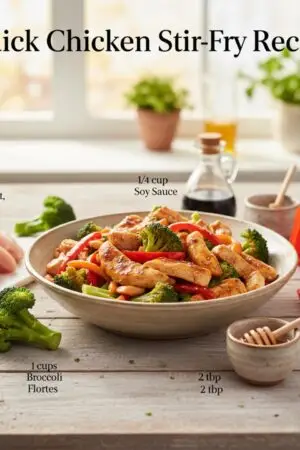
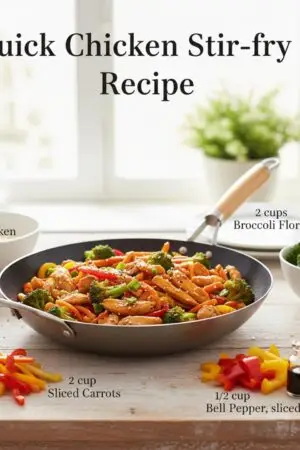
- • For the Vegetables: 300-400g mixed stir-fry friendly vegetables, such as 1 large bell pepper (sliced), 100g broccoli florets (small), 1 medium carrot (julienned), 75g mange tout/sugar snap peas, 50g sliced mushrooms, 2 spring onions (sliced, white and green separated).
-
• For the Sauce:
- – 3 tbsp low-sodium soy sauce
- – 1 tbsp rice vinegar
- – 1 tbsp sesame oil
- – 1 tbsp honey or maple syrup
- – 1 inch (2.5 cm) fresh ginger, grated
- – 3 cloves garlic, minced
- – 1 tsp cornflour (cornstarch)
- – 2 tbsp cold water (for cornflour slurry)
- • Cooking Oil: 1 tbsp high smoke point oil (groundnut, rapeseed, or sunflower oil).
- • For Serving: Cooked rice, cauliflower rice, or noodles.
What are the step-by-step instructions for cooking the stir fry?
Follow these precise steps for a flawless chicken and vegetable stir fry:
-
• Step 1: Prepare Everything (7 minutes).
- – Make the Sauce: In a small bowl, whisk together soy sauce, rice vinegar, sesame oil, honey, grated ginger, and minced garlic. In a separate tiny bowl, combine cornflour and cold water to create a slurry. Set both aside.
- – Chop Ingredients: Cut chicken into uniform 2.5 cm pieces. Prepare all vegetables according to the recommended cuts (e.g., bell peppers into 2 cm squares, broccoli into small florets, carrots julienned). Keep harder vegetables (broccoli, carrots) separate from softer ones (bell peppers, mushrooms, mange tout).
- – Cook Base: If using rice or noodles, ensure they are cooked and ready to serve. This can be done concurrently with prep.
-
• Step 2: Sear the Chicken (3 minutes).
- – Heat your wok or large frying pan over high heat for 2 minutes until very hot and slightly smoking. Add 1 tbsp of high smoke point cooking oil.
- – Add chicken pieces in a single layer, ensuring not to overcrowd the pan. Cook for 1.5-2 minutes without moving, allowing a beautiful sear to form. Flip and cook for another 1 minute until browned on all sides and mostly cooked through. Remove chicken from the pan and set aside.
-
• Step 3: Stir-Fry Vegetables (4 minutes).
- – If needed, add another teaspoon of oil to the hot pan. Add the harder vegetables (broccoli, carrots, white part of spring onions) and stir-fry for 2 minutes, tossing constantly.
- – Add the softer vegetables (bell peppers, mushrooms, mange tout) and stir-fry for another 1.5 minutes until tender-crisp.
-
• Step 4: Combine and Sauce (1 minute).
- – Return the seared chicken to the pan with the vegetables. Give the sauce a quick whisk, then pour it over the chicken and vegetables. Add the cornflour slurry and stir continuously for 30-60 seconds until the sauce thickens and coats all ingredients evenly.
- – Stir in the green parts of the spring onions.
-
• Step 5: Serve Immediately.
- – Transfer your healthy chicken and vegetable stir fry over your chosen base (rice, cauliflower rice, or noodles) and enjoy your nutrient-dense meal.
🌶️ How can you elevate your chicken stir fry with expert tips and customisations?
The beauty of a chicken stir fry lies in its incredible versatility. Once you master the basic technique, the possibilities for customisation are endless, allowing you to tailor the dish to your taste, dietary needs, and what’s available in your fridge. The culinary experts at evilchefmom encourage creative exploration to make this healthy stir fry truly your own.
How can you adapt a chicken stir fry recipe for different dietary needs?
The flexibility of chicken stir fry makes it an excellent choice for accommodating diverse dietary requirements.
- • Vegetarian/Vegan: Replace chicken with firm tofu (pressed and cubed), tempeh, or a variety of mushrooms. Ensure your soy sauce is vegan (most are, but check labels) and use maple syrup instead of honey.
- • Gluten-Free: Use tamari instead of regular soy sauce, as tamari is a gluten-free alternative that retains a rich, umami flavour. Opt for rice noodles or cauliflower rice as your base.
- • Low-Carb: Serve over cauliflower rice or spiralised courgette noodles. Increase the proportion of non-starchy vegetables like bell peppers, broccoli, and leafy greens.
- • Increased Protein: Add extra chicken, prawns, or edamame beans to boost the protein content, perfect for fitness enthusiasts.
These simple adjustments ensure that almost everyone can enjoy a customised and delicious stir fry, making it a truly inclusive easy Asian dinner option.
What are some innovative ways to customise your healthy chicken stir fry?
Beyond basic substitutions, there are many ways to infuse new life into your chicken stir fry and make it a regular highlight in your meal rotation.
- • Protein Variety: Instead of chicken, try thinly sliced beef, succulent prawns, or even a mix of seafood for a different flavour profile. Marinating tougher meats for 15-30 minutes can also enhance tenderness.
- • Flavour Boosters: For a spicier kick, add a pinch of dried chilli flakes or a dash of sriracha to your sauce. A squeeze of fresh lime juice at the end can add brightness. A teaspoon of fish sauce can also introduce an extra layer of umami complexity, creating a more sophisticated teriyaki stir fry flavour.
- • Exotic Vegetables: Introduce bok choy, baby corn, water chestnuts, or bamboo shoots for authentic Asian textures and flavours. These additions are excellent for a chicken and vegetable stir fry.
- • Garnishes: A sprinkle of toasted sesame seeds, chopped peanuts or cashews, fresh coriander, or extra spring onion greens can add a final flourish of texture and aromatic freshness.
- • Meal Prep: Prepare your sauce and chop all your vegetables a day or two in advance. Store them separately in airtight containers. This reduces your active cooking time on a busy weeknight to just 8-10 minutes, making it an ultimate speedy supper.
By embracing these customisation options, you can ensure that your chicken stir fry remains exciting, nutritious, and perfectly tailored to your evolving culinary preferences.
The 15-minute healthy chicken and veggie stir fry is a testament to the fact that wholesome, delicious food does not require hours in the kitchen. By focusing on smart preparation, a balanced homemade sauce, precise cooking techniques, and mindful choice of base, you can consistently achieve culinary excellence. This recipe is more than just a quick meal; it is a gateway to a more efficient, flavourful, and health-conscious approach to home cooking. The culinary experts at evilchefmom are delighted to share these insights, empowering you to create truly wonderful meals.
Don’t miss the opportunity to enhance your culinary skills and discover delightful recipes with the experts at evilchefmom. Visit evilchefmom.com today to explore premium kitchen resources and inspiring cooking solutions for your next meal. If you need expert advice or have any questions about our recipes or products, our professional team is always ready to assist you via our Hotline: 01386 423984, or visit us at: Unit 3, 56-58 Steward Street, Birmingham, B18 7AE. We believe that with the support of evilchefmom, your cooking skills will achieve outstanding results, winning the trust of users who will share, save and recommend our products, creating a strong impact.
📚 References
- • Public Health England: Eatwell Guide. https://www.gov.uk/government/publications/the-eatwell-guide
- • British Nutrition Foundation: Fibre. https://www.nutrition.org.uk/healthy-eating/basics/fibre/
- • Food Standards Agency: Cooking Safely. https://www.food.gov.uk/safety-hygiene/cooking-safely
- • European Food Information Council (EUFIC): What is Umami?. https://www.eufic.org/en/whats-in-food/article/what-is-umami
- • The Maillard Reaction: Chemistry and Applications. https://www.sciencedirect.com/topics/food-science-and-technology/maillard-reaction
Frequently Asked Questions
How can you prepare a healthy and fast chicken stir fry in under 20 minutes?
A healthy and fast chicken stir fry is achievable in under 20 minutes by meticulously preparing all ingredients before cooking, utilising high heat for rapid searing, and ensuring uniform vegetable cuts, allowing for maximum nutrient retention and optimal texture in minimal time.
What is the secret to making a simple soy, ginger, and garlic sauce from scratch?
The secret to a simple yet flavourful homemade soy, ginger, and garlic sauce lies in balancing authentic ingredients like quality soy sauce, fresh ginger, minced garlic, a touch of sweetness, and a thickening agent, ensuring a perfect umami-rich coating for your chicken stir fry.
Why is uniform chopping of vegetables crucial for even cooking in a stir fry?
Uniformly chopping vegetables for a stir fry is crucial because it ensures all ingredients cook evenly and reach their optimal tender-crisp texture simultaneously within the rapid cooking window, preventing some pieces from being undercooked or overcooked.