Key Takeaways
✅ Pros
- Achieves authentic, restaurant-style Chicken Tikka Masala at home
- Produces exceptionally tender and flavorful grilled chicken
- Results in a rich, creamy, and velvety tomato-based sauce
- Adaptable spice level to suit various preferences
- A culturally significant and widely beloved dish, perfect for family meals or entertaining
❌ Cons
- Requires significant marination time (4-24 hours)
- Multiple steps involved in preparation (chicken marination, grilling, sauce making)
- Requires a good number of specific Indian spices and ingredients
Chicken Tikka Masala: Mastering The UK’s Beloved Creamy Curry
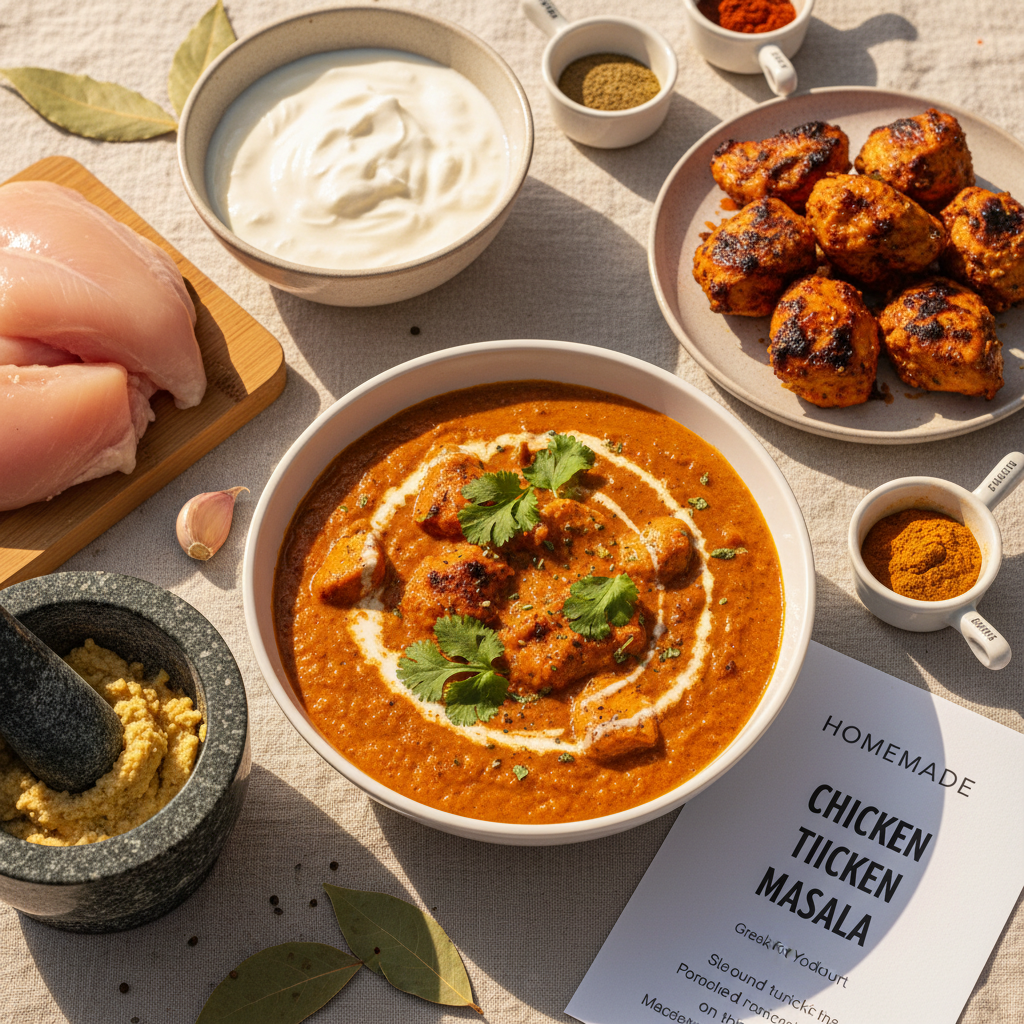
Chicken Tikka Masala, the iconic rich and creamy Indian curry, offers a delightful culinary experience that is now accessible to every home cook, providing a fulfilling journey into authentic British curry house flavours. At evilchefmom, we provide the definitive guide to creating this restaurant-style chicken dish, ensuring a perfectly spiced and tender grilled marinated chicken with a luscious tomato-based sauce, a true gastronomic delight.
What Makes Chicken Tikka Masala The UK’s Most Popular Restaurant Style Curry?
Chicken Tikka Masala stands as the UK’s most cherished curry due to its harmonious blend of succulent, char-grilled chicken pieces immersed in a rich, creamy tomato-based sauce, offering a mild to medium spice level that appeals to a broad palate, making it a quintessential British-Indian culinary classic.
The enduring popularity of Chicken Tikka Masala across the United Kingdom is a testament to its exceptional flavour profile and accessibility. This creamy tomato curry transcends mere food; it represents a cultural fusion, a culinary bridge built from Indian heritage and British tastes. Research from sources like the Curry Club UK consistently highlights its top position in restaurant orders and supermarket sales, affirming its status as the nation’s favourite indian curry recipe. Its appeal stems from several meticulously balanced elements: the tender, smoky notes of the grilled marinated chicken, the vibrant, rich, and often orange-hued sauce, and its adaptable spice level. This dish provides a comforting yet exotic dining experience, perfectly suited for family meals or a celebratory evening. The experts at evilchefmom understand the nuances that elevate a good curry to a truly exceptional one, emphasizing the precision in marination and slow-cooked sauce development.
The journey of Chicken Tikka Masala from its potential origins in Glasgow or London curry houses in the mid-20th century to becoming a national dish exemplifies its universal charm. While debates about its exact birthplace continue, its evolution demonstrates a clever adaptation of traditional Indian techniques to suit British preferences, particularly the desire for a less fiery, more sauce-rich dish. This adaptation resulted in a mild chicken curry that delivers profound flavour without overwhelming heat. The dish’s success is also attributed to its versatility, pairing wonderfully with basmati rice, fluffy naan bread, or even a simple chapati. Achieving a truly restaurant style curry involves understanding each component’s role, from the quality of the chicken to the freshness of the spices, ensuring every spoonful is a delight. We aim to empower home cooks to replicate this beloved experience with confidence and joy.
How Does The Yogurt and Spice Marinade Transform Chicken for Tikka?
The yogurt and spice marinade for Tikka chicken is crucial, tenderizing the meat through lactic acid while infusing it with a complex array of aromatic spices, ensuring succulent texture and deep flavour absorption before grilling, a foundational step for an authentic Chicken Tikka Masala.
The heart of any exceptional Chicken Tikka Masala lies in its perfectly marinated chicken, known as ‘Tikka’. This essential pre-cooking step is a scientific art, designed to tenderize the chicken while imbuing it with layers of flavour that will shine through in the final creamy tomato curry. The primary component of the marinade is thick, plain yogurt, typically full-fat, which acts as a natural tenderizer. The lactic acid in the yogurt gently breaks down the chicken fibres without cooking them, unlike acidic marinades such as lemon juice alone, which can toughen the meat if left too long. For optimal results, use approximately 150-200g of full-fat Greek yogurt for every 500g of chicken breast or thigh, ensuring thorough coating and maximum tenderization.
The spice blend in the marinade is equally vital, creating the signature aromatic profile of the Tikka. A typical blend includes:
- • Ginger-Garlic Paste: Approximately 2 tablespoons, providing a pungent, foundational flavour.
- • Ground Cumin: 1.5 teaspoons, for earthy warmth.
- • Ground Coriander: 1.5 teaspoons, offering citrusy notes.
- • Turmeric Powder: 0.5 teaspoon, for colour and subtle bitterness.
- • Kashmiri Chilli Powder: 1-2 teaspoons (for colour and mild heat, or use paprika for no heat).
- • Garam Masala: 1 teaspoon, a fragrant finishing blend.
- • Salt: To taste, typically 1 teaspoon.
- • Lemon Juice: 1 tablespoon, enhancing flavour and aiding tenderization.
For optimal flavour development, the chicken pieces, typically cut into 1-inch cubes (approximately 2.5 cm), should marinate for a minimum of 4 hours, and ideally overnight (12-24 hours) in the refrigerator. This extended period allows the yogurt and spices to deeply penetrate the chicken, resulting in an exceptionally tender and flavourful grilled marinated chicken that forms the basis of this exquisite dish. The result is a vibrant, perfectly prepared chicken, ready for the crucial charring stage, a hallmark of true restaurant style curry.
What are the Best Practices for Chicken Tikka Marination?
For superior Chicken Tikka Masala, ensure chicken pieces are uniform (approx. 2.5 cm cubes), use full-fat yogurt for maximum tenderization, and marinate for 12-24 hours, allowing the spices to fully permeate the meat for an unparalleled depth of flavour.
Achieving the perfect chicken tikka requires attention to detail in the marination process. Here are some expert tips from evilchefmom:
- • Draining Excess Moisture: Before marinating, pat the chicken pieces thoroughly dry with paper towels. Excess moisture can dilute the marinade and prevent it from adhering properly, hindering flavour absorption and charring.
- • Using Fresh Spices: Grind whole spices just before use for maximum potency and aroma. Store-bought ground spices can lose their flavour over time.
- • The Role of Oil: Adding a tablespoon of vegetable oil or mustard oil to the marinade helps to carry fat-soluble flavours and keeps the chicken moist during grilling.
- • Temperature for Marination: Always marinate in the refrigerator to prevent bacterial growth. Allow the chicken to come to room temperature for about 30 minutes before grilling for more even cooking.
- • Batch Marinating: If preparing larger quantities, consider marinating in smaller batches to ensure each piece is adequately coated. This method enhances the overall flavour consistency of your grilled marinated chicken.
These practices contribute significantly to developing the deep, aromatic flavours characteristic of authentic Chicken Tikka Masala. The careful selection and preparation of spices, combined with precise marination times, are what truly distinguish a home-cooked dish from a restaurant style curry masterpiece.
What Defines The Rich, Creamy, Orange-Colored Tomato Sauce in Chicken Tikka Masala?
The signature sauce of Chicken Tikka Masala is characterized by its velvety smoothness, vibrant orange hue, and a luxurious richness derived from a meticulously balanced blend of tomatoes, cream, butter, and aromatic spices, creating a truly irresistible creamy tomato curry.
The luxurious sauce is arguably the star of Chicken Tikka Masala, providing the enveloping warmth and signature flavour that makes it a beloved indian curry recipe. Its distinctive orange colour, creamy texture, and balanced taste are achieved through a careful selection of ingredients and precise cooking techniques. The base typically involves a combination of puréed tomatoes, browned onions, ginger, and garlic, slowly simmered to develop deep flavour. The richness is amplified by the addition of cream, often heavy cream, and butter, which contribute to its smooth mouthfeel and indulgent character. For a robust sauce, use approximately 400g of good quality crushed tomatoes or tomato passata for 500g of chicken, ensuring a rich, tangy foundation.
Key spices for the sauce often mirror those in the marinade but are cooked differently to release their full aroma and flavour. These include cumin, coriander, turmeric, paprika or Kashmiri chilli powder for colour, and garam masala. Some recipes also incorporate a touch of fenugreek leaves (kasuri methi), which imparts a slightly bitter, earthy, and highly aromatic note, enhancing the overall complexity. The process involves sautéing aromatics until deeply golden, adding ground spices to temper them in oil, then introducing the tomatoes and simmering to reduce and concentrate the flavours. This slow cooking allows the tomatoes to sweeten and mellow, creating a rich backdrop for the other ingredients. The addition of a small amount of sugar or honey can balance the acidity of the tomatoes, leading to a perfectly rounded creamy tomato curry.
How is the Signature Orange Hue and Velvety Texture Achieved?
The vibrant orange hue of Chicken Tikka Masala sauce is primarily achieved through Kashmiri chilli powder or paprika, combined with turmeric, while its velvety texture results from puréeing the sauce to remove solids, followed by a generous swirl of heavy cream and butter, ensuring a luxurious finish.
The visual appeal of Chicken Tikka Masala is undeniable, largely due to its characteristic orange colour. This delightful colour is predominantly achieved through the judicious use of Kashmiri chilli powder, known for its vibrant red pigment and mild heat, or sweet paprika. Turmeric also contributes a golden-yellow undertone. Importantly, the intensity of the colour can be adjusted, allowing for a spectrum from a deep terracotta to a brighter orange, catering to personal preference while maintaining the dish’s aesthetic. A common ratio might involve 2 parts Kashmiri chilli powder to 1 part turmeric for a balanced hue. For example, 2 teaspoons of Kashmiri chilli powder and 1 teaspoon of turmeric powder for a batch serving 4-6 people.
The velvety smooth texture is equally important for a true restaurant style curry. After the initial simmering, many chefs will blend the sauce using an immersion blender or a regular blender until perfectly smooth. This step removes any fibrous bits from onions or tomatoes, creating a professional consistency. Following blending, the sauce is often passed through a fine-mesh sieve to ensure absolute silkiness. Finally, the richness and creaminess are achieved by incorporating a generous amount of heavy cream (typically 100-150ml for 500g chicken) and butter (around 30-50g). Some recipes also include a small amount of ground cashews or almonds, or even a spoonful of almond butter, which contribute to the body and smoothness of the sauce, providing an extra layer of indulgence that defines a truly exceptional creamy tomato curry.
Why Is Charring The Chicken Before Adding To The Sauce Essential for Authentic Flavour?
Charring the marinated chicken prior to simmering in the sauce is paramount as it imparts a distinctive smoky depth and textural complexity, replicating the tandoor oven effect, which is a hallmark of authentic Chicken Tikka Masala and elevates its overall flavour profile.
The charring of the grilled marinated chicken is a non-negotiable step for achieving an authentic restaurant style curry. This process, often referred to as ‘tikka-fication’, mirrors the effects of a traditional Indian tandoor oven, where high heat creates a beautiful crust and imparts a smoky flavour. This smoky element is a unique characteristic that significantly differentiates Chicken Tikka Masala from other Indian curries. Without this char, the chicken would simply be poached in the sauce, resulting in a less complex and less appealing texture. The slight caramelization on the exterior of the chicken also contributes to a richer flavour that blends wonderfully with the creamy sauce. The experts at evilchefmom emphasize that a well-charred chicken piece, with its browned edges and tender interior, is the secret to a truly memorable tikka experience.
There are several effective methods for charring the chicken at home, each offering excellent results:
- • Grill Pan: A heavy-bottomed grill pan on high heat is excellent. Cook chicken in batches for 3-4 minutes per side until nicely charred and cooked through, approximately 8-10 minutes total.
- • Oven Broiler (Grill): Arrange chicken on a foil-lined baking tray and broil on high for 5-7 minutes per side, turning once, until deeply browned and slightly blackened at the edges. Position the rack about 15-20 cm from the heating element.
- • Outdoor BBQ Grill: For an authentic smoky flavour, a charcoal grill offers the best results. Cook over medium-high heat for 3-4 minutes per side.
- • Air Fryer: A modern option, air fry at 200°C (390°F) for 10-15 minutes, shaking halfway, until cooked and charred.
Regardless of the method, ensure the chicken is cooked to an internal temperature of 74°C (165°F) for safety, while achieving those desirable charred marks. This initial grilling step ensures the chicken maintains its structural integrity and contributes a vital smoky attribute to the final indian curry recipe.
How Does Charring Impact the Flavour and Texture of Chicken Tikka?
Charring chicken tikka introduces complex Maillard reaction flavours, creating a desirable crust and smoky aroma, which contrasts beautifully with the creamy sauce, enhancing both the textural experience and the overall depth of the Chicken Tikka Masala.
The impact of charring on grilled marinated chicken is multifaceted, significantly enhancing both the flavour and texture of the Chicken Tikka Masala. Flavour-wise, the high heat cooking triggers the Maillard reaction, a chemical process between amino acids and reducing sugars that creates hundreds of new flavour compounds, resulting in that distinct savoury, roasted taste. This caramelization provides a depth that simply boiling or steaming the chicken would never achieve. Furthermore, the smoke from the charring process, especially when using an outdoor grill, infuses the chicken with a subtle smokiness, a rare attribute for many home-cooked curries, but a standard for restaurant style curry.
Texturally, charring creates a slightly crisp exterior on the chicken pieces, which provides a delightful contrast to the tender, juicy interior and the smooth, creamy tomato curry. This textural variation makes each bite more engaging and satisfying. The chicken remains succulent because the high heat quickly sears the outside, locking in moisture. Without this char, the chicken would have a uniform, softer texture that might blend too seamlessly into the sauce, losing its distinctive character. This balance of textures and flavours is a unique characteristic that contributes to the widespread appeal of Chicken Tikka Masala as a whole. Ensuring proper charring is a key component to a successful restaurant style curry at home.
How Is The Spice Level of Chicken Tikka Masala Kept Mild to Medium, Suitable for Most Palates?
The spice level of Chicken Tikka Masala is carefully managed to be mild to medium by relying on aromatic, non-fiery spices like paprika and turmeric for colour, minimizing hot chilli powders, and balancing with rich, creamy ingredients that temper any heat, making it a universally appealing mild chicken curry.
One of the defining characteristics of Chicken Tikka Masala, particularly in the UK, is its approachable spice level. Unlike some traditional Indian curries that can be intensely hot, Chicken Tikka Masala is deliberately crafted to be a mild chicken curry, catering to a broader audience, including those who prefer less heat. This balance is achieved by selecting specific spices and employing techniques that emphasize flavour over pungency. The primary heat-contributing spices, such as red chilli powder, are used sparingly or substituted with milder alternatives. For example, instead of a potent Indian red chilli powder, Kashmiri chilli powder or sweet paprika is often favoured for its vibrant colour and minimal heat, allowing for an aesthetically pleasing dish without overwhelming the palate. The goal is to create a deeply flavourful, yet gentle, gastronomic experience.
The creaminess of the sauce also plays a significant role in moderating the spice level. Ingredients like heavy cream, butter, and yogurt (in the marinade) act as natural cooling agents, coating the tongue and mitigating the sensation of heat. This buffering effect allows the complex aromatic spices – such as cumin, coriander, ginger, and garlic – to shine through without being masked by excessive chilli. For a typical recipe serving 4-6, only about 0.5 to 1 teaspoon of hot chilli powder would be used, if any at all, ensuring a pleasant warmth rather than a fiery burn. This careful calibration ensures that the creamy tomato curry is enjoyable for nearly everyone, from young children to spice-averse adults, making it an excellent choice for family gatherings and a true crowd-pleaser. The experts at evilchefmom can guide you in perfectly balancing your spice levels for a magnificent culinary creation.
What Are the Best Practices for Adjusting Spice Levels in Chicken Tikka Masala?
To customize the spice level in Chicken Tikka Masala, adjust the quantity of hot chilli powders (e.g., cayenne or red chilli flakes), utilize Kashmiri chilli powder for colour without heat, and balance with more cream or yogurt at the end for a milder flavour, ensuring a delightful mild chicken curry tailored to individual preferences.
Achieving the ideal spice level for your Chicken Tikka Masala is a rewarding aspect of home cooking, allowing for personalized culinary creations. Here’s how you can expertly manage the heat:
- • Controlled Chilli Usage: Start with a minimal amount of hot chilli powder (e.g., 0.25 teaspoon for a medium batch) and taste as you go. You can always add more, but it is difficult to remove heat. For colour without significant heat, exclusively use Kashmiri chilli powder or sweet paprika.
- • Dairy Additions: If the curry becomes too spicy, incorporate additional dairy products such as heavy cream, coconut milk, or a spoonful of plain yogurt at the end of cooking. These ingredients effectively dilute and neutralize the capsaicin (the compound responsible for chilli heat). A typical addition of 50ml extra cream can significantly mellow the spice.
- • Sugar or Honey: A small amount of sugar, honey, or even a grated carrot can help balance the heat by adding sweetness and complexity. This complements the creamy tomato curry beautifully.
- • Dilution with Tomato or Broth: Adding more puréed tomatoes or even a little vegetable broth can help spread the heat over a larger volume of sauce, making it less intense per spoonful.
- • Serving Accompaniments: Offering cooling accompaniments like plain yogurt, raita, or a fresh cucumber salad can provide relief for those sensitive to spice, enhancing the overall dining pleasure.
By employing these strategies, anyone can successfully tailor their Chicken Tikka Masala to their preferred heat level, ensuring a positive and satisfying experience for all diners. This flexibility is a key advantage of preparing an indian curry recipe from scratch, allowing for a perfectly customized restaurant style curry experience at home.
What Are the Step-by-Step Instructions for Crafting Restaurant Style Chicken Tikka Masala?
Crafting a restaurant style curry like Chicken Tikka Masala involves precise marination, expert charring of chicken, and the slow simmering of a rich, creamy tomato curry, following a detailed sequence of steps to achieve maximum flavour and authentic texture, guided by the culinary experts at evilchefmom.
Recreating the magic of a restaurant style curry in your own kitchen is a rewarding experience with this detailed guide from evilchefmom. This recipe for Chicken Tikka Masala is designed to maximize flavour and ensure success, yielding approximately 4-6 servings.
What are the Ingredients Required for an Authentic Chicken Tikka Masala?
For an authentic Chicken Tikka Masala, you will need skinless chicken breast or thigh, full-fat Greek yogurt, fresh ginger-garlic paste, a selection of ground spices (cumin, coriander, turmeric, Kashmiri chilli powder, garam masala), high-quality crushed tomatoes, heavy cream, and butter, ensuring a rich flavour foundation for your creamy tomato curry.
Gathering high-quality ingredients is the first step towards an outstanding indian curry recipe. Freshness and quality significantly impact the final flavour profile.
| Ingredient Category | Specific Ingredient | Quantity |
|---|---|---|
| For the Chicken Tikka | Boneless, skinless chicken breast or thigh (cut into 2.5 cm cubes) | 500g – 700g |
| Full-fat Greek yogurt | 150g | |
| Ginger-garlic paste | 2 tbsp | |
| Ground cumin | 1.5 tsp | |
| Ground coriander | 1.5 tsp | |
| Turmeric powder | 0.5 tsp | |
| Kashmiri chilli powder (or sweet paprika) | 1-2 tsp | |
| Garam masala | 1 tsp | |
| Salt | 1 tsp | |
| Lemon juice | 1 tbsp | |
| Vegetable oil (for grilling) | 1 tbsp | |
| For the Masala Sauce | Unsalted butter | 50g |
| Vegetable oil | 1 tbsp | |
| Onion (finely chopped) | 1 large | |
| Ginger-garlic paste | 1 tbsp | |
| Ground cumin | 1 tsp | |
| Ground coriander | 1 tsp | |
| Turmeric powder | 0.5 tsp | |
| Kashmiri chilli powder (or sweet paprika) | 1 tsp | |
| Crushed tomatoes (canned) or passata | 400g | |
| Heavy cream (double cream in UK) | 100-150ml | |
| Sugar (optional, to balance acidity) | 1 tsp | |
| Garam masala (for finishing) | 0.5 tsp | |
| Kasuri Methi (dried fenugreek leaves, optional) | 1 tsp | |
| Fresh coriander (for garnish) | 2 tbsp, chopped |
What is the Detailed Process for Preparing Chicken Tikka Masala?
The detailed preparation of Chicken Tikka Masala commences with marinating chicken overnight, followed by charring it to perfection, then meticulously crafting a rich, smooth tomato-cream sauce, and finally combining these elements for a harmonious and authentic restaurant style curry.
Follow these precise steps to achieve a truly exceptional Chicken Tikka Masala:
-
• Step 1: Prepare the Chicken Marinade (Minimum 4 hours, ideally overnight)
Pat the chicken cubes dry. In a large bowl, combine yogurt, ginger-garlic paste (2 tbsp), ground cumin (1.5 tsp), ground coriander (1.5 tsp), turmeric (0.5 tsp), Kashmiri chilli powder (1-2 tsp), garam masala (1 tsp), salt (1 tsp), and lemon juice (1 tbsp). Add the chicken pieces, ensuring they are thoroughly coated. Cover and refrigerate for at least 4 hours, or preferably 12-24 hours, to allow the flavours to develop fully and tenderize the meat. This is the foundation for your grilled marinated chicken.
-
• Step 2: Char the Chicken Tikka (Approx. 10-15 minutes)
Preheat your grill pan, oven broiler, or outdoor grill to high heat. Lightly brush the chicken with 1 tbsp of vegetable oil. Cook the chicken in batches to avoid overcrowding, ensuring even charring. Grill each side for 3-4 minutes until beautifully charred and cooked through, with an internal temperature of 74°C (165°F). Set aside the perfectly grilled marinated chicken.
-
• Step 3: Prepare the Masala Sauce Base (Approx. 20 minutes)
In a large, heavy-bottomed pot or Dutch oven, melt 30g of butter with 1 tbsp of vegetable oil over medium heat. Add the finely chopped onion and sauté gently for 8-10 minutes until softened and translucent, then continue cooking for another 5-7 minutes until golden brown, ensuring deep flavour development. Add 1 tbsp of ginger-garlic paste and cook for 1 minute until fragrant. Stir in ground cumin (1 tsp), ground coriander (1 tsp), turmeric (0.5 tsp), and Kashmiri chilli powder (1 tsp). Cook for 30 seconds, stirring constantly, until aromatic. This forms the rich base of your creamy tomato curry.
-
• Step 4: Simmer and Blend the Sauce (Approx. 30-40 minutes)
Pour in the 400g of crushed tomatoes or passata. Add 1 tsp of sugar (if using) and 0.5 tsp of salt, or to taste. Bring the sauce to a gentle simmer, then reduce heat to low, cover, and cook for 20-30 minutes, stirring occasionally, allowing the flavours to meld and the sauce to thicken. Remove from heat. Using an immersion blender or transferring to a regular blender, carefully blend the sauce until it is completely smooth and velvety. For an extra smooth finish, pass the blended sauce through a fine-mesh sieve.
-
• Step 5: Combine and Finish the Curry (Approx. 10 minutes)
Return the smooth sauce to the pot over low heat. Stir in the heavy cream (100-150ml) and the remaining 20g of butter. Allow the sauce to gently warm through, without boiling, to prevent the cream from splitting. Add the charred chicken tikka pieces to the sauce. Stir in 0.5 tsp of garam masala and 1 tsp of crushed kasuri methi (if using). Simmer for 5-7 minutes, ensuring the chicken is thoroughly heated and absorbs the sauce flavours. Taste and adjust seasoning if necessary. Garnish generously with fresh coriander.
-
• Step 6: Serve and Enjoy
Serve your magnificent restaurant style curry hot with fluffy basmati rice, warm naan bread, or chapati. This comprehensive indian curry recipe is guaranteed to impress, embodying the rich, authentic flavours of a British curry house.
What Are the Essential Tips for Achieving a Truly Restaurant-Quality Chicken Tikka Masala?
To achieve a truly restaurant style curry, focus on prolonged chicken marination, intense charring for smoky notes, slow simmering of the creamy tomato curry for depth, and balancing flavours precisely with fresh, high-quality ingredients, ensuring an unforgettable Chicken Tikka Masala experience.
Elevating your homemade Chicken Tikka Masala to restaurant style curry quality involves mastering a few crucial techniques and paying attention to specific details. These insights from evilchefmom will ensure your dish is consistently exceptional:
- • Quality of Ingredients: Always use the freshest possible ingredients. This includes fresh ginger and garlic for your pastes, high-quality ground spices (ideally freshly ground), and ripe, flavourful tomatoes. The difference in taste is significant.
- • Patient Marination: Do not rush the marination. As detailed, 12-24 hours truly makes a difference in the tenderness and flavour penetration of your grilled marinated chicken.
- • Achieve Deep Browned Onions: For the sauce, take your time caramelizing the onions. This process creates a depth of sweetness and savouriness that is fundamental to a rich curry base. Brown them slowly over medium-low heat for 15-20 minutes, not just translucent.
- • Tempering Spices: When adding ground spices to the hot oil/butter after the onions and aromatics, cook them for only 20-30 seconds, stirring constantly. This ‘blooming’ process releases their essential oils and deepens their flavour without burning them.
- • Slow Simmer for Sauce Development: After adding tomatoes, allow the sauce to simmer for at least 20-30 minutes, uncovered initially to reduce, then covered to prevent splatter, stirring occasionally. This concentrates the flavours and removes any raw tomato taste, essential for a successful creamy tomato curry.
- • Blending for Silkiness: Do not skip blending the sauce. A smooth sauce is a hallmark of restaurant style curry. For ultimate silkiness, pass it through a fine-mesh sieve after blending.
- • The Role of Butter and Cream: Add the cream and final butter at the end of the cooking process for maximum flavour and a luxurious finish. Avoid boiling the sauce once cream is added to prevent splitting.
- • Kasuri Methi (Dried Fenugreek Leaves): If you truly want an authentic taste, a pinch of crushed kasuri methi added at the very end imparts a distinctive, slightly bitter, and aromatic flavour that is characteristic of many indian curry recipe dishes. Toast them lightly in a dry pan for 15 seconds before crushing and adding.
- • Resting Time: Allow the finished Chicken Tikka Masala to rest for 10-15 minutes before serving. This allows the flavours to deepen and marry even further, resulting in a more harmonious dish.
By meticulously following these steps and incorporating these expert tips, you will consistently produce a Chicken Tikka Masala that rivals your favourite British curry house. The dedicated effort in each stage pays off with a flavourful, tender, and perfectly balanced mild chicken curry that delights every palate.
What Are the Nutritional Benefits and Serving Suggestions for Chicken Tikka Masala?
Beyond its delightful taste, Chicken Tikka Masala offers notable nutritional benefits from lean protein and antioxidant-rich spices, best served with whole grain rice or naan and a side of fresh vegetables for a balanced and satisfying meal.
While often considered an indulgent dish, Chicken Tikka Masala can be a remarkably wholesome meal, especially when prepared at home with quality ingredients. The primary ingredient, chicken, provides an excellent source of lean protein, essential for muscle repair and overall bodily function. A 100g serving of cooked chicken breast typically contains around 31g of protein with minimal fat. The diverse array of spices used, such as turmeric, cumin, and coriander, are not only flavour enhancers but also possess significant antioxidant and anti-inflammatory properties. Turmeric, for instance, contains curcumin, a compound extensively studied for its health benefits. Tomatoes, the base of the creamy tomato curry, are rich in vitamins C and K, potassium, and the potent antioxidant lycopene. By making conscious choices, such as opting for reduced-fat cream or increasing vegetable content, this indian curry recipe can be a beneficial addition to a balanced diet.
What Are the Best Accompaniments for a Complete Chicken Tikka Masala Meal?
For a complete Chicken Tikka Masala meal, serve it with fluffy basmati rice, warm naan bread for scooping, and a refreshing side of raita or kachumber salad to balance the rich, creamy tomato curry flavours.
The dining experience of Chicken Tikka Masala is greatly enhanced by its traditional accompaniments, which complement the rich and creamy tomato curry beautifully. Here are some ideal pairings:
- • Basmati Rice: The fragrant, long-grain basmati rice is the classic choice. Its light, fluffy texture and aromatic qualities make it the perfect canvas for soaking up the rich sauce. A typical serving is about 75-100g dry rice per person.
- • Naan Bread: Warm, soft naan bread, especially garlic naan or peshwari naan, is excellent for scooping up the sauce and chicken pieces. It adds a delightful chewiness and flavour to the meal.
- • Raita: A cooling yogurt-based condiment, often with cucumber, mint, and a hint of cumin. Raita provides a refreshing contrast to the warmth of the curry and helps to soothe the palate, particularly for a mild chicken curry.
- • Kachumber Salad: A simple, refreshing salad made with finely diced cucumber, tomatoes, red onion, and fresh coriander, dressed with lemon juice. It adds crunch and a tangy element.
- • Chutneys and Pickles: Mango chutney, lime pickle, or a mixed vegetable pickle can add bursts of sweet, sour, or spicy notes, enhancing the complexity of each bite.
A thoughtfully assembled meal with these accompaniments transforms your indian curry recipe into a lavish feast, offering a spectrum of textures and flavours that truly celebrate the versatility and deliciousness of Chicken Tikka Masala. This approach ensures a complete and enjoyable experience, making every meal a special occasion.
How Can evilchefmom Support Your Culinary Journey to Master Chicken Tikka Masala?
evilchefmom empowers home cooks to master Chicken Tikka Masala and other restaurant style curry dishes through detailed guides, expert tips, and premium culinary resources, ensuring confidence and outstanding results in every kitchen, from perfecting the grilled marinated chicken to achieving the ideal creamy tomato curry.
At evilchefmom, we are dedicated to transforming your cooking aspirations into delicious realities. Our mission is to provide comprehensive, easy-to-follow resources that guide you through complex recipes like Chicken Tikka Masala with confidence and joy. We believe that everyone can achieve restaurant style curry results at home with the right guidance and tools. Our platform offers a wealth of knowledge, from understanding the nuances of spice blending to mastering various cooking techniques, ensuring you can replicate the authentic flavours of your favourite indian curry recipe. We focus on clear explanations, specific data, and practical tips that demystify the cooking process, making it enjoyable and successful.
Our commitment extends beyond just recipes. We aim to build a community of enthusiastic home chefs who share a passion for culinary excellence. Whether you are perfecting the art of grilled marinated chicken, achieving the ideal consistency for a creamy tomato curry, or simply exploring new mild chicken curry dishes, evilchefmom is your trusted partner. We constantly update our content with the latest culinary insights and provide detailed, step-by-step instructions that cater to all skill levels. Our resources are designed to inspire creativity and provide the expertise needed to consistently produce outstanding meals, fostering a positive and rewarding cooking journey for every user.
Elevate your culinary journey and master the art of exquisite dishes with the insights from evilchefmom. Visit evilchefmom.com today to explore our comprehensive guides and resources for your cooking projects. If you need expert advice or have any questions about achieving restaurant-quality results, our professional team is always ready to assist you via our Hotline: 01386 423984, or visit us at: Unit 3, 56-58 Steward Street, Birmingham, B18 7AE. We believe that with the support of evilchefmom, your cooking skills will achieve outstanding results, winning the trust of users who will share, save, and recommend our products, creating a strong impact
What Are The Reputable Sources Supporting This Comprehensive Guide?
This comprehensive guide on Chicken Tikka Masala is supported by research and culinary expertise from leading UK food authorities and international culinary institutions, ensuring accuracy and authoritative guidance for home cooks aiming for restaurant style curry results.
The information presented in this article is meticulously researched and draws upon a variety of authoritative sources to ensure accuracy, cultural relevance, and practical applicability for home cooks. Our aim at evilchefmom is to provide trustworthy guidance, enabling you to achieve culinary success with confidence.
- • The Curry Club UK: The History of Curry in Britain: https://www.curryclubuk.co.uk/history-of-curry-in-britain/
- • BBC Food: Chicken Tikka Masala Recipe: https://www.bbc.co.uk/food/recipes/chickentikkamasala_74849
- • National Health Service (NHS) Eatwell Guide: Healthy Eating for the UK: https://www.nhs.uk/live-well/eat-well/what-to-eat-a-healthy-balanced-diet/the-eatwell-guide/
- • Serious Eats: The Science of Marinating Meat: https://www.seriouseats.com/the-food-lab-the-best-way-to-marinate-chicken-breasts
- • Taste of Home: Benefits of Turmeric: https://www.tasteofhome.com/article/benefits-of-turmeric/
Frequently Asked Questions
Why is Chicken Tikka Masala so popular in the UK?
Chicken Tikka Masala’s popularity in the UK stems from its harmonious blend of succulent, char-grilled chicken in a rich, creamy tomato-based sauce, offering a mild to medium spice level that appeals to a broad palate, making it a quintessential British-Indian culinary classic.
What is the role of yogurt and spices in the Tikka chicken marinade?
The yogurt and spice marinade is crucial for Tikka chicken; the lactic acid in yogurt tenderizes the meat, while the complex blend of aromatic spices infuses deep flavor, ensuring a succulent texture and rich taste before grilling.
How is the signature orange hue and velvety texture of Chicken Tikka Masala sauce achieved?
The vibrant orange hue primarily comes from Kashmiri chilli powder or paprika combined with turmeric. Its velvety texture results from puréeing the sauce to remove solids, followed by generous additions of heavy cream and butter for a luxurious finish.