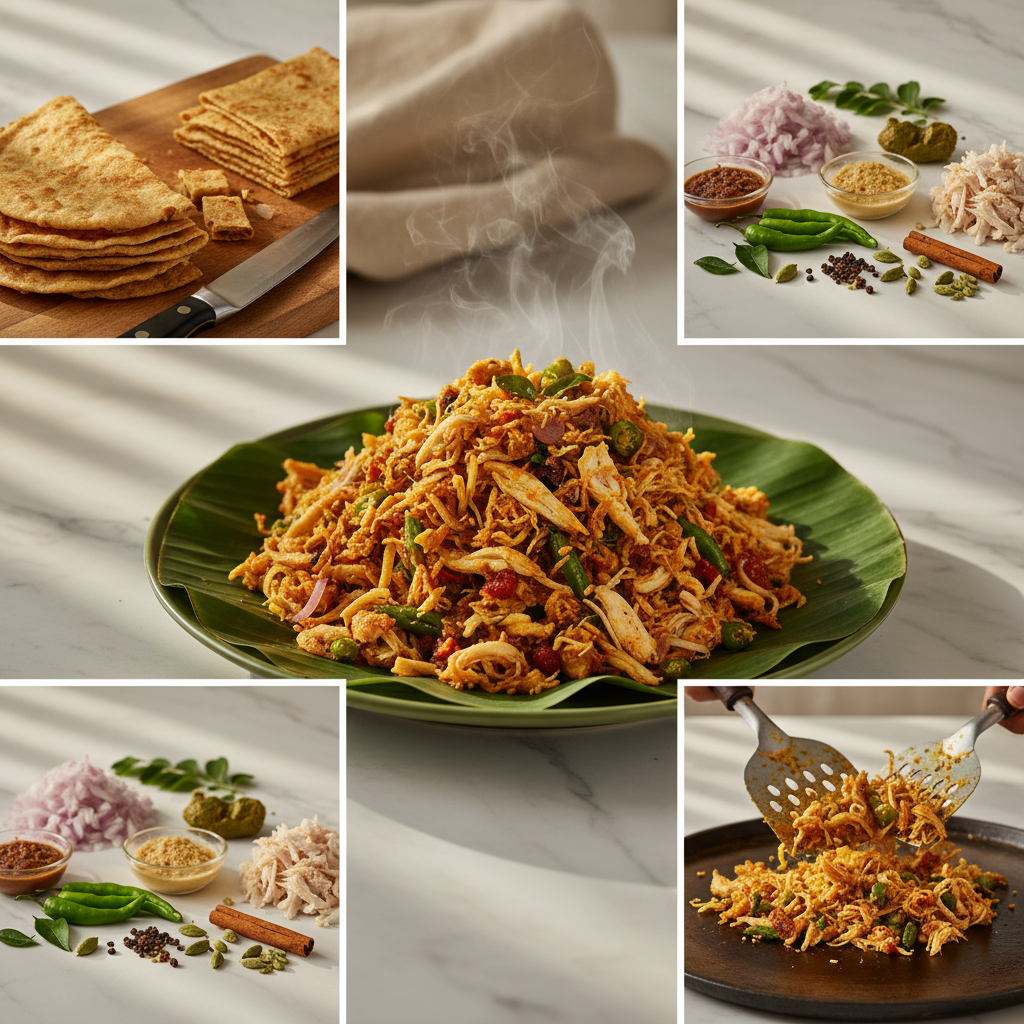
Key Takeaways
✅ Pros
- Bursting with authentic Sri Lankan flavors and aromatic spices
- Excellent way to use leftover chicken curry, adding depth of flavor
- Offers a satisfying blend of textures from soft roti, chewy chicken, and crunchy vegetables
- Economical and hearty meal, perfect for families or entertaining
- Recreates a unique street food experience at home
❌ Cons
- Requires specific Godhamba roti, which might be hard to find in some regions
- Mastering the traditional chopping technique with spatulas takes practice
- Extensive vegetable preparation (chopping and shredding) can be time-consuming
Chicken Kothu Roti: Authentic Sri Lankan Street Food Recipe
Chicken Kothu Roti, a vibrant and flavourful chopped roti stir fry, stands as an iconic sri lankan street food delight, offering a truly satisfying culinary journey for enthusiasts worldwide. With evilchefmom, you can effortlessly recreate this dynamic flatbread medley at home, transforming simple ingredients into a rich, spicy flatbread stir fry that is both economical and wonderfully delicious, perfect for any occasion.
What is Authentic Sri Lankan Chicken Kothu Roti, and How Can You Master Its Preparation?
Authentic Sri Lankan Chicken Kothu Roti is a beloved street food crafted from shredded roti, succulent chicken, vibrant vegetables, and aromatic spices, all expertly chopped and stir-fried on a hot griddle. Mastering its preparation involves understanding the rhythmic chopping technique and balancing the rich flavours for a truly immersive culinary experience.
Chicken Kothu Roti, often simply known as kottu recipe, represents the heart and soul of Sri Lankan street gastronomy. This unique dish originates from the Tamil language, where ‘kothu’ means to chop, perfectly describing its preparation method. It is a hearty, satisfying meal that has gained immense popularity not only across Sri Lanka but also among diverse communities globally, including a significant following within the UK. The dish’s appeal lies in its dynamic preparation, where ingredients are expertly sliced and diced on a sizzling hot griddle using sharp metal spatulas, creating a distinctive rhythmic sound that is synonymous with sri lankan street food culture. This culinary spectacle draws crowds, transforming cooking into an engaging performance.
The beauty of an authentic chicken kothu roti lies in its harmonious blend of textures and bold flavours. It typically features finely shredded Godhamba roti, a type of Sri Lankan flatbread, combined with tender pieces of chicken, often from a rich curry, alongside an assortment of finely chopped vegetables such as carrots, leeks, cabbage, and onions. Eggs are frequently scrambled into the mix, adding a creamy richness, while a powerful combination of aromatic spices, including curry powder, turmeric, and green chillies, infuses the dish with its characteristic warmth and heat. The entire concoction is stir-fried to perfection, ensuring every bite delivers a delightful interplay of soft bread, chewy chicken, and crunchy vegetables, all coated in a fragrant, spicy flatbread stir fry sauce. Mastering this preparation allows home cooks to recreate a genuine taste of Sri Lanka, offering a unique and satisfying meal that stands out.
What Essential Ingredients Do You Need for a Perfect Chicken Kothu Roti?
A perfect Chicken Kothu Roti requires fresh Godhamba roti, cooked chicken (ideally leftover curry recipe), a medley of finely chopped vegetables like carrots, cabbage, and leeks, along with eggs, ginger, garlic, and a robust blend of Sri Lankan spices for an unparalleled flavour profile.
The foundation of an exceptional chicken kothu roti lies in the quality and preparation of its core ingredients. Sourcing fresh, high-quality components ensures the best possible outcome for this delightful kottu recipe. For a serving of 4-6 individuals, consider these precise quantities and details for an optimal culinary experience, as recommended by the culinary experts at evilchefmom:
| Ingredient | Quantity (for 4-6 servings) | Notes & Preparation |
|---|---|---|
| Godhamba Roti | 8-10 pieces (approx. 500g) | Freshly made or good quality frozen. Shred into 1-inch pieces. |
| Cooked Chicken | 300-400g | Shredded, ideally from leftover curry recipe for enhanced flavour. |
| Onions | 2 large | Finely chopped. |
| Green Chillies | 3-5, or to taste | Finely sliced. Adjust quantity for desired spice level. |
| Garlic Paste | 1 tablespoon | Freshly made or good quality store-bought. |
| Ginger Paste | 1 tablespoon | Freshly made or good quality store-bought. |
| Curry Leaves | 2 sprigs (approx. 20 leaves) | Fresh for best aroma. |
| Cabbage | 1 cup, shredded | Adds crunch and sweetness. |
| Carrots | 1/2 cup, finely julienned | For colour and subtle sweetness. |
| Leeks | 1 cup, thinly sliced | A classic Sri Lankan addition, provides mild onion flavour. |
| Eggs | 2-3 large | Lightly beaten. |
| Sri Lankan Roasted Curry Powder | 2 tablespoons | Essential for authentic flavour. |
| Turmeric Powder | 1/2 teaspoon | For colour and earthy notes. |
| Chilli Powder | 1 teaspoon, or to taste | Adds heat, adjustable. |
| Vegetable Oil | 3-4 tablespoons | For stir-frying. |
| Salt and Pepper | To taste | Seasoning throughout. |
The choice of roti is paramount for this chopped roti stir fry. Godhamba roti, a thin, flaky flatbread, is traditionally used due to its ability to absorb flavours and achieve the perfect texture when chopped. While fresh is always best, many Asian supermarkets in the UK offer good quality frozen alternatives that work well. For the chicken, using leftover curry recipe chicken is a brilliant hack, infusing the kothu with an immediate depth of flavour and contributing to a delightful, rich base. This approach also champions sustainability by reducing food waste, a concept increasingly valued by UK households. The vegetables not only add colour and essential nutrients but also contribute significantly to the dish’s characteristic crunch, creating a balanced and appealing mouthfeel.
How Can You Efficiently Prepare the Components for Your Kothu Roti?
Efficient preparation for Chicken Kothu Roti involves finely shredding roti and chicken, precisely chopping vegetables into uniform sizes, and preparing a fragrant spice paste. This organised approach ensures a smooth cooking process and a perfectly balanced spicy flatbread stir fry.
Effective mise en place is the secret to mastering any complex dish, and chicken kothu roti is no exception. Given the rapid cooking time on the griddle, having all components prepped and ready ensures a seamless and enjoyable cooking experience. The culinary team at evilchefmom offers these insights for streamlined preparation:
- • Roti Preparation: If using fresh Godhamba roti, ensure it is cooled completely before shredding. Warm roti tends to tear rather than shred cleanly. If using frozen roti, thaw it thoroughly and lightly toast it on a dry pan for 30 seconds per side to make it pliable and easier to shred. Aim for pieces approximately 1 inch in size. For best results, some chefs recommend lightly chilling the prepared roti for 15-20 minutes, which can prevent it from clumping during the stir-fry.
- • Chicken Shredding: If utilising leftover curry recipe chicken, gently pull the meat from the bone and shred it into small, manageable pieces. If starting with raw chicken, poach or boil chicken breasts (around 300-400g) until fully cooked, then cool and shred. Ensure the chicken is moist; if it seems dry, a tablespoon of chicken stock or leftover curry sauce can be added to the shredded meat.
-
• Vegetable Chopping: Precision in chopping vegetables is key for uniform cooking and a pleasing texture.
- – Onions: Dice two large onions finely.
- – Green Chillies: Slice 3-5 green chillies thinly for an even distribution of spice.
- – Cabbage: Shred 1 cup of cabbage into thin strips, approximately 1-2 inches long.
- – Carrots: Julienne 1/2 cup of carrots into thin matchsticks, about 1.5 inches long.
- – Leeks: Thinly slice 1 cup of leeks, including the green parts for vibrant colour and flavour.
- • Spice Mix Preparation: Combine 2 tablespoons of Sri Lankan roasted curry powder, 1/2 teaspoon of turmeric powder, and 1 teaspoon of chilli powder in a small bowl. This pre-mix ensures even distribution and prevents burning individual spices during cooking. Have 1 tablespoon each of ginger paste and garlic paste ready.
- • Egg Preparation: Lightly beat 2-3 large eggs in a bowl with a pinch of salt and pepper.
While traditional kothu involves extensive hand chopping, using a food processor for certain vegetables like cabbage or carrots can significantly reduce preparation time without compromising the overall quality, particularly for home cooks in the UK with busy schedules. However, for a truly authentic sri lankan street food experience, hand chopping allows for greater control over the final texture and ensures that the ingredients maintain their individual integrity before being mixed into the cohesive chopped roti stir fry.
What is the Signature Chopping Technique for Kothu Roti, and How Do You Master It?
The signature chopping technique for Kothu Roti, known as the ‘kothu’ rhythm, involves using two metal spatulas or scrapers to rapidly chop and mix ingredients on a hot griddle. Mastering this rhythmic action is crucial for achieving the dish’s characteristic finely shredded texture and perfectly integrated flavours.
The heart of an authentic chicken kothu roti experience is undoubtedly the mesmerising ‘kothu’ sound, a rhythmic symphony created by the continuous chopping on the griddle. This isn’t merely a culinary technique; it’s an art form and a defining characteristic of this iconic sri lankan street food. The sound attracts customers and signals the preparation of a fresh, hot batch of chopped roti stir fry. For home cooks, while achieving the exact speed of a seasoned street vendor takes practice, the principles are easily applied.
The essential tools for this technique are a large, flat griddle (a heavy-bottomed cast iron pan or a wide wok can suffice at home) and two sturdy metal spatulas or scrapers. The spatulas should have a relatively straight edge and be comfortable to hold, allowing for precise and forceful chopping. Here is a detailed guide to mastering the signature chopping for your kottu recipe:
- • Initial Chop and Mix: Once all ingredients (sautéed aromatics, vegetables, chicken, eggs, and roti) are combined on the griddle, use one spatula to gather a portion of the mixture. With the second spatula, begin a rapid, downward chopping motion. The goal is to break down the roti further and integrate all components thoroughly.
- • Rhythmic Chopping: The key is consistency. Alternate the chopping motion between the two spatulas, allowing them to strike the griddle with a satisfying clang. This rhythmic action not only chops but also mixes and folds the ingredients, ensuring an even distribution of flavour and spice. Imagine a drumbeat – steady and purposeful.
- • Incorporating All Elements: As you chop, occasionally use one spatula to scoop and fold the mixture from the sides towards the centre, ensuring no part of the dish is left unchopped or unmixed. This also allows for uniform browning and caramelisation on the hot surface, contributing to the dish’s complex flavour profile.
- • Achieving the Desired Texture: Continue chopping for approximately 5-7 minutes. The aim is for the roti pieces to be broken down to about 0.5-1 cm in size, perfectly integrated with the chicken and vegetables. The final texture should be a delightful mix: soft, slightly chewy roti, tender chicken, and crisp-tender vegetables. Over-chopping can turn the dish mushy, while under-chopping leaves large, unwieldy pieces.
- • Safety and Practice: Always ensure your griddle is stable. Practice with lighter ingredients first to get a feel for the rhythm and control. Maintaining a comfortable grip on the spatulas is key to preventing fatigue and ensuring smooth, consistent chops.
This rhythmic chopping not only homogenises the ingredients but also allows the flavours to meld beautifully, creating a single, cohesive, and incredibly satisfying dish. The physical act of chopping also adds to the sensory experience of cooking and eating this authentic Sri Lankan delight, making it a truly immersive culinary adventure.
What is the Step-by-Step Process to Cook Authentic Chicken Kothu Roti?
Cooking authentic Chicken Kothu Roti involves sequential steps: sautéing aromatics, stir-frying vegetables, incorporating chicken and spices, scrambling eggs, adding shredded roti, and finally engaging in the signature rhythmic chopping on a hot griddle to achieve a perfectly blended and textured chopped roti stir fry.
Recreating the vibrant energy and irresistible flavours of a sri lankan street food stall in your own kitchen is a truly rewarding experience. With meticulous preparation and adherence to these detailed steps, you can confidently craft a perfect chicken kothu roti, as guided by the expertise of evilchefmom. This recipe yields 4-6 generous servings and takes approximately 25-30 minutes of active cooking time after initial prep.
- • Step 1: Heat the Griddle/Wok. Place a large, flat griddle or a heavy-bottomed wok over medium-high heat. Add 2 tablespoons of vegetable oil. Allow the oil to heat until it shimmers, typically taking 2-3 minutes. A sufficiently hot surface is crucial for a proper stir-fry, ensuring vegetables retain their crispness and flavours develop rapidly.
- • Step 2: Sauté Aromatics. Add the finely chopped onions and curry leaves to the hot oil. Sauté for 3-4 minutes, stirring frequently, until the onions soften and turn translucent. Then, add the ginger paste, garlic paste, and sliced green chillies. Cook for another 1-2 minutes until fragrant, ensuring the raw smell of ginger and garlic dissipates. This aromatic base is fundamental to the spicy flatbread stir fry‘s depth.
- • Step 3: Stir-fry Vegetables. Introduce the julienned carrots, shredded cabbage, and sliced leeks to the griddle. Increase the heat slightly if necessary. Stir-fry for 4-5 minutes, or until the vegetables are crisp-tender. They should still have a pleasant bite, contributing to the dish’s varied texture. Season lightly with salt and pepper at this stage.
- • Step 4: Incorporate Chicken and Spices. Add the shredded cooked chicken (especially if it’s from a leftover curry recipe, it brings incredible flavour) to the vegetable mixture. Sprinkle in the Sri Lankan roasted curry powder, turmeric powder, and chilli powder. Mix thoroughly, ensuring the chicken and vegetables are evenly coated with the fragrant spice blend. Cook for 2-3 minutes, allowing the spices to toast and release their full aroma.
- • Step 5: Scramble the Eggs. Create a small well in the centre of the mixture on the griddle. Pour the lightly beaten eggs into this space. Allow the eggs to set for about 30 seconds, then gently scramble them with a spatula until just cooked but still moist. Once scrambled, quickly incorporate the eggs into the rest of the ingredients, ensuring they are evenly distributed.
- • Step 6: Add Roti and Begin Chopping. Add the shredded Godhamba roti to the griddle. At this point, the entire mixture should cover a significant portion of your cooking surface. Using two metal spatulas, begin the signature ‘kothu’ chopping. Start by gently folding the roti into the other ingredients to combine them. Then, with a rhythmic motion, chop the mixture, breaking down the roti pieces further and thoroughly mixing all components. Continue this for 5-7 minutes.
- • Step 7: Final Seasoning and Serve. Taste the kottu recipe and adjust seasoning with additional salt and pepper if needed. Ensure the texture is a pleasing blend of soft, chewy, and crunchy elements. Serve immediately, piping hot, for the best experience.
The dynamic nature of cooking chicken kothu roti on a large griddle is part of its charm. It is an interactive cooking process that yields a deeply satisfying and flavour-packed meal, perfectly illustrating the vibrant culinary traditions of Sri Lanka.
How Can You Adjust the Spice Level and Flavour Profile of Your Chicken Kothu Roti?
You can adjust the spice level of your Chicken Kothu Roti by varying the amount of green chillies and chilli powder, while enhancing its flavour profile involves incorporating additional aromatics like pandan leaves or a squeeze of fresh lime juice for a brighter, more complex taste.
The beauty of cooking sri lankan street food at home lies in the flexibility to tailor it precisely to your palate. While authentic chicken kothu roti is known for its bold and often fiery spice, it is entirely possible to adjust the heat to suit individual preferences, particularly for a UK audience that may prefer a milder kick. The culinary experts at evilchefmom recommend these strategies for customising your kottu recipe:
-
• Controlling the Heat:
- – Green Chillies: These are the primary source of fresh heat. For a milder dish, reduce the number of green chillies to 1-2, or remove the seeds before slicing. For a spicier version, increase to 5-7, or even use a hotter variety if desired.
- – Chilli Powder: This adds a deeper, lingering heat. Start with 1/2 teaspoon for a moderate spice level and increase to 1.5-2 teaspoons for a robust kick. Using a Kashmiri chilli powder offers a vibrant colour with less intense heat.
- – Dried Red Chillies: For an extra layer of heat and smokiness, a few dried red chillies can be added during the sautéing of aromatics. Crush them slightly to release their oils.
-
• Enhancing Aromatic Depth:
- – Pandan Leaves: A small piece (2-3 inches) of pandan leaf, added with the curry leaves, imparts a uniquely sweet, vanilla-like aroma that complements the savoury spicy flatbread stir fry beautifully.
- – Extra Curry Leaves: Fresh curry leaves are indispensable. Adding an additional sprig or two towards the end of cooking can brighten the overall aroma.
- – Lime Juice: A final squeeze of fresh lime juice just before serving adds a zesty brightness that cuts through the richness and elevates the entire flavour profile, offering a refreshing counterpoint to the spice.
- – Tomato Paste/Chopped Tomatoes: For a slightly richer, tangier flavour, a tablespoon of tomato paste or a quarter cup of finely chopped fresh tomatoes can be added after the onions, cooking until the moisture evaporates.
-
• Serving Accompaniments:
- – Sambols: A dollop of pol sambol (coconut sambol) or katta sambol (chilli paste) on the side provides an additional burst of flavour and heat, allowing diners to customise each bite.
- – Yoghurt/Raita: For those who find the dish too spicy, a cooling side of plain yoghurt or a simple cucumber raita offers a refreshing contrast, effectively balancing the heat.
By thoughtfully adjusting these elements, you can create a chopped roti stir fry that perfectly caters to your personal taste, making it an even more enjoyable and accessible culinary adventure for friends and family.
What Are the Best Practices for Serving and Enjoying Your Homemade Chicken Kothu Roti?
For the ultimate enjoyment of your homemade Chicken Kothu Roti, it is best served immediately, piping hot from the griddle, garnished with fresh coriander. This ensures optimal texture and flavour, mirroring the authentic sri lankan street food experience.
The true magic of chicken kothu roti, like many spicy flatbread stir fry dishes, lies in its freshness. The moment it comes off the griddle, its aromas are most potent, its texture is perfectly balanced, and its warmth is deeply comforting. The culinary experts at evilchefmom emphasize that immediate serving is paramount for the most delightful experience. Here are some best practices for serving and savouring your homemade kottu recipe:
- • Serve Immediately: As soon as the chopping is complete and the ingredients are thoroughly mixed and heated through, transfer the chopped roti stir fry directly onto plates or into serving bowls. The steam, the sizzle, and the vibrant colours are all part of the allure. The crispness of the vegetables and the slight chewiness of the roti are at their peak right off the heat.
- • Garnishing for Freshness and Appeal: A simple garnish can elevate the presentation and add a burst of fresh flavour. Sprinkle generously with freshly chopped coriander leaves or finely sliced spring onions. A wedge of lime on the side allows diners to add a refreshing tang to their portion, enhancing the overall taste.
- • Pairing with Beverages: The rich spice and satisfying nature of chicken kothu roti pairs wonderfully with refreshing beverages. Consider a chilled glass of ginger beer, a sweet iced tea, or a simple glass of water to complement the robust flavours. In a UK context, a crisp lager could also be a delightful pairing for those who enjoy beer with spicy food.
- • Embrace the Street Food Experience: Kothu Roti is often eaten casually, sometimes even with hands, enjoying the medley of flavours and textures. Encourage a relaxed, communal dining experience, reflecting its origins as a popular street food shared among friends and family.
- • Storage and Reheating (with caveats): While best fresh, any leftovers can be stored in an airtight container in the refrigerator for up to 2 days. Reheating can be done on a pan with a little oil, ensuring it is heated through. However, the roti may lose some of its original texture and become softer. A quick stir-fry method on a hot griddle can help revive some of its qualities compared to microwave reheating.
By prioritising immediate enjoyment and considering these thoughtful accompaniments, you ensure that every plate of your homemade chicken kothu roti delivers an authentic and wonderfully satisfying culinary journey.
Why Is Chicken Kothu Roti a Sustainable and Enjoyable Culinary Choice?
Chicken Kothu Roti stands as an exceptionally sustainable and enjoyable culinary choice due to its genius in repurposing leftover curry recipe and flatbread, significantly reducing food waste while delivering a profoundly flavourful, texturally rich, and nutritionally balanced meal that appeals to a wide audience.
In an era where conscious consumption and culinary innovation are highly valued, chicken kothu roti emerges as a shining example of a dish that is both incredibly delicious and remarkably sustainable. Its ingenious use of humble ingredients and leftover curry recipe elements makes it a fantastic option for modern households, particularly those in the UK striving to reduce food waste. The culinary experts at evilchefmom celebrate this dish not only for its flavour but also for its practical brilliance:
- • Championing Food Waste Reduction: One of the most significant benefits of kothu roti is its ability to transform leftovers into a gourmet meal. Stale roti, often discarded, finds new life and purpose in this chopped roti stir fry. Similarly, any remaining chicken curry, which might otherwise be relegated to a less exciting reheat, becomes the flavourful core of this dynamic dish. According to WRAP (Waste and Resources Action Programme), UK households waste 6.6 million tonnes of food per year, with bread products and leftovers being significant contributors. Dishes like chicken kothu roti offer a delicious solution to this challenge, promoting mindful consumption.
- • Nutritionally Balanced and Satisfying: This dish offers an excellent balance of macronutrients. The roti provides complex carbohydrates for sustained energy, the chicken delivers high-quality protein, and the array of vegetables contributes essential vitamins, minerals, and dietary fibre. With the addition of eggs, the nutritional profile is further enhanced, making it a complete and incredibly satisfying meal that fuels the body positively.
- • Economic and Accessible: Using readily available and often inexpensive ingredients, chicken kothu roti is a highly economical meal solution. It makes the most of every component, stretching ingredients further and providing a substantial meal without a high cost, an attractive feature for budget-conscious families in the UK.
- • A Culinary Adventure at Home: Beyond its practical benefits, preparing kottu recipe is a joyful and engaging process. The rhythmic chopping, the vibrant colours, and the intoxicating aromas fill the kitchen with an energy reminiscent of sri lankan street food. It’s an opportunity to explore global flavours and bring an exciting, interactive dining experience to your table. This cultural immersion through food positively contributes to culinary education and appreciation.
- • Versatility and Customisation: The inherent flexibility of spicy flatbread stir fry allows for endless customisation. Home cooks can easily adapt it to vegetarian or vegan preferences, experiment with different protein sources, or incorporate seasonal vegetables, further enhancing its sustainable appeal and ensuring it remains a delightful option for all dietary needs.
By embracing the creation of chicken kothu roti, you are not only preparing a fantastically flavourful meal but also participating in a sustainable culinary tradition that cleverly maximises resources and minimises waste, aligning perfectly with contemporary values of responsible cooking and joyful eating.
What Are the Cultural Impact and Growing Popularity of Chicken Kothu Roti in the UK?
Chicken Kothu Roti has significantly impacted the UK’s culinary landscape, evolving from a niche dish within Sri Lankan communities to a widely appreciated sri lankan street food. Its growing popularity is driven by its unique texture, vibrant spice profile, and versatile nature, attracting a broad audience seeking authentic and exciting global flavours.
The journey of chicken kothu roti from the bustling streets of Colombo to the diverse food scene of the United Kingdom is a testament to its universal appeal and adaptability. Over the past decade, this dynamic chopped roti stir fry has steadily gained traction, moving beyond its traditional ethnic enclaves to become a celebrated feature in mainstream culinary discussions and establishments across the UK. The culinary experts at evilchefmom observe this trend with great enthusiasm, recognising the dish’s positive cultural impact.
- • Bridging Culinary Gaps: Initially introduced by the Sri Lankan diaspora, kothu roti has played a significant role in diversifying the UK’s South Asian food offerings. While Indian and Pakistani cuisines have long been staples, Sri Lankan food, with its distinct flavour profiles and culinary techniques, provides a refreshing alternative. This has enriched the UK’s gastronomic landscape, offering consumers broader choices and deeper cultural experiences.
- • Rise in Street Food Culture: The UK has witnessed a significant boom in street food markets and festivals over the last 15 years. This trend provides a perfect platform for dishes like kottu recipe. Its interactive preparation, the tantalising aromas, and the satisfying ‘clang’ of the spatulas make it a spectacle that draws crowds. Locations like Borough Market in London, Digbeth Dining Club in Birmingham, and various food markets across Manchester and Glasgow regularly feature Sri Lankan stalls, with kothu roti often being a star attraction.
- • Appeal to Diverse Palates: The unique combination of soft, chewy roti, tender chicken (often from a leftover curry recipe), crunchy vegetables, and aromatic spices creates a complex yet approachable flavour profile. Its adjustability in spice levels further broadens its appeal, allowing it to cater to both adventurous eaters and those preferring milder options. The texture contrast is particularly appealing, offering a sensory experience distinct from other stir-fried dishes.
- • Social Media and Food Blogging Influence: The visual appeal and the distinctive sounds of kothu roti preparation have made it a favourite subject for food bloggers, vloggers, and social media influencers in the UK. Platforms like TikTok and Instagram are filled with videos showcasing its creation, further boosting its visibility and desirability among a younger, digitally-savvy audience. This organic promotion has significantly contributed to its viral popularity.
- • Accessibility and Home Cooking: The increasing availability of Sri Lankan ingredients in UK supermarkets and online stores, coupled with the desire for home cooks to experiment with international cuisines, has made creating spicy flatbread stir fry at home more feasible. This article by evilchefmom aims to empower more individuals to confidently bring this delightful dish into their kitchens.
The journey of chicken kothu roti in the UK exemplifies the positive impact of culinary exchange, enriching the nation’s food culture and offering delightful experiences to an ever-growing number of food enthusiasts. It stands as a vibrant symbol of cultural integration and gastronomic discovery.
Don’t miss the opportunity to enhance your security with our premium collection of high-security locks and architectural hardware from the experts at evilchefmom. Visit evilchefmom.com today to explore and purchase the finest resources for your project. If you need expert advice or have any questions about our products, our professional team is always ready to assist you via our Hotline: 01386 423984, or visit us at: Unit 3, 56-58 Steward Street, Birmingham, B18 7AE. We believe that with the support of evilchefmom, your cooking skills will achieve outstanding results, winning the trust of users who will share, save and recommend our products, creating a strong impact
What Reputable Sources Provide Further Information on Sri Lankan Cuisine and Food Waste?
To deepen your understanding of Sri Lankan cuisine and sustainable food practices, consult authoritative UK and international sources such as national culinary organisations, food waste charities, and reputable cooking platforms that offer well-researched insights and practical guidance.
For those eager to explore the rich tapestry of Sri Lankan cuisine further or to gain more insights into sustainable cooking and food waste reduction, the following reputable sources offer valuable and well-researched information:
- • BBC Good Food – Sri Lankan Recipes: This widely trusted UK culinary platform provides a range of authentic recipes and cultural context for various global cuisines, including Sri Lankan dishes. It offers accessible recipes often adapted for home cooks. https://www.bbcgoodfood.com/howto/guide/sri-lankan-recipes
- • WRAP (Waste and Resources Action Programme): A leading UK charity working with businesses, individuals and communities to achieve a circular economy. Their website offers comprehensive data, reports, and practical advice on food waste reduction in the UK. https://wrap.org.uk/resources/guide/food-waste-action-plan-uk
- • TasteAtlas – Kothu Roti: An encyclopaedia of traditional dishes, local ingredients, and authentic restaurants, offering detailed information on the origin, preparation, and cultural significance of dishes like Kothu Roti. https://www.tasteatlas.com/kottu
- • Good Food Institute Europe: Focuses on sustainable food systems, including discussions on reducing food waste and promoting plant-based diets, which often involve creative uses of ingredients, similar to kothu roti’s philosophy. https://gfieurope.org/
- • The Guardian – Food Section: Frequently publishes articles on international cuisine, food trends, sustainable eating, and recipes, offering a broader UK perspective on the culinary world. https://www.theguardian.com/food
Frequently Asked Questions
What is Authentic Sri Lankan Chicken Kothu Roti?
Authentic Sri Lankan Chicken Kothu Roti is a beloved street food made from shredded Godhamba roti, tender chicken, vibrant vegetables, and aromatic spices, all expertly chopped and stir-fried on a hot griddle. It’s known for its rhythmic preparation and rich, satisfying flavors.
What are the essential ingredients for a perfect Chicken Kothu Roti?
A perfect Chicken Kothu Roti requires fresh Godhamba roti, cooked shredded chicken (ideally from leftover curry), finely chopped onions, green chillies, ginger and garlic paste, curry leaves, shredded cabbage, julienned carrots, sliced leeks, beaten eggs, and a robust blend of Sri Lankan roasted curry powder, turmeric, and chili powder.
How can I efficiently prepare the components for Kothu Roti?
Efficient preparation involves finely shredding cooled roti and cooked chicken, precisely chopping all vegetables into uniform sizes (onions, chillies, cabbage, carrots, leeks), and pre-mixing your dry spices (curry powder, turmeric, chili powder). This organized ‘mise en place’ ensures a smooth and quick cooking process.
Why is Godhamba roti traditionally used for Chicken Kothu Roti?
Godhamba roti is traditionally used because its thin, flaky texture is ideal for absorbing the rich flavors of the stir-fry and achieving the perfect consistency when chopped. It holds up well without becoming too soggy or tough during the cooking process.
