Key Takeaways
✅ Pros
- Achieves maximum crispiness in the chicken breading
- Results in perfectly melted, bubbly, and golden-brown cheese
- Features a rich, flavorful marinara sauce
- Easy-to-follow techniques suitable for all skill levels
- Elevates the classic Italian-American dinner experience
❌ Cons
- Requires multiple steps (pounding, breading, frying)
- Homemade marinara sauce adds preparation time
Chicken Parmesan, a beloved Italian-American classic, offers a delightful combination of textures and flavors. At evilchefmom, we’ve perfected this recipe to ensure you achieve a truly crispy and delicious marinara mozzarella chicken dish every time, using simple techniques to elevate your Italian dinner experience. Discover how to create the ultimate breaded chicken breast that will impress your family and friends.
What Makes This the Ultimate Crispy Chicken Parmesan Recipe?
This recipe focuses on achieving maximum crispiness, a perfectly melted cheese topping, and a rich, flavourful sauce, all while being easy to follow.
This recipe elevates the classic marinara mozzarella chicken by focusing on several key elements that ensure a truly unforgettable dining experience. The “ultimate” designation comes from a combination of techniques designed to maximise flavour and texture, while remaining accessible to home cooks of all skill levels. It’s about more than just following instructions; it’s about understanding the “why” behind each step, so you can adapt and perfect the recipe to your own preferences.
One of the primary goals is achieving that perfect crispy crust. Many chicken parmesan recipes result in a soggy breading that separates from the chicken. Our recipe addresses this by using a double-breading technique, ensuring that the breadcrumbs adhere properly and create a robust, protective layer. We also emphasize the importance of using dry breadcrumbs and properly drying the chicken before breading, which further contributes to the overall crispiness.
The cheese melt is another crucial aspect. We don’t just want melted cheese; we want bubbly, golden-brown perfection. This is achieved by using high-quality mozzarella and broiling the chicken parmesan for a short period at the end of cooking. Broiling allows the cheese to melt evenly and develop a slightly caramelised flavour, adding another layer of complexity to the dish.
Finally, the sauce is the heart and soul of any great chicken parmesan. While jarred marinara sauce can be convenient, our recipe encourages you to make your own homemade marinara. This allows you to control the flavour profile and ensure that the sauce complements the other ingredients perfectly. We provide a simple yet flavourful marinara recipe that can be easily adapted to your own taste.
What Ingredients Do I Need to Make Crispy Chicken Parmesan?
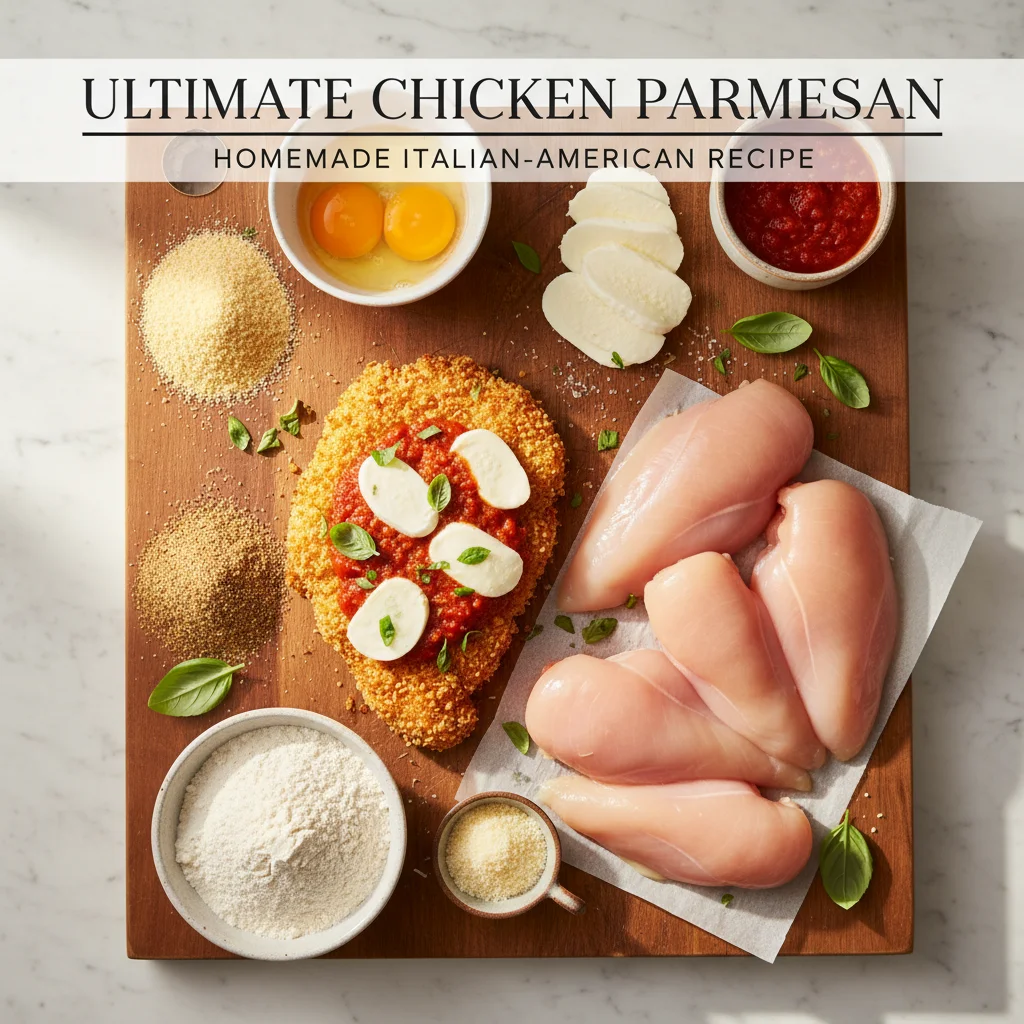
You’ll need chicken breasts, breadcrumbs, eggs, flour, mozzarella, parmesan, marinara sauce (homemade or jarred), and some basic seasonings.
To create this Italian dinner masterpiece, gather the following high-quality ingredients. The quality of your ingredients directly impacts the final flavour, so choose wisely. Here’s a detailed breakdown:
- •Chicken Breasts: Aim for 4 boneless, skinless chicken breasts, each about 6-8 ounces (170-225g). Ensure they are of uniform thickness for even cooking. You might need to pound them to achieve this. UK regulations require all chicken to be traceable, so look for Red Tractor certification to ensure quality and welfare standards.
- •Breadcrumbs: Use a combination of 1 cup (approximately 115g) of panko breadcrumbs for extra crispiness and 1/2 cup (approximately 55g) of Italian seasoned breadcrumbs for added flavour. Panko breadcrumbs are coarser and lighter, creating a superior crispy texture.
- •Eggs: 2 large, free-range eggs, lightly beaten. Free-range eggs from UK farms often have richer yolks, contributing to a better flavour and coating for the chicken.
- •Flour: 1/2 cup (approximately 60g) of all-purpose flour, seasoned with salt, pepper, and a pinch of garlic powder. This creates a dry base for the egg to adhere to.
- •Mozzarella Cheese: 8 ounces (approximately 225g) of fresh mozzarella, sliced. Fresh mozzarella melts beautifully and provides a creamy texture. Look for mozzarella made with British milk for a local touch.
- •Parmesan Cheese: 1/4 cup (approximately 25g) of freshly grated Parmesan cheese. Parmesan adds a salty, umami flavour that complements the mozzarella perfectly.
- •Marinara Sauce: Approximately 2 cups (about 480ml) of your favourite marinara sauce. You can use a high-quality jarred sauce or make your own. A homemade sauce will always elevate the dish.
- •Olive Oil: For frying the chicken. About 1/2 cup (120ml) should be sufficient.
- •Seasonings: Salt, black pepper, garlic powder, dried oregano, dried basil. Use these to taste.
How Do I Prepare the Chicken for Maximum Crispiness?
Pound the chicken to an even thickness, then dredge in flour, dip in egg, and coat thoroughly with breadcrumbs. Ensure the chicken is dry before breading.
Preparing the chicken correctly is paramount to achieving that sought-after crispy texture. Here’s a detailed, step-by-step guide:
- Pounding the Chicken: Place each chicken breast between two sheets of cling film. Use a meat mallet to pound the chicken to an even thickness of about 1/2 inch (1.25cm). This ensures even cooking and prevents some parts from being overcooked while others remain undercooked.
- Drying the Chicken: Pat the chicken breasts completely dry with paper towels. This is crucial for the breading to adhere properly. Moisture is the enemy of crispiness.
- Setting Up the Breading Station: Create a three-part breading station. In the first shallow dish, place the seasoned flour. In the second, place the beaten eggs. In the third, combine the panko breadcrumbs and Italian seasoned breadcrumbs.
- Breading the Chicken: Dredge each chicken breast in the flour, ensuring it’s completely coated. Shake off any excess. Next, dip the floured chicken into the beaten eggs, again ensuring full coverage. Finally, press the chicken into the breadcrumb mixture, making sure the breadcrumbs adhere to every surface. Press firmly to ensure a good coating.
- Resting the Breading: Place the breaded chicken breasts on a wire rack and let them rest for about 10-15 minutes. This allows the breading to set and adhere even better during cooking.
What Is the Best Way to Cook the Chicken Cutlets?
Pan-frying in olive oil until golden brown and cooked through is the best method for maintaining crispiness.
Pan-frying is the preferred method for cooking the chicken cutlets because it allows for direct contact between the breading and the hot oil, resulting in a beautifully crispy crust. Here’s how to do it:
- Heating the Oil: In a large frying pan, heat about 1/2 inch (1.25cm) of olive oil over medium-high heat. The oil should be hot enough to sizzle when a breadcrumb is dropped into it. The ideal temperature is around 175°C (350°F). Use a thermometer to ensure accuracy.
- Frying the Chicken: Carefully place the breaded chicken cutlets into the hot oil, ensuring not to overcrowd the pan. Overcrowding will lower the oil temperature and result in soggy chicken. Cook for about 4-5 minutes per side, or until golden brown and cooked through. The internal temperature of the chicken should reach 74°C (165°F), according to UK food safety standards.
- Draining Excess Oil: Remove the cooked chicken cutlets from the pan and place them on a wire rack lined with paper towels to drain excess oil. This helps maintain the crispiness.
Should I Use Homemade Marinara or Jarred Sauce?
Homemade marinara is preferable for superior flavour, but a high-quality jarred sauce can be a convenient alternative.
The choice between homemade and jarred marinara sauce depends on your time constraints and flavour preferences. A homemade sauce offers unparalleled flavour control and freshness, while a good-quality jarred sauce provides convenience without sacrificing too much on taste.
How Do I Make a Simple Homemade Marinara Sauce?
Sauté garlic in olive oil, add crushed tomatoes, herbs, and simmer until thickened.
Here’s a basic recipe for a delicious homemade marinara sauce:
- •Ingredients: 2 tablespoons olive oil, 2 cloves garlic (minced), 1 (794g) tin crushed tomatoes, 1 teaspoon dried oregano, 1/2 teaspoon dried basil, salt and pepper to taste.
- •Instructions: Heat the olive oil in a saucepan over medium heat. Add the minced garlic and sauté for about 1 minute, until fragrant. Be careful not to burn the garlic. Add the crushed tomatoes, oregano, basil, salt, and pepper. Bring to a simmer, then reduce the heat and simmer for at least 15 minutes, or up to an hour, stirring occasionally, until the sauce has thickened to your liking.
What Should I Look for in a Jarred Marinara Sauce?
Choose sauces with simple ingredient lists, no added sugar, and low sodium content.
When selecting a jarred marinara sauce, consider the following factors:
- •Ingredient List: Opt for sauces with a short and simple ingredient list, focusing on tomatoes, olive oil, garlic, and herbs. Avoid sauces with excessive additives, preservatives, or artificial flavourings.
- •Added Sugar: Many jarred sauces contain added sugar to balance the acidity of the tomatoes. Look for sauces with no added sugar or very low sugar content.
- •Sodium Content: Be mindful of the sodium content, as jarred sauces can be high in sodium. Choose a sauce with lower sodium levels to better control your salt intake. The UK’s Food Standards Agency recommends adults consume no more than 6g of salt per day.
- •Taste Test: Ultimately, the best way to choose a jarred sauce is to taste test different brands and find one that suits your palate.
How Do I Achieve the Perfect Cheese Melt?
Broil the chicken parmesan for a short time until the mozzarella is bubbly and golden brown.
Achieving the perfect cheese melt is the final touch that elevates chicken parmesan from good to extraordinary. The key is to use the broiler to create a bubbly, golden-brown crust on the mozzarella.
- Preheating the Broiler: Preheat your oven’s broiler. Position the oven rack about 10-15cm (4-6 inches) from the broiler element. Keep a close watch as broilers can heat up very quickly.
- Assembling the Chicken Parmesan: Place the fried chicken cutlets in a baking dish. Top each cutlet with a generous amount of marinara sauce. Then, layer the sliced mozzarella cheese over the sauce, ensuring it covers the entire surface. Sprinkle with grated Parmesan cheese.
- Broiling: Place the baking dish under the preheated broiler and broil for about 2-3 minutes, or until the mozzarella cheese is melted, bubbly, and lightly golden brown. Watch carefully to prevent burning. The ideal internal temperature of the cheese should reach around 60°C (140°F).
- Resting: Remove the chicken parmesan from the oven and let it rest for a couple of minutes before serving. This allows the cheese to set slightly and prevents it from sliding off the chicken.
What Is the Best Way to Serve Chicken Parmesan?
Traditionally, it’s served over spaghetti, but it also pairs well with salad or roasted vegetables.
Chicken parmesan is a versatile dish that can be served in various ways, depending on your preference and the occasion. Here are a few popular serving suggestions:
- •Over Spaghetti: The classic and most traditional way to serve chicken parmesan is over a bed of spaghetti. Cook the spaghetti according to package directions and toss it with some of the marinara sauce. Top with the chicken parmesan and garnish with fresh basil. The average serving size of spaghetti in the UK is around 75g (dry weight) per person.
- •With Salad: For a lighter meal, serve chicken parmesan with a fresh salad. A simple green salad with a vinaigrette dressing or a Caprese salad with tomatoes, mozzarella, and basil would be excellent choices.
- •With Roasted Vegetables: Roasted vegetables like asparagus, broccoli, or courgettes make a healthy and delicious side dish for chicken parmesan. Toss the vegetables with olive oil, salt, pepper, and herbs, and roast them in the oven until tender and slightly caramelised.
- •In a Sandwich: For a satisfying lunch or casual dinner, serve chicken parmesan in a crusty roll or baguette. Add some extra marinara sauce and melted mozzarella for an extra-indulgent treat.
How Can I Store and Reheat Leftover Chicken Parmesan?
Store in an airtight container in the fridge for up to 3 days. Reheat in the oven for best results.
Proper storage and reheating are essential to maintaining the quality and flavour of leftover chicken parmesan. Here’s how to do it:
- •Storage: Allow the chicken parmesan to cool completely before storing. Place it in an airtight container and refrigerate for up to 3 days. According to the UK Food Standards Agency, cooked food should be cooled quickly and stored in the fridge at a temperature below 5°C to prevent bacterial growth.
- •Reheating: The best way to reheat chicken parmesan is in the oven. Preheat the oven to 175°C (350°F). Place the chicken parmesan in a baking dish and cover it with foil. Bake for about 15-20 minutes, or until heated through. Remove the foil during the last few minutes of baking to crisp up the breading. Microwaving can make the breading soggy.
Are There Any Variations I Can Try?
Yes, you can add different cheeses, sauces, or vegetables to customise the dish.
Chicken parmesan is a versatile dish that can be easily customised to suit your taste preferences. Here are a few variations you can try:
- •Cheese Variations: Experiment with different types of cheese. Try using provolone, fontina, or a blend of mozzarella and Gruyère for a richer flavour.
- •Sauce Variations: Use a different sauce altogether. Pesto, Alfredo, or a spicy arrabbiata sauce would all be delicious alternatives to marinara.
- •💡 Verdict: This Chicken Parmesan recipe stands out by prioritizing crispiness, a flawless cheese melt, and a rich sauce, making it a superior choice for an authentic Italian-American meal. The detailed instructions ensure home cooks can achieve restaurant-quality results with confidence.
Frequently Asked Questions
What makes this Chicken Parmesan recipe the ultimate?
This recipe is considered ultimate due to its focus on achieving maximum crispiness through a double-breading technique and proper chicken preparation, a perfectly bubbly and golden-brown melted cheese topping achieved by broiling, and a rich, flavorful sauce (ideally homemade).
What ingredients are essential for crispy Chicken Parmesan?
Key ingredients include boneless, skinless chicken breasts, a combination of panko and Italian seasoned breadcrumbs for texture and flavor, eggs and flour for breading, high-quality fresh mozzarella and Parmesan for the melt, marinara sauce, and olive oil for frying. Basic seasonings like salt, pepper, garlic powder, oregano, and basil are also crucial.
How do I achieve a perfect cheese melt on my Chicken Parmesan?
To achieve a perfect cheese melt, preheat your oven’s broiler and position the rack 4-6 inches from the broiler element. After topping the fried chicken with marinara, mozzarella, and Parmesan, broil it for about 2-3 minutes, or until the cheese is melted, bubbly, and lightly golden brown. Watch closely to prevent burning.