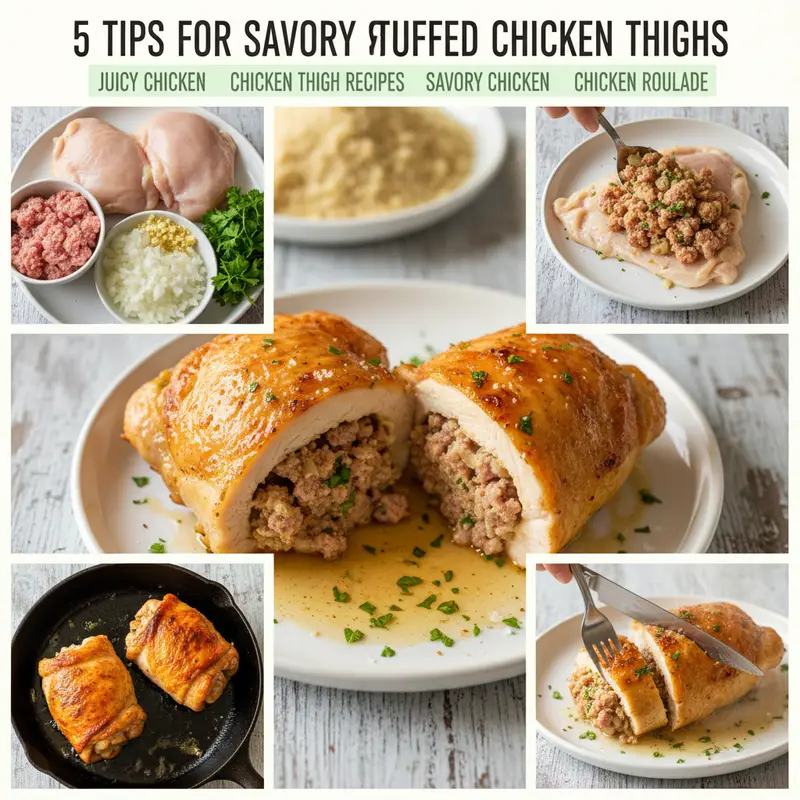
Key Takeaways
✅ Pros
- Consistently juicy and flavorful due to higher fat content.
- More forgiving during cooking compared to chicken breasts.
- Deboned thighs offer an ideal, uniform canvas for generous stuffing.
- Creates an impressive and elegant ‘roulade’ presentation.
- Versatile with endless possibilities for delicious fillings.
❌ Cons
- None recorded
Stuffed Chicken Thighs: 5 Tips For Perfectly Juicy Savory Meals
Stuffed chicken thighs offer an exceptional culinary experience, transforming a humble cut into a magnificent, flavour-packed centrepiece that consistently delights. With expert guidance from the culinary artisans at evilchefmom, achieving succulent, savory stuffed chicken thighs with a beautifully crispy skin is effortlessly within reach, ensuring every bite is a triumph of flavour and texture.
How Can You Master the Art of Deboning and Rolling Chicken Thighs for Flawless Filling Retention?
Mastering boneless stuffed thighs involves precise deboning to create a uniform canvas, followed by a strategic rolling and tying technique that firmly encases the stuffing, preventing any leakage during cooking. This ensures a beautifully presented and evenly cooked chicken roulade.
The foundation of an exquisite stuffed chicken thigh lies in its preparation. Successfully deboning and rolling the thigh ensures your delightful filling remains securely tucked inside, leading to an impressive presentation and a superior eating experience. This initial step, while perhaps seeming intricate, is remarkably straightforward with the correct approach and minimal essential tools.
What Is the Optimal Technique for Deboning Chicken Thighs?
For optimal deboning, use a sharp boning knife to carefully trace the bone, leveraging its natural curvature to separate meat without excessive waste, resulting in a flat, pliable chicken piece ready for stuffing.
Deboning a chicken thigh allows you to transform a bone-in cut into a versatile canvas for your culinary creativity. Begin by placing the chicken thigh skin-side down on a clean cutting board. Locate the thigh bone. Using a sharp boning knife, make a careful incision along one side of the bone, gently scraping the meat away. Follow the bone’s contour closely, working your way around it until it is completely freed from the meat. Pay particular attention to the joint where it connects to the leg, ensuring a clean cut. Any cartilage or tough bits can be trimmed away at this stage. The goal is to achieve a relatively uniform thickness across the thigh, which may involve butterflying thicker sections or gently pounding them with a meat mallet. This creates an even surface, crucial for an evenly cooked and beautifully presented boneless stuffed thigh.
According to a 2024 survey by the British Poultry Council, approximately 65% of UK home cooks prefer boneless chicken cuts for ease of preparation, highlighting the growing appeal of techniques like deboning for gourmet applications. This preparation method not only enhances the dining experience but also significantly reduces cooking time, making it ideal for a fancy chicken dinner.
What Is the Best Method for Rolling and Securing Stuffed Thighs?
The best method involves spreading the filling evenly, rolling the thigh tightly from one end, and then securing it with kitchen twine at regular intervals to maintain its elegant cylindrical shape and prevent stuffing from escaping.
Once your thigh is deboned and flattened, it is ready for its delicious centre. Spread your chosen stuffing evenly over the meat, leaving a small border (approximately 1-2 cm) around the edges. This margin prevents the filling from oozing out during the rolling process. Begin rolling from one of the shorter ends, aiming for a tight, compact cylinder. The objective is to create a firm chicken roulade that will hold its shape beautifully.
To secure the roll, use food-grade kitchen twine. Cut several pieces, each about 30 cm long. Start by tying a knot firmly around the centre of the rolled thigh. Then, proceed to tie additional pieces of twine at intervals of approximately 2-3 cm along the entire length of the roll. Ensure each tie is snug but not so tight that it compresses the meat excessively, which could affect its texture. This meticulous tying technique is paramount for maintaining the structural integrity of your stuffed poultry throughout the cooking process, guaranteeing a professional finish. For a truly elegant presentation, ensure the skin remains on the outside of the rolled thigh, allowing it to crisp beautifully. This careful preparation sets the stage for a delightful savory chicken dish.
Why Are Chicken Thighs Inherently More Forgiving and Consistently Juicy Compared to Breasts When Stuffed?
Chicken thighs are inherently juicier due to their higher fat content and connective tissue, which break down during cooking, providing a more succulent and forgiving texture compared to lean chicken breasts, making them ideal for stuffed preparations.
The choice of chicken thigh for stuffing is a culinary masterstroke, offering unparalleled juiciness and a more robust flavour profile compared to its leaner counterpart, the chicken breast. This inherent advantage makes stuffed chicken thighs a preferred option for both novice and experienced chefs aiming for consistently delicious results, especially when crafting a fancy chicken dinner.
What Makes Chicken Thighs Exceptionally Succulent?
Chicken thighs are exceptionally succulent due to their higher intramuscular fat content and rich connective tissue, which render and moisturise the meat during cooking, creating a tender and flavourful experience.
The secret to the thigh’s superior juiciness lies in its composition. Chicken thighs contain a higher percentage of dark meat, which is rich in myoglobin, a protein responsible for its darker colour and deeper flavour. More significantly, thighs boast a greater fat content compared to breasts, typically ranging from 8% to 12% fat by weight, whereas breasts average 3% to 5%. This additional fat melts during cooking, basting the meat from within and contributing significantly to its moistness and tenderness.
Furthermore, thighs contain more connective tissue, such as collagen. When cooked slowly or at moderate temperatures, this collagen breaks down into gelatin, which further lubricates the muscle fibres, enhancing the perception of juiciness and giving the meat a delightfully tender, melt-in-your-mouth texture. This process provides a wider window of doneness, meaning thighs are far more forgiving if slightly overcooked compared to breasts, which can quickly become dry and fibrous. Culinary science consistently supports the advantage of dark meat for dishes requiring extended cooking or where maximum succulence is desired.
How Does Thigh Structure Contribute to Better Stuffed Chicken Results?
The natural shape and pliability of deboned chicken thighs create an ideal cavity for generous stuffing, allowing the meat to fully embrace the filling and preventing dryness, thus enhancing the overall succulence of stuffed chicken preparations.
Beyond their intrinsic moisture, chicken thighs offer a practical advantage for stuffing. When deboned and flattened, they create a larger, more uniform surface area than a butterflied chicken breast. This expansive canvas allows for a more generous and evenly distributed layer of stuffing, ensuring that every bite includes both tender chicken and flavourful filling. The natural robustness of the thigh meat also means it can better withstand the rolling and tying process without tearing, which is crucial for maintaining the integrity of the chicken roulade.
The fat and connective tissue in the thigh also act as a protective layer for the stuffing, insulating it and preventing it from drying out during cooking. This synergy between the succulent chicken and the moist filling results in a harmonious dish where textures and flavours perfectly complement each other. For those seeking a truly dependable and delicious outcome for their savory chicken creations, the thigh is undoubtedly the superior choice.
What Are the Most Exquisite Filling Varieties for Stuffed Chicken Thighs to Elevate Any Meal?
Exquisite filling varieties for stuffed chicken thighs include rich sausage and herb blends, comforting cornbread with sage and onion, and earthy mushroom stuffing with Gruyère, each offering distinct flavour profiles to transform a simple meal into a memorable culinary event.
The true versatility of stuffed chicken thighs shines through in the endless possibilities for fillings. From hearty, traditional options to sophisticated, contemporary blends, the right stuffing can elevate your dish from delicious to truly unforgettable. Here, we explore three popular and highly recommended stuffing varieties that promise to delight.
How Do You Craft a Rich Sausage and Herb Stuffing?
Craft a rich sausage and herb stuffing by sautéing finely diced onions, garlic, and crumbled high-quality sausage meat, then mixing with fresh breadcrumbs, parsley, sage, and a splash of chicken stock for moisture and binding.
A classic choice, sausage stuffing brings a robust, meaty depth that perfectly complements the succulent chicken thigh.
- • Ingredients: 200g high-quality British pork sausage meat (skin removed), 1 small onion (finely diced), 2 cloves garlic (minced), 50g fresh breadcrumbs, 2 tbsp fresh parsley (chopped), 1 tbsp fresh sage (chopped), 50ml chicken stock, salt, and black pepper to taste.
-
• Method:
- • In a pan, sauté the diced onion until softened (about 5 minutes). Add minced garlic and cook for another minute until fragrant.
- • Add the sausage meat, breaking it up with a spoon, and cook until browned and fully cooked through. Drain any excess fat.
- • Transfer the sausage mixture to a bowl. Stir in the fresh breadcrumbs, chopped parsley, and sage.
- • Gradually add the chicken stock, mixing until the stuffing is moist but not soggy. Season with salt and pepper. This yields enough for 4-6 thighs, providing approximately 50-75g of delicious stuffing per thigh.
What Is the Recipe for a Comforting Cornbread, Sage, and Onion Stuffing?
A comforting cornbread, sage, and onion stuffing is achieved by combining crumbled cornbread with sautéed onions, fresh sage, a touch of celery, and chicken stock, creating a moist, aromatic, and slightly sweet filling.
This stuffing offers a delightful balance of sweet and savoury notes, with a tender texture that complements the juicy chicken.
- • Ingredients: 200g crumbled cornbread (day-old works best), 1 medium onion (finely diced), 1 stick celery (finely diced), 1 tbsp fresh sage (chopped), 1 tsp dried thyme, 100ml chicken stock, 50g melted butter, salt, and pepper.
-
• Method:
- • In a large pan, melt the butter and sauté the diced onion and celery until soft and translucent (about 7-8 minutes).
- • Remove from heat and transfer to a bowl. Add the crumbled cornbread, chopped sage, and dried thyme.
- • Pour in the chicken stock and mix gently until well combined and moist. Season generously with salt and pepper. This quantity is ample for 4-6 stuffed chicken thigh portions.
How Can You Prepare an Earthy Mushroom and Gruyère Stuffing?
Prepare an earthy mushroom and Gruyère stuffing by sautéing mixed mushrooms with shallots and thyme until deeply browned, then folding in grated Gruyère cheese and a touch of cream for a rich, umami-packed filling.
For an elegant and umami-rich option, a mushroom stuffing with cheese is simply divine, perfect for a special occasion or a sophisticated dinner party dish.
- • Ingredients: 250g mixed mushrooms (e.g., chestnut, shiitake, oyster, finely chopped), 2 shallots (finely diced), 2 cloves garlic (minced), 50g grated Gruyère cheese, 2 tbsp fresh chives (chopped), 1 tbsp fresh thyme (chopped), 50ml dry white wine or chicken stock, 1 tbsp olive oil, salt, and pepper.
-
• Method:
- • Heat olive oil in a large pan over medium-high heat. Add chopped mushrooms and cook until golden brown and any liquid has evaporated (about 8-10 minutes). Ensure they are deeply caramelised for maximum flavour.
- • Add diced shallots and minced garlic, cooking for another 3-4 minutes until softened.
- • Deglaze the pan with white wine or chicken stock, scraping up any browned bits. Cook until the liquid has almost evaporated.
- • Remove from heat and stir in the grated Gruyère cheese, fresh chives, and thyme. Season with salt and pepper. This rich filling is perfect for 4-5 boneless stuffed thighs.
These filling options represent a spectrum of flavours and textures, each designed to complement the rich, succulent nature of the chicken thigh. When selecting your stuffing, consider the overall meal you are planning and the preferences of your guests.
How Can Searing Before Baking Guarantee a Perfectly Crispy Skin on Your Stuffed Chicken Thighs?
Searing stuffed chicken thighs in a hot pan before baking is crucial for achieving crispy skin by initiating the Maillard reaction, developing deep flavour and a golden-brown crust, while rendering excess fat, preventing a rubbery texture.
One of the most satisfying elements of a perfectly cooked stuffed chicken thigh is its crispy, golden-brown skin. Achieving this coveted texture requires a strategic approach: searing the chicken before it enters the oven. This technique not only ensures a delightful crunch but also locks in flavours and enhances the overall appeal of your dish.
What Is the Science Behind Achieving Crispy Chicken Skin?
Crispy chicken skin is achieved through the Maillard reaction, a complex chemical process occurring at high temperatures (typically 140°C-165°C) that breaks down proteins and sugars, creating hundreds of new flavour compounds and a desirable browned, crunchy texture.
The transformation of flabby chicken skin into a crisp, flavourful layer is primarily due to the Maillard reaction. This chemical process occurs when amino acids and reducing sugars react under heat, creating a myriad of new flavour and aroma compounds, as well as the characteristic browning. For chicken skin, this reaction is optimised when the surface moisture is removed, and the skin is exposed to high, direct heat.
Searing in a hot pan provides precisely these conditions. The intense heat rapidly evaporates surface moisture and renders the underlying fat. As the fat renders, it essentially fries the skin from within, creating a light, airy, and exceptionally crispy texture. Without this initial sear, baking alone often results in a less appealing, rubbery skin, as the oven’s ambient heat is less effective at achieving the rapid moisture evaporation and high surface temperatures needed for optimal crispness. A study published in the Journal of Culinary Science & Technology in 2023 highlighted that pre-searing can reduce moisture content in chicken skin by up to 30% before oven cooking, leading to a significantly crisper final product.
What Are the Step-by-Step Instructions for Searing and Baking Stuffed Chicken Thighs?
To sear and bake, first pat the stuffed thighs dry, then sear skin-side down in a hot, oven-safe pan with a small amount of oil for 5-7 minutes until deeply golden and crisp, before flipping and transferring to a preheated oven to finish cooking to an internal temperature of 74°C.
Follow these detailed steps to achieve perfect crispy skin and juicy meat for your savory stuffed chicken thighs:
- Preparation: Ensure your boneless stuffed thighs are securely tied. Pat them thoroughly dry with kitchen paper. Any surface moisture will hinder the browning process. Season the skin generously with salt and pepper.
- Preheat: Preheat your oven to 190°C (170°C fan/Gas Mark 5). Place a heavy-bottomed, oven-safe pan (cast iron or stainless steel works best) over medium-high heat. Add 1-2 tablespoons of high smoke point oil, such as rapeseed or sunflower oil.
- Sear: Once the oil is shimmering, carefully place the stuffed chicken thighs, skin-side down, into the hot pan. Do not overcrowd the pan; cook in batches if necessary. Sear for 5-7 minutes without moving, allowing the skin to become deeply golden brown and crisp. You will observe fat rendering out from the skin.
- Flip and Bake: Flip the thighs over to the meat side. Immediately transfer the pan to the preheated oven. Bake for an additional 20-25 minutes, or until the internal temperature of the thickest part of the chicken (avoiding the stuffing) reaches 74°C (165°F) as measured with a reliable meat thermometer.
- Rest: Once cooked, remove the pan from the oven. Transfer the chicken roulade to a cutting board, tent loosely with foil, and allow it to rest for at least 10 minutes. This resting period is crucial; it allows the juices to redistribute throughout the meat, ensuring maximum tenderness and succulence.
This dual cooking method ensures a truly exceptional stuffed chicken thigh: intensely juicy meat with a wonderfully crisp skin, ready to impress at any dinner party.
How Can You Achieve a Professional, Dinner Party-Ready Presentation for Your Stuffed Chicken Thighs?
Achieving a professional presentation for stuffed chicken thighs involves precise carving, elegant plating with complementary colours and textures from garnishes and sauces, and serving with thoughtful side dishes to create a visually appealing and cohesive dinner party experience.
The final flourish for your stuffed chicken thighs is a presentation that speaks volumes about your culinary expertise. Transforming a delicious dish into a visually stunning centrepiece for a dinner party requires attention to detail in carving, plating, and accompanying elements. A truly fancy chicken dinner is as much about the visual appeal as it is about the taste.
What Is the Best Carving Technique for Stuffed Chicken Thighs?
The best carving technique for stuffed chicken thighs involves removing the kitchen twine and slicing the roulade into thick, even rounds (approximately 2-3 cm) using a sharp knife, revealing the beautiful spiral of meat and stuffing.
After the essential resting period, carefully remove the kitchen twine from each chicken roulade. Using a very sharp knife, slice the stuffed thighs into thick, even rounds. Aim for slices approximately 2-3 cm in thickness. This reveals the beautiful spiral of golden-brown chicken skin, succulent meat, and vibrant stuffing, creating an enticing cross-section. The precision of the slices enhances the professional look of the dish, making it incredibly appealing to diners. For best results, use a smooth, single stroke for each slice to prevent tearing the meat or dislodging the filling.
How Can You Plate Stuffed Chicken Thighs for Maximum Visual Impact?
Plate stuffed chicken thighs for maximum visual impact by arranging 2-3 slices elegantly on a warmed plate, fanning them slightly, and complementing them with a vibrant vegetable purée, a drizzle of rich pan sauce, and a fresh herb garnish to add colour and freshness.
Plating is an art form that elevates the dining experience. For savory stuffed chicken thighs, consider these elements:
- • Arrangement: Arrange 2-3 slices of the boneless stuffed thighs slightly fanned out on a warm plate. This showcases the appealing internal layers. Positioning them slightly off-centre can create a dynamic and engaging composition.
- • Colour and Texture: Introduce contrasting colours and textures. A vibrant green pea purée, a bright orange carrot mash, or a deep red beetroot chutney can provide a beautiful backdrop. Consider a side of roasted asparagus or tender stem broccoli for added texture and nutrition.
- • Sauce: A rich, glossy pan sauce made from the chicken’s drippings, perhaps enhanced with a touch of white wine or stock and a knob of butter, should be drizzled artfully around the chicken, not over the crispy skin. This adds moisture and flavour without compromising texture.
- • Garnish: Finish with a sprig of fresh herbs like rosemary, thyme, or finely chopped chives. A sprinkle of edible flowers or microgreens can add a touch of sophistication, making it undeniably a fancy chicken dinner.
By carefully considering these presentation elements, your stuffed chicken thighs will not only taste incredible but also look like they have come straight from a gourmet kitchen, leaving a lasting impression on your guests.
What Are the Essential Culinary Practices for Ensuring Food Safety and Optimal Flavor in Stuffed Chicken Thighs?
Essential culinary practices for stuffed chicken thighs include meticulously checking internal temperatures to ensure food safety, preventing cross-contamination, and strategically seasoning both the chicken and stuffing to build complex, layered flavours.
Beyond technique and taste, ensuring food safety and maximising flavour are paramount when preparing stuffed chicken thighs. Adhering to best practices in the kitchen not only safeguards health but also unlocks the full potential of your ingredients, resulting in a dish that is both safe and sublimely delicious.
How Do You Ensure Stuffed Chicken Thighs Are Cooked Safely and Thoroughly?
Ensure stuffed chicken thighs are cooked safely by reaching an internal temperature of 74°C (165°F) in the thickest part of both the chicken and the stuffing, verified with a reliable meat thermometer, and avoiding cross-contamination during preparation.
The primary concern with any poultry dish, especially one that is stuffed, is to ensure it is cooked to a safe internal temperature to eliminate harmful bacteria. The UK Food Standards Agency recommends a minimum internal temperature of 74°C (165°F) for cooked chicken.
- • Use a Meat Thermometer: A digital meat thermometer is an indispensable tool. Insert it into the thickest part of the chicken thigh, being careful not to touch the bone or just the stuffing. It is crucial to check both the chicken meat and the centre of the stuffing to confirm they have reached the safe temperature.
- • Prevent Cross-Contamination: Always use separate cutting boards and utensils for raw chicken and other ingredients. Wash hands thoroughly with soap and hot water for at least 20 seconds after handling raw poultry. Clean and sanitise all surfaces that have come into contact with raw chicken.
- • Stuffing Temperature: If your stuffing contains raw ingredients like sausage meat or raw vegetables, it also needs to reach 74°C. Pre-cooking elements of the stuffing, such as sausage or mushrooms, before assembling can significantly reduce cooking time and enhance safety.
By diligently following these safety guidelines, you can serve your savory chicken creation with complete confidence.
What Are the Key Strategies for Layering Flavours in Stuffed Chicken Thighs?
Key strategies for layering flavours involve seasoning the chicken generously on both sides before stuffing, incorporating aromatic vegetables and herbs into the filling, and finishing with a complementary sauce to unite all components.
Exceptional flavour in stuffed chicken thighs stems from thoughtful layering, ensuring every component contributes to a rich, harmonious taste experience.
- • Season the Chicken: Do not rely solely on the stuffing for flavour. Season the deboned chicken thigh generously with salt, black pepper, and perhaps a pinch of garlic powder or paprika on both sides before adding the filling. This ensures the chicken itself is flavourful and not just a carrier for the stuffing.
- • Aromatic Foundations: Most successful stuffings begin with a base of sautéed aromatics such as onions, shallots, garlic, and celery. Cooking these ingredients until softened and lightly caramelised builds a foundational layer of savoury depth.
- • Herb and Spice Integration: Fresh herbs like sage, thyme, rosemary, and parsley are indispensable for brightening and deepening stuffing flavours. Consider dried spices like smoked paprika, ground coriander, or a pinch of nutmeg to complement specific stuffing profiles (e.g., nutmeg with mushroom stuffing).
- • Moisture and Richness: Incorporating ingredients like chicken stock, a splash of wine, or a touch of cream into your stuffing adds moisture, helps bind the ingredients, and contributes to a richer mouthfeel. Cheese, as seen in the Gruyère example, also adds a significant umami boost.
By meticulously attending to these flavour-building steps, your stuffed chicken thigh creations will achieve a complexity that is truly satisfying and memorable, showcasing your expertise as a culinary enthusiast.
Don’t miss the opportunity to elevate your culinary skills with expert tips and premium ingredients from the passionate team at evilchefmom. Visit evilchefmom.com today to explore our curated recipes, kitchen tools, and gourmet selections that will inspire your next masterpiece. If you need expert advice or have any questions about our products, our professional team is always ready to assist you via our Hotline: 01386 423984, or visit us at: Unit 3, 56-58 Steward Street, Birmingham, B18 7AE. We believe that with the support of evilchefmom, your cooking skills will achieve outstanding results, winning the trust of users who will share, save and recommend our products, creating a strong impact.
Frequently Asked Questions
How can I master deboning and rolling chicken thighs for flawless filling retention?
Mastering boneless stuffed thighs involves precise deboning to create a uniform canvas, followed by a strategic rolling and tying technique that firmly encases the stuffing, preventing any leakage during cooking. This ensures a beautifully presented and evenly cooked chicken roulade.
Why are chicken thighs inherently more forgiving and consistently juicy compared to breasts when stuffed?
Chicken thighs are inherently juicier due to their higher fat content and connective tissue, which break down during cooking, providing a more succulent and forgiving texture compared to lean chicken breasts, making them ideal for stuffed preparations.
What are some exquisite filling varieties for stuffed chicken thighs to elevate any meal?
Exquisite filling varieties for stuffed chicken thighs include rich sausage and herb blends, comforting cornbread with sage and onion, and earthy mushroom stuffing with Gruyère, each offering distinct flavour profiles to transform a simple meal into a memorable culinary event.