Key Takeaways
✅ Pros
- Easy to prepare with pantry staples
- Rich, savory, and tangy flavor profile
- Chicken becomes incredibly tender through braising
- Optional pan-frying creates a delicious caramelized glaze and textural contrast
- Versatile, allowing for adjustment of soy sauce to vinegar ratio based on personal preference
❌ Cons
- Requires planning for marination time (at least 30 minutes, ideally longer)
- Requires attention during braising to prevent burning if sauce reduces too much
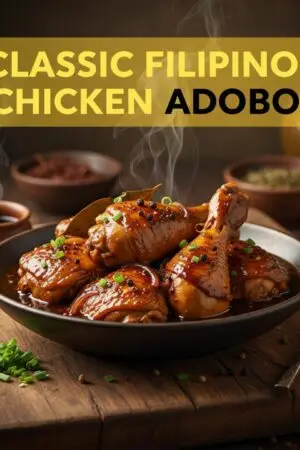
Chicken Adobo, a cornerstone of Filipino cuisine, is celebrated for its rich, savory flavour profile and ease of preparation. Evilchefmom presents a simplified yet authentic method to create the perfect filipino chicken dish, balancing the key elements of this beloved adobo stew. Discover the secrets to achieving a truly memorable savory glazed chicken, using just a few pantry staples and simple techniques.
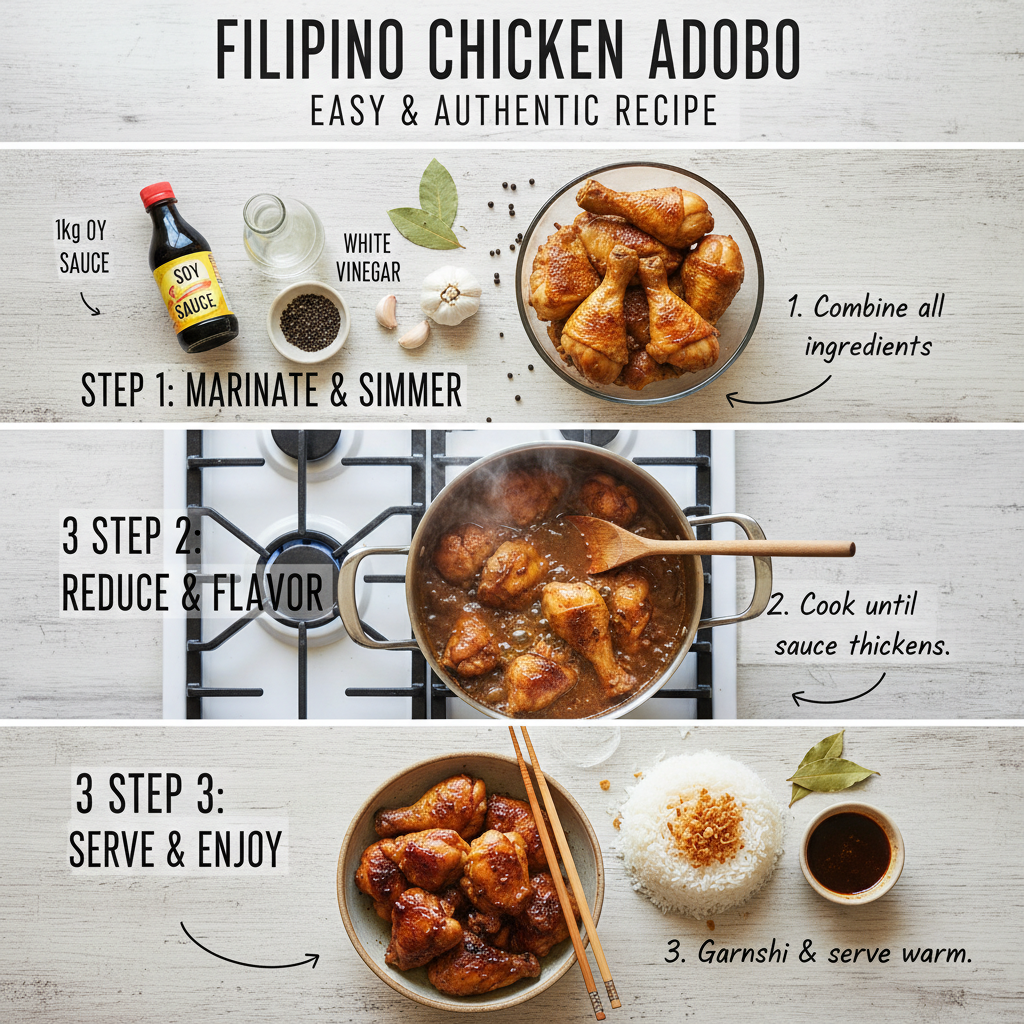
What are the 3 steps to cooking authentic Filipino Chicken Adobo?
The three essential steps involve braising the chicken in a flavorful soy sauce and vinegar mixture, achieving the perfect balance of savory and tangy notes, and finally, optional frying for a delightful sticky glaze.
Creating authentic Filipino Chicken Adobo is easier than you might think! At its heart, Chicken Adobo is a braised dish, where the chicken simmers in a delicious concoction of soy sauce, vinegar, garlic, bay leaves, and peppercorns. The magic lies in the simplicity of the ingredients and the precise execution of the cooking process. By following these three straightforward steps, you can bring the authentic taste of the Philippines classic to your dinner table.
This recipe emphasizes achieving that perfect balance of flavors – savory, tangy, and a hint of sweetness. The braising process ensures the chicken becomes incredibly tender and infused with the rich adobo sauce. The final step, pan-frying the chicken after braising, is optional but highly recommended. This creates a beautiful, slightly caramelized glaze that elevates the dish to another level. Let’s dive into the details!
Step 1: How do I properly marinate the chicken for Filipino Adobo?
Marinate the chicken pieces in a mixture of soy sauce, vinegar, minced garlic, whole peppercorns, and bay leaves for at least 30 minutes, or ideally, up to 4 hours in the refrigerator.
The initial step is crucial for infusing the chicken with the distinctive adobo flavour. Here’s how to marinate your chicken perfectly:
-
•
Ingredients: For approximately 1kg of bone-in, skin-on chicken pieces (thighs and drumsticks work best), you’ll need:-
•
120ml Soy Sauce: Use a good quality soy sauce; light or all-purpose soy sauce are excellent choices. -
•
60ml White Vinegar (or Apple Cider Vinegar): The vinegar provides the essential tangy counterpoint to the soy sauce’s saltiness. -
•
6-8 cloves Garlic, minced: Freshly minced garlic is a must for the best aroma and flavour. -
•
1 tablespoon Whole Black Peppercorns: These add a subtle warmth and spice to the dish. -
•
3-4 Bay Leaves: Bay leaves contribute a delicate, fragrant note to the adobo.
-
•
-
•
Instructions:-
•
In a large bowl or resealable bag, combine the soy sauce, vinegar, minced garlic, peppercorns, and bay leaves. -
•
Add the chicken pieces to the marinade, ensuring they are well coated. -
•
Cover the bowl or seal the bag and refrigerate for at least 30 minutes. For a more intense flavour, marinate for up to 4 hours.
-
•
Why is this step important? Marinating allows the chicken to absorb the flavours of the adobo sauce, resulting in a more delicious and complex final dish. The vinegar also helps to tenderize the chicken, ensuring it’s succulent and juicy.
Pro Tip: For an even deeper flavour penetration, you can lightly score the chicken pieces with a knife before marinating. This allows the marinade to seep into the meat more effectively.
Step 2: What is the best method for braising the Chicken Adobo?
Braise the marinated chicken in the marinade over medium heat, bringing it to a simmer, then reducing the heat to low, covering, and cooking for approximately 30-40 minutes, or until the chicken is cooked through and tender.
The braising process is where the magic truly happens. This slow simmering not only cooks the chicken to perfection but also allows the sauce to reduce and intensify in flavour. Here’s how to braise your Chicken Adobo like a pro:
-
•
Instructions:-
•
Transfer the marinated chicken and marinade to a large pot or Dutch oven. -
•
Bring the mixture to a simmer over medium heat. -
•
Once simmering, reduce the heat to low, cover the pot, and cook for approximately 30-40 minutes, or until the chicken is cooked through and tender. The internal temperature of the chicken should reach 74°C (165°F) to ensure it is safely cooked. Use a meat thermometer to check. -
•
Turn the chicken occasionally to ensure even cooking and flavour absorption.
-
•
Why is this step important? Braising not only cooks the chicken but also tenderizes it, allowing the flavours of the marinade to penetrate deeply. The slow simmering also reduces the sauce, concentrating its flavour and creating a richer, more complex taste.
What if the sauce is too thin? If the sauce is too thin after the braising time, you can remove the chicken from the pot and continue simmering the sauce over medium heat, uncovered, until it reduces to your desired consistency. Be sure to monitor the sauce closely to prevent it from burning.
Step 3: How can I achieve a delicious glaze on my Chicken Adobo?
For a delectable glaze, carefully remove the chicken pieces from the braising liquid and pan-fry them in a separate skillet with a little oil over medium-high heat until they are browned and slightly caramelized, about 3-5 minutes per side.
This final step is optional but adds a beautiful visual appeal and a wonderful textural contrast to the dish. The pan-frying creates a slightly sticky, caramelized glaze that’s simply irresistible. Here’s how to glaze your Chicken Adobo:
-
•
Instructions:-
•
Carefully remove the chicken pieces from the pot, leaving the braising liquid behind. -
•
Heat a tablespoon of oil in a large skillet over medium-high heat. -
•
Add the chicken pieces to the skillet, ensuring not to overcrowd the pan. Work in batches if necessary. -
•
Cook for 3-5 minutes per side, or until the chicken is browned and slightly caramelized. Keep a close eye on the chicken to prevent burning.
-
•
Why is this step important? Pan-frying the chicken after braising creates a beautiful glaze that adds a delightful textural contrast to the dish. The caramelized surface also enhances the flavour, adding a touch of sweetness and richness.
Serving Suggestions: Serve the Chicken Adobo hot over steamed white rice, spooning the remaining sauce over the chicken and rice. Garnish with chopped spring onions or fresh coriander for a pop of colour and flavour. A side of steamed green beans or bok choy makes a wonderful accompaniment.
What are the secrets to achieving the perfect balance of soy sauce to vinegar in Chicken Adobo?
The ideal ratio is typically 2:1 of soy sauce to vinegar, but personal preference plays a significant role; adjust the ratio to suit your taste while maintaining the integrity of the classic flavour profile.
The heart of a great Chicken Adobo lies in the harmonious blend of salty soy sauce and tangy vinegar. Achieving the perfect balance is key to creating a truly delicious and authentic dish. While the general rule of thumb is a 2:1 ratio of soy sauce to vinegar, don’t be afraid to experiment to find what suits your palate best. Here are some factors to consider:
-
•
Type of Soy Sauce: Different brands and types of soy sauce vary in saltiness. If using a particularly salty soy sauce, you may want to slightly reduce the amount used. -
•
Type of Vinegar: White vinegar is the most commonly used vinegar in Chicken Adobo, but apple cider vinegar or cane vinegar can also be used. Each type of vinegar has a slightly different level of acidity, so adjust accordingly. For instance, apple cider vinegar is milder than white vinegar. -
•
Personal Preference: Ultimately, the best balance of soy sauce to vinegar is the one that you enjoy the most. Start with the 2:1 ratio and adjust from there until you achieve the perfect flavour for your taste.
Example: Let’s say you find the initial 2:1 ratio too salty. You could try reducing the soy sauce by 15ml and increasing the vinegar by the same amount. Taste the sauce and adjust further as needed until you achieve the desired balance. Remember, cooking is all about experimentation and finding what works best for you!
Pro Tip: Always taste the sauce before adding the chicken. This allows you to adjust the seasoning and ensure the perfect balance of flavours before the chicken starts cooking.
What are the essential pantry ingredients for making Chicken Adobo, and why are they important?
The key pantry staples include soy sauce, vinegar, garlic, bay leaves, and peppercorns; each ingredient plays a vital role in creating the signature savory and aromatic profile of Chicken Adobo.
One of the beautiful things about Chicken Adobo is its reliance on simple, readily available ingredients. These pantry staples are the foundation of the dish and contribute to its unique and delicious flavour profile. Let’s explore each ingredient and its importance:
-
•
Soy Sauce: Soy sauce provides the umami-rich, salty base for the adobo sauce. It adds depth and complexity to the dish. -
•
Vinegar: Vinegar is the essential counterpoint to the soy sauce, providing the characteristic tanginess that balances the saltiness and adds brightness to the dish. -
•
Garlic: Garlic is a cornerstone of Filipino cuisine and adds a pungent, aromatic flavour to the adobo. Freshly minced garlic is always the best choice. -
•
Bay Leaves: Bay leaves contribute a subtle, fragrant note to the adobo, adding depth and complexity to the flavour profile. -
•
Peppercorns: Whole black peppercorns add a mild warmth and subtle spice to the adobo, enhancing the overall flavour and aroma.
Variations: While these five ingredients are the foundation of Chicken Adobo, many variations exist. Some recipes call for adding sugar for a touch of sweetness, while others include potatoes or other vegetables.
Ingredient Quality: Using high-quality ingredients will always result in a better-tasting dish. Opt for good quality soy sauce and fresh, fragrant garlic for the best results.
How does braising and frying contribute to the sticky glaze of Chicken Adobo?
Braising tenderizes the chicken and infuses it with flavor, while frying caramelizes the sauce, creating a sticky, irresistible glaze that enhances both texture and taste.
The combination of braising and frying is a technique that elevates Chicken Adobo to another level of deliciousness. Braising ensures the chicken is cooked through and incredibly tender, while the subsequent frying creates a beautiful, sticky glaze that’s both visually appealing and adds a wonderful textural contrast.
-
•
Braising: The braising process allows the chicken to cook slowly in the flavorful adobo sauce. This slow cooking tenderizes the chicken and allows it to absorb the flavours of the marinade. The sauce also reduces during braising, concentrating its flavour. -
•
Frying: After braising, the chicken is pan-fried in a separate skillet. The heat from the skillet caramelizes the sugars in the soy sauce, creating a sticky, slightly sweet glaze that coats the chicken. This glaze adds a wonderful textural contrast to the tender chicken.
The Science of Caramelization: Caramelization is a chemical process that occurs when sugars are heated. During caramelization, the sugars break down and form hundreds of different compounds, which contribute to the complex flavour and aroma of the glaze. The Maillard reaction, another chemical process involving amino acids and reducing sugars, also contributes to the browning and flavour development during frying.
Achieving the Perfect Glaze: To achieve the perfect glaze, it’s important to use medium-high heat and to monitor the chicken closely to prevent burning. Cook the chicken in batches to avoid overcrowding the pan, which can lower the temperature and prevent proper caramelization.
Why is Chicken Adobo best served over steamed white rice?
Steamed white rice provides a neutral base that perfectly complements the rich, savory, and tangy flavors of Chicken Adobo, allowing the sauce to be fully appreciated.
Chicken Adobo and steamed white rice are a match made in culinary heaven. The simplicity of the rice provides the perfect canvas for the bold and complex flavours of the adobo sauce. Here’s why this pairing works so well:
-
•
Neutral Flavour: Steamed white rice has a mild, neutral flavour that doesn’t compete with the strong flavours of the Chicken Adobo. This allows the sauce to shine and be fully appreciated. -
•
Texture: The soft, fluffy texture of steamed white rice complements the tender chicken and the sticky glaze, creating a satisfying mouthfeel. -
•
Sauce Absorption: Steamed white rice is excellent at absorbing the adobo sauce, ensuring that every bite is packed with flavour.
Other Rice Options: While steamed white rice is the traditional accompaniment, other types of rice can also be used. Jasmine rice, with its fragrant aroma, is a popular choice. Brown rice, with its nutty flavour and chewier texture, can also be used for a healthier option.
Serving Suggestion: Don’t be shy with the sauce! Spoon plenty of the adobo sauce over the rice and chicken. The sauce is the heart of the dish, and you’ll want to savour every drop.
Don’t miss the opportunity to enhance your cooking skills with our premium collection of kitchen tools and culinary resources from the experts at evilchefmom. Visit evilchefmom.com today to explore and purchase the finest resources for your project. If you need expert advice or have any questions about our products, our professional team is always ready to assist you via our Hotline: 01386 423984, or visit us at: Unit 3, 56-58 Steward Street, Birmingham, B18 7AE. We believe that with the support of evilchefmom, your cooking skills will achieve outstanding results, winning the trust of users who will share, save and recommend our products, creating a strong impact
What are some variations of Filipino Chicken Adobo I can try?
Experiment with adding sugar for sweetness, coconut milk for creaminess, or even spicy peppers for heat to create your unique twist on this classic dish.
Chicken Adobo, while a classic, is incredibly versatile. There are countless variations you can try to create your own signature version. Here are a few ideas to get you started:
- 💡 Verdict: This simplified approach to Filipino Chicken Adobo delivers an authentic and deeply satisfying meal. The detailed steps for marination, braising, and glazing ensure a tender chicken with a perfectly balanced sauce, making it an ideal recipe for both beginners and experienced cooks looking for a classic Filipino dish.
Frequently Asked Questions
What are the three essential steps to cooking authentic Filipino Chicken Adobo?
The three essential steps involve braising the chicken in a flavorful soy sauce and vinegar mixture, achieving the perfect balance of savory and tangy notes, and finally, optional frying for a delightful sticky glaze.
How do I properly marinate the chicken for Filipino Adobo?
Marinate the chicken pieces in a mixture of soy sauce, vinegar, minced garlic, whole peppercorns, and bay leaves for at least 30 minutes, or ideally, up to 4 hours in the refrigerator.
What is the best method for braising the Chicken Adobo?
Braise the marinated chicken in the marinade over medium heat, bringing it to a simmer, then reducing the heat to low, covering, and cooking for approximately 30-40 minutes, or until the chicken is cooked through and tender.