Key Takeaways
✅ Pros
- Extremely quick preparation, ready in 15 minutes.
- Versatile; easily customizable with various leftover vegetables and noodle types.
- Offers dietary adaptations for gluten-free, vegetarian, or refined sugar-free needs.
- A healthier alternative to takeout with simple ingredient swaps.
- Efficient use of pre-cooked ingredients and pre-cut vegetables.
❌ Cons
- Relies on pre-cooked ingredients for maximum speed, which may not suit all preferences seeking completely fresh preparation.
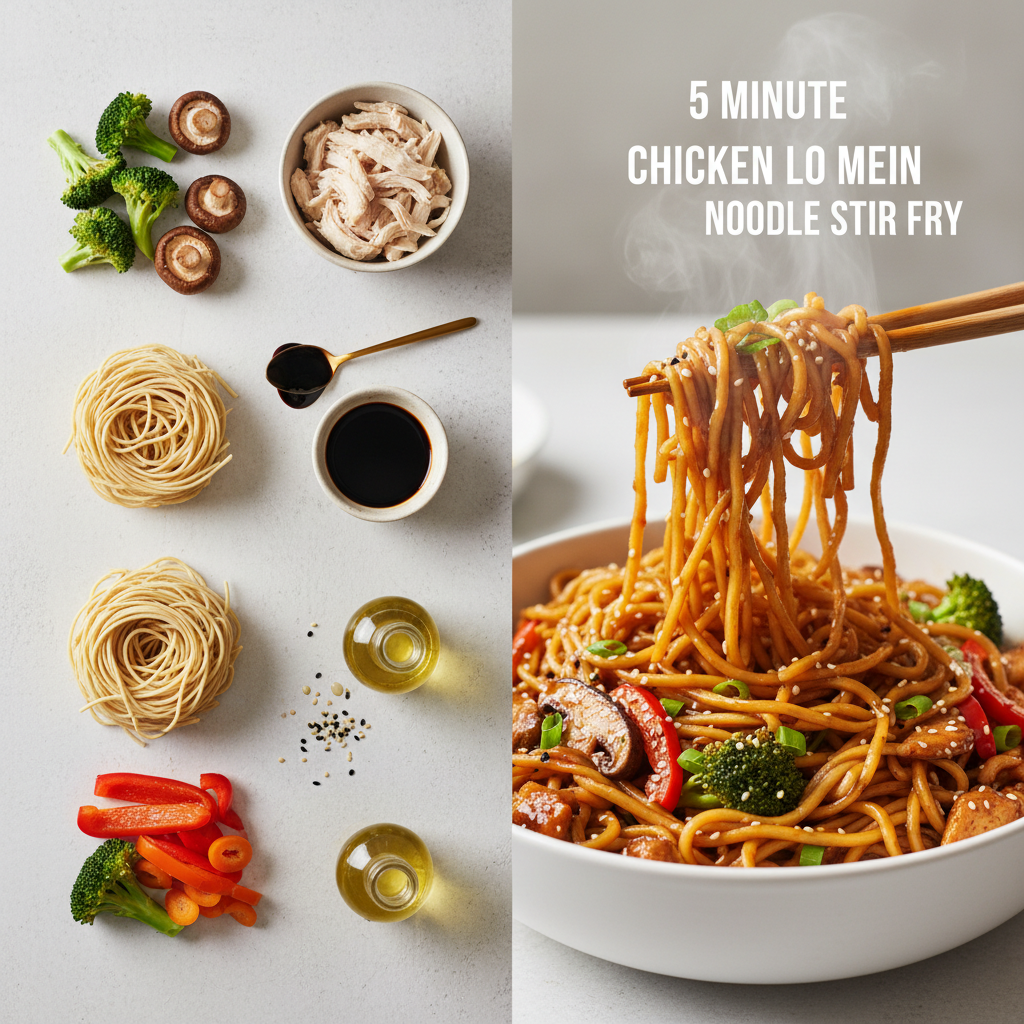
Chicken Lo Mein is a delectable and quick noodle dish, perfect for busy weeknights. At evilchefmom, we’ve perfected a recipe that brings together fresh ingredients and authentic flavours in just 15 minutes. This easy chicken stir fry will become your new go-to meal, offering a delightful combination of savoury chicken, soft chinese noodles, and crisp vegetables, all coated in a luscious sauce. Learn how to make this vegetable lo mein in no time!
What Makes This Chicken Lo Mein Recipe So Quick?
The speed comes from efficient preparation, quick-cooking ingredients like pre-cooked chicken (leftover roast chicken works great!), and a streamlined stir-frying process that ensures your meal is ready in just about 15 minutes.
The key to a speedy chicken lo mein lies in smart preparation and efficient cooking techniques. This recipe leverages pre-cooked chicken – leftover roast chicken is an excellent choice – to drastically cut down on cooking time. Furthermore, the stir-frying process is streamlined to ensure each ingredient cooks quickly and evenly, allowing you to have a delicious and satisfying meal on the table in approximately 15 minutes. This makes it an ideal option for busy weeknights when time is of the essence but you still crave a homemade, flavorful dish. Using pre-cut vegetables, readily available in most UK supermarkets, can further reduce preparation time. By combining these time-saving methods, you can enjoy a restaurant-quality chicken lo mein without the long wait or the high cost of takeout noodles.
What Are the Best Types of Noodles for Chicken Lo Mein?
Fresh egg noodles are ideal for lo mein due to their soft texture and ability to absorb the sauce. However, dry spaghetti can be a reasonable substitute if you adjust the cooking time to achieve a similar tenderness.
The choice of noodle significantly impacts the final texture and flavor of your chicken lo mein. Fresh egg noodles are traditionally preferred because of their delicate, slightly chewy texture and their excellent capacity to soak up the delicious lo mein sauce. These noodles, often found in Asian supermarkets across the UK, cook quickly and provide an authentic taste. However, if fresh egg noodles aren’t readily available, dry spaghetti can be used as a substitute. It’s crucial to adjust the cooking time of the spaghetti to ensure it reaches a similar level of tenderness to egg noodles; overcooked spaghetti will become mushy, while undercooked spaghetti will be too firm. Aim for an al dente texture, slightly firm to the bite, which will complement the other ingredients in the stir fry. Experimenting with different types of noodles, such as udon or ramen, can also yield interesting and tasty results, allowing you to customise the dish to your personal preferences. Remember that different noodles will absorb varying amounts of sauce, so you might need to adjust the sauce quantity accordingly.
How Do Fresh Egg Noodles Compare to Dry Spaghetti in Lo Mein?
Fresh egg noodles offer a softer, more authentic texture and absorb sauce better, while dry spaghetti is a readily available alternative that requires careful cooking to achieve the right consistency.
Fresh egg noodles and dry spaghetti each bring distinct qualities to chicken lo mein. Fresh egg noodles provide a softer, more pliable texture that readily absorbs the savoury sauce, enhancing the overall flavour profile. Their quick cooking time also aligns well with the fast-paced nature of stir-frying. Dry spaghetti, on the other hand, offers convenience and accessibility. It’s a pantry staple for many UK households, making it a readily available substitute. However, achieving the desired texture with spaghetti requires careful attention to cooking time. Overcooking can lead to a mushy consistency, while undercooking results in a hard, unpleasant bite. Consider these factors when choosing your noodle type to ensure your chicken lo mein achieves the perfect balance of flavour and texture. For a healthier option, consider whole wheat spaghetti, which provides added fiber and a slightly nutty flavour.
What’s the Best Sauce Combination for Chicken Lo Mein?
A balanced blend of soy sauce, oyster sauce, and sesame oil is ideal. This combination provides umami, saltiness, and a rich, nutty aroma, creating a delicious and authentic lo mein flavour.
The sauce is the heart of any great lo mein, and a well-balanced combination is crucial for achieving that authentic, irresistible flavour. Soy sauce forms the base, providing the necessary saltiness and umami. Oyster sauce adds depth and richness, contributing a subtle sweetness and a complex savoury note. Sesame oil introduces a distinct, nutty aroma and a luxurious mouthfeel. The ratio of these ingredients is essential: too much soy sauce can make the dish overly salty, while too much oyster sauce can overpower the other flavours. A typical starting point is a 2:1:1 ratio of soy sauce to oyster sauce to sesame oil, but feel free to adjust to your personal preference. For a spicier kick, consider adding a dash of chilli oil or a pinch of red pepper flakes. A small amount of sugar or honey can also balance the savoury elements and enhance the overall flavour profile. Experiment with different combinations to find your perfect lo mein sauce recipe. Consider using dark soy sauce for a richer color and flavor, but use it sparingly as it is more intense than light soy sauce.
How Can I Adjust the Sauce for Different Dietary Needs?
For gluten-free diets, use tamari instead of soy sauce. For vegetarian or vegan options, replace oyster sauce with a mushroom-based sauce. Adjust the sweetness with maple syrup or agave for a refined sugar-free version.
Adapting the lo mein sauce to accommodate various dietary restrictions is simple and allows everyone to enjoy this delicious dish. For those following a gluten-free diet, tamari is an excellent substitute for soy sauce. Tamari is made from soybeans but undergoes a different fermentation process that eliminates wheat, making it gluten-free. For vegetarian or vegan versions, oyster sauce can be replaced with a mushroom-based sauce, which provides a similar umami flavour without the use of animal products. Many brands offer vegetarian oyster sauce alternatives, readily available in UK supermarkets and online. If you’re looking to reduce or eliminate refined sugar, maple syrup or agave nectar can be used as natural sweeteners to balance the savoury flavours in the sauce. Start with a small amount and adjust to your liking, keeping in mind that these sweeteners have different levels of sweetness compared to refined sugar. With these simple substitutions, you can create a chicken lo mein sauce that caters to a wide range of dietary needs and preferences, ensuring everyone at the table can savour this flavorful dish.
How Can I Use Leftover Vegetables in Chicken Lo Mein?
Chicken Lo Mein is a fantastic way to use up leftover vegetables. Broccoli, carrots, peppers, and mushrooms all work well. Simply chop them into bite-sized pieces and add them to the stir fry.
Chicken Lo Mein is not only a delicious meal but also a practical way to reduce food waste by utilizing leftover vegetables. Almost any vegetable can be incorporated into the stir fry, adding both flavour and nutritional value. Common choices include broccoli florets, sliced carrots, bell peppers (of any colour), and mushrooms. However, don’t limit yourself to these; other great options include snap peas, spinach, bean sprouts, and even cooked greens like kale or chard. The key is to chop the vegetables into bite-sized pieces to ensure they cook quickly and evenly. Add the vegetables to the wok or frying pan after the chicken has been stir-fried, starting with the harder vegetables that require more cooking time. Softer vegetables can be added towards the end to prevent them from becoming overcooked and mushy. Using leftover vegetables not only minimizes waste but also allows you to customize your chicken lo mein with a variety of flavours and textures. It’s a win-win situation for both your taste buds and the environment. Consider adding a splash of water or chicken broth if the stir fry becomes too dry due to the added vegetables.
What Are Some Less Common Vegetables That Work Well in Lo Mein?
Courgette, asparagus, and even Brussels sprouts (shredded) can add unique textures and flavours to your lo mein. Don’t be afraid to experiment with different combinations!
While traditional lo mein recipes often feature common vegetables like carrots and broccoli, there’s no reason to shy away from more unconventional options. Courgette (zucchini), with its mild flavour and tender texture, can be a surprisingly good addition. Asparagus, when lightly stir-fried, retains a pleasant crispness and adds a touch of elegance. Even Brussels sprouts, when thinly shredded, can contribute a slightly nutty and earthy flavour that complements the other ingredients. Other less common choices include pak choi, bok choy, and edamame. The key is to consider the cooking time and texture of each vegetable. Harder vegetables should be added earlier in the stir-frying process, while softer vegetables should be added towards the end to prevent overcooking. Experimenting with different combinations of vegetables can lead to exciting new flavour discoveries and elevate your chicken lo mein to a whole new level. Remember to adjust the sauce accordingly to complement the chosen vegetables. For example, a slightly sweeter sauce might pair well with Brussels sprouts, while a more savoury sauce might enhance the flavour of courgette.
How Can I Make Chicken Lo Mein Even Faster?
Use pre-cooked chicken, pre-cut vegetables, and pre-made sauce. These shortcuts can significantly reduce preparation time, making it a truly fast food option.
To achieve the ultimate speed in preparing chicken lo mein, consider leveraging several time-saving shortcuts. As mentioned earlier, using pre-cooked chicken, such as leftover roast chicken or rotisserie chicken purchased from a supermarket, drastically reduces cooking time. Similarly, pre-cut vegetables, readily available in most UK grocery stores, eliminate the need for chopping and prepping. Many supermarkets also offer pre-made stir fry sauce, which can be a convenient alternative to making your own from scratch. Look for sauces that contain a balanced blend of soy sauce, oyster sauce, and sesame oil. Another tip is to cook the noodles ahead of time and store them in the refrigerator until ready to use. When it’s time to assemble the lo mein, simply stir fry the chicken and vegetables, add the pre-cooked noodles and sauce, and heat through. By utilizing these shortcuts, you can have a delicious and satisfying chicken lo mein meal on the table in as little as 15 minutes, making it a perfect option for busy weeknights or when you’re craving a quick and easy dinner. Consider investing in a good quality wok for faster and more even cooking.
What Are Some Healthy Swaps to Make This a Healthier Takeout Noodles Option?
Use whole wheat noodles, lean chicken breast, and load up on vegetables. Reduce the amount of sauce and use low-sodium soy sauce to lower the sodium content.
While chicken lo mein is a delicious and satisfying meal, it can be made even healthier with a few simple swaps. Opting for whole wheat noodles instead of traditional egg noodles increases the fiber content, promoting better digestion and providing sustained energy. Using lean chicken breast, trimmed of any visible fat, reduces the overall fat content of the dish. Loading up on vegetables not only adds flavour and texture but also boosts the nutritional value, providing essential vitamins and minerals. Reducing the amount of sauce used can significantly lower the sodium content, as many sauces are high in sodium. Using low-sodium soy sauce is another effective way to reduce sodium intake. Consider adding a splash of rice vinegar or lemon juice to enhance the flavour without adding extra sodium. Other healthy additions include adding protein-rich edamame or tofu, and using healthy oils like olive oil or avocado oil for stir-frying. By making these simple swaps, you can enjoy a healthier version of chicken lo mein that is both delicious and nutritious. Consider adding a source of healthy fats, such as chopped nuts or seeds, for added nutritional benefits.
What is the Full Recipe for 5 Minute Chicken Lo Mein Noodle Stir Fry?
Our recipe combines pre-cooked chicken, fresh or dry noodles, a flavorful sauce, and your choice of vegetables, all stir-fried to perfection in about 15 minutes.
Here’s a detailed recipe to guide you through creating a delicious and quick chicken lo mein:
Ingredients:
- • 250g fresh or dry egg noodles (or spaghetti)
- • 200g pre-cooked chicken, shredded or diced
- • 1 cup mixed vegetables (broccoli, carrots, peppers, mushrooms)
- • 2 tablespoons soy sauce
- • 1 tablespoon oyster sauce (or mushroom sauce for vegetarian)
- • 1 tablespoon sesame oil
- • 1 clove garlic, minced
- • 1 teaspoon ginger, grated
- • 1 tablespoon vegetable oil
- • Optional: chilli oil or red pepper flakes, to taste
Instructions:
- 1. Cook the noodles according to package directions. Drain and set aside. If using spaghetti, cook until al dente.
- 2. In a small bowl, whisk together soy sauce, oyster sauce, and sesame oil. Set aside.
- 3. Heat vegetable oil in a wok or large frying pan over medium-high heat.
- 4. Add minced garlic and grated ginger to the wok and stir fry for about 30 seconds, until fragrant.
- 5. Add mixed vegetables to the wok and stir fry for 2-3 minutes, until slightly softened.
- 6. Add pre-cooked chicken to the wok and stir fry for 1-2 minutes, until heated through.
- 7. Add cooked noodles to the wok and toss with the chicken and vegetables.
- 8. Pour the sauce over the noodles, chicken, and vegetables. Stir fry for 1-2 minutes, until everything is evenly coated and heated through.
- 9. If desired, add chilli oil or red pepper flakes to taste.
- 10. Serve immediately and enjoy your delicious and quick chicken lo mein!
Can I Prepare This Chicken Lo Mein Ahead of Time?
While best served fresh, you can prepare the individual components ahead of time and combine them when ready to eat. Cook the noodles, chop the vegetables, and prepare the sauce in advance. Store everything separately in the refrigerator and stir fry when needed.
While chicken lo mein is best enjoyed fresh, it is possible to prepare certain components ahead of time to streamline the cooking process. Cooking the noodles in advance and storing them in the refrigerator is a great time-saver. Similarly, chopping the vegetables and preparing the sauce ahead of time can significantly reduce the amount of time spent in the kitchen when you’re ready to cook. Store each component separately in airtight containers in the refrigerator. When you’re ready to assemble the lo mein, simply stir fry the chicken and vegetables, add the pre-cooked noodles and sauce, and heat through. Keep in mind that pre-cooked noodles may become slightly sticky, so you may need to add a splash of water or oil when reheating them. Avoid combining all the ingredients together too far in advance, as the noodles can absorb the sauce and become mushy. Preparing the individual components ahead of time allows you to enjoy a freshly made chicken lo mein even on the busiest of weeknights. Consider portioning the ingredients into individual servings for even greater convenience.
Don’t miss the opportunity to enhance your cooking skills with our premium collection of recipes and cooking tips from the experts at evilchefmom. Visit evilchefmom.com today to explore and purchase the finest resources for your culinary journey. If you need expert advice or have any questions about our products, our professional team is always ready to assist you via our Hotline: 01386 423984, or visit us at: Unit 3, 56-58 Steward Street, Birmingham, B18 7AE. We believe that with the support of evilchefmom, your cooking skills will achieve outstanding results, winning the trust of users who will share, save and recommend our products, creating a strong impact
Frequently Asked Questions
What makes this Chicken Lo Mein recipe so quick?
The recipe is quick due to efficient preparation, using pre-cooked chicken, and a streamlined stir-frying process, allowing it to be ready in about 15 minutes.
What are the best types of noodles for Chicken Lo Mein?
Fresh egg noodles are ideal for their soft texture and sauce absorption. Dry spaghetti can be a substitute, but requires careful cooking to achieve similar tenderness.
What’s the best sauce combination for Chicken Lo Mein?
A balanced blend of soy sauce, oyster sauce, and sesame oil provides umami, saltiness, and a nutty aroma, creating an authentic lo mein flavor.