Key Takeaways
✅ Pros
- Authentic and rich flavor profile
- Versatile; can be made vegetarian with paneer/tofu
- Customizable heat level
- A complete and satisfying meal with homemade roti
❌ Cons
- Requires several distinct cooking steps (curry and roti)
- Specific ingredients like yardlong beans and scotch bonnets might require a specialty grocery store
- Time-consuming due to multiple components and resting time for roti dough
Surinamese Roti Chicken, a delightful Caribbean culinary experience, combines tender chicken, flavourful spices, and soft roti bread. At evilchefmom, we’re excited to guide you through a simple, positive, and rewarding process to create the best Surinamese roti chicken, ensuring a rich and aromatic dish every time. Learn the art of making chicken masala, perfecting the roti recipe, and understanding suriname food for a truly authentic experience. Prepare to master the techniques and spices that make this dish a cherished staple.
What are the key ingredients for authentic Surinamese Roti Chicken?
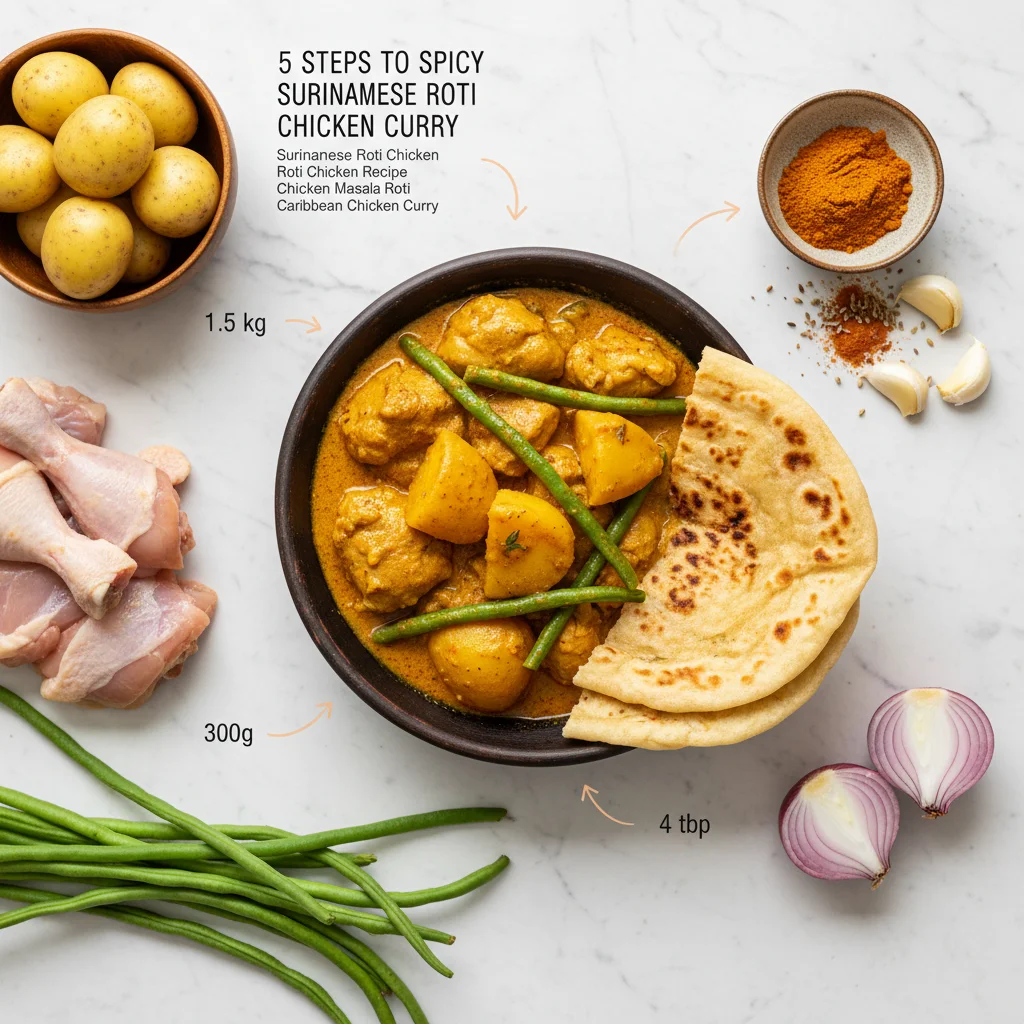
Authentic Surinamese Roti Chicken requires chicken pieces, potatoes, yardlong beans, a blend of curry powder (masala), garlic, onions, and scotch bonnet peppers, all cooked in a rich, flavourful sauce.
The heart of Surinamese Roti Chicken lies in its fresh ingredients and the harmonious blend of spices. The primary ingredient is, of course, chicken – typically bone-in pieces such as thighs and drumsticks, as they provide a richer flavour. For a delightful vegetarian option, you can substitute the chicken with paneer or tofu, ensuring everyone can enjoy this dish. Potatoes add substance and creaminess to the curry, while yardlong beans (also known as bora) contribute a unique texture and subtle sweetness. These beans are crucial for an authentic suriname food experience.
The chicken masala blend is what gives the dish its distinctive taste. This usually consists of a combination of curry powder, cumin, coriander, turmeric, and garam masala. Each spice contributes a layer of flavour, creating a complex and aromatic profile. Fresh garlic and onions form the base of the curry, providing a pungent and savoury foundation. For those who enjoy a bit of heat, Scotch bonnet peppers are essential. These peppers add a fiery kick that balances the sweetness of the beans and the richness of the chicken. Remember to handle them with care, as they are quite potent.
Here’s a detailed breakdown of the key ingredients and their approximate quantities for a serving of 4-6 people:
| Ingredient | Quantity | Notes |
|---|---|---|
| Chicken Pieces (bone-in) | 1.5 kg | Thighs and drumsticks recommended |
| Potatoes | 500g | Peeled and quartered |
| Yardlong Beans | 300g | Cut into 2-inch pieces |
| Curry Powder | 4 tbsp | Adjust to taste |
| Garlic | 4 cloves | Minced |
| Onions | 2 medium | Diced |
| Scotch Bonnet Pepper | 1-2 | Finely chopped (optional) |
How do you create the perfect Surinamese masala blend for the curry?
The ideal Surinamese masala blend involves combining curry powder with cumin, coriander, turmeric, and garam masala. Adjust the proportions to achieve your preferred level of flavour and heat.
Creating the perfect masala blend is crucial for achieving that authentic Surinamese Roti Chicken flavour. The base of the blend is typically a good quality curry powder, which already contains a mix of spices. However, to elevate the flavour profile, it’s essential to add individual spices to customize it to your taste.
Cumin adds a warm, earthy note, while coriander provides a citrusy and slightly sweet aroma. Turmeric contributes a vibrant colour and a subtle bitterness, and garam masala brings a complex blend of warm spices like cinnamon, cardamom, and cloves. The key is to balance these spices to create a harmonious flavour that complements the chicken and vegetables.
Here’s a suggested proportion for creating your chicken masala blend:
- • 4 tablespoons of curry powder (choose a mild or hot variety depending on your preference)
- • 1 tablespoon of ground cumin
- • 1 tablespoon of ground coriander
- • 1 teaspoon of turmeric powder
- • 1 teaspoon of garam masala
Mix all the spices in a bowl and store them in an airtight container. This blend can be made in advance and used whenever you’re ready to cook curry chicken potatoes. The freshness of the spices will significantly impact the overall flavour of the dish, so it’s best to use spices that are relatively new.
How can I adjust the heat level of my masala?
Adjust the heat by controlling the amount of Scotch bonnet pepper and the type of curry powder you use. For a milder flavour, reduce or omit the pepper and use a mild curry powder.
The heat level of your masala is a personal preference. For those who enjoy a fiery kick, adding Scotch bonnet peppers is the way to go. However, these peppers are extremely potent, so it’s best to start with a small amount and adjust to taste. Remember that the heat will intensify as the curry simmers, so it’s better to err on the side of caution.
If you prefer a milder flavour, you can reduce or omit the Scotch bonnet pepper altogether. Alternatively, you can use a milder curry powder as the base of your masala blend. Some curry powders are specifically labelled as mild, medium, or hot, so choose one that suits your taste. You can also add a pinch of sugar to balance the heat and enhance the other flavours.
What is the best way to combine chicken with yardlong beans and potatoes?
To combine chicken, yardlong beans, and potatoes effectively, sauté the chicken with aromatics and spices, then add the potatoes and cook until tender. Finally, add the yardlong beans towards the end to retain their texture and colour.
Combining the ingredients in the right order is essential for achieving the perfect texture and flavour in your curry chicken potatoes. Start by sautéing the chicken pieces in a large pot or Dutch oven with the garlic, onions, and masala blend. This allows the chicken to brown and absorb the flavours of the spices.
Once the chicken is browned, add the potatoes and enough water or chicken broth to cover the ingredients. Bring the mixture to a boil, then reduce the heat and simmer until the potatoes are tender. This usually takes about 20-25 minutes. Adding the potatoes at this stage allows them to cook through and release their starch, which thickens the sauce and adds creaminess to the curry.
The yardlong beans should be added towards the end of the cooking process, as they cook relatively quickly. Add them about 10 minutes before the curry is done, and simmer until they are tender-crisp. This ensures that they retain their vibrant green colour and slightly crunchy texture. Overcooking the beans will make them mushy and less appealing.
Here’s a step-by-step guide to combining the ingredients:
- 1. Heat 2 tablespoons of oil in a large pot or Dutch oven over medium heat.
- 2. Add the chicken pieces and sauté until browned on all sides.
- 3. Add the minced garlic, diced onions, and masala blend to the pot. Sauté for another 2-3 minutes until fragrant.
- 4. Add the potatoes and enough water or chicken broth to cover the ingredients.
- 5. Bring the mixture to a boil, then reduce the heat and simmer for 20-25 minutes, or until the potatoes are tender.
- 6. Add the yardlong beans and simmer for another 10 minutes, or until they are tender-crisp.
- 7. Season with salt and pepper to taste.
Can I use frozen yardlong beans?
Yes, frozen yardlong beans can be used. Add them directly to the curry towards the end of cooking, ensuring they are heated through and tender-crisp.
If fresh yardlong beans are not available, you can certainly use frozen ones. Frozen vegetables are often just as nutritious as fresh ones, as they are typically frozen soon after being harvested. When using frozen yardlong beans, there’s no need to thaw them before adding them to the curry. Simply add them directly to the pot towards the end of the cooking process, about 5-7 minutes before the curry is done. This will ensure that they are heated through and retain their texture.
What’s the best way to make Roti Bread for Surinamese Chicken Curry?
The best roti bread is made with flour, water, and a touch of oil, then cooked on a hot griddle until puffed and lightly browned. This provides the perfect accompaniment to scoop up the flavorful curry.
No Surinamese Roti Chicken experience is complete without the perfect roti recipe. Roti is a flatbread that’s used to scoop up the delicious curry, and its soft, slightly chewy texture complements the richness of the chicken and vegetables. Making roti at home is easier than you might think, and the results are well worth the effort.
The basic ingredients for roti are flour, water, and a touch of oil. The flour is typically all-purpose flour, but you can also use a combination of all-purpose and whole wheat flour for a slightly nuttier flavour. The water should be lukewarm, and the oil helps to keep the roti soft and pliable. The dough is kneaded until smooth and elastic, then left to rest for at least 30 minutes. This allows the gluten to relax, making the roti easier to roll out.
Once the dough has rested, it’s divided into small balls, which are then rolled out into thin circles. The roti are cooked on a hot griddle or tawa until they puff up and are lightly browned on both sides. Some people like to brush the roti with a little melted butter or ghee after cooking to add extra flavour and softness.
Here’s a detailed recipe for making roti:
- • 2 cups all-purpose flour
- • 1 cup lukewarm water
- • 2 tablespoons oil
- • Pinch of salt
Instructions:
- 1. In a large bowl, combine the flour and salt.
- 2. Add the water and oil and mix until a dough forms.
- 3. Knead the dough on a lightly floured surface for 5-7 minutes, or until smooth and elastic.
- 4. Place the dough in a bowl, cover with a damp cloth, and let it rest for at least 30 minutes.
- 5. Divide the dough into small balls (about 2 inches in diameter).
- 6. Roll out each ball into a thin circle (about 6-8 inches in diameter).
- 7. Heat a griddle or tawa over medium-high heat.
- 8. Cook each roti for 1-2 minutes per side, or until it puffs up and is lightly browned.
- 9. Brush with melted butter or ghee (optional).
- 10. Serve warm with Surinamese Roti Chicken.
How can I keep the roti soft?
To keep roti soft, store them in a cloth-lined container after cooking. Adding a little oil to the dough and brushing the cooked roti with butter or ghee also helps.
Keeping the roti soft is essential for enjoying it to the fullest. There are several techniques you can use to ensure that your roti remains soft and pliable even after it has cooled down.
First, make sure to add a little oil to the dough when you’re making it. This helps to keep the roti soft and prevents it from drying out. Second, after cooking each roti, store it in a cloth-lined container. The cloth will absorb any excess moisture and prevent the roti from becoming soggy. Third, brush the cooked roti with a little melted butter or ghee. This adds extra flavour and softness, and also helps to keep the roti from drying out.
By following these tips, you can ensure that your roti remains soft and delicious, making it the perfect accompaniment to your Surinamese Roti Chicken.
How do you achieve a thick, rich sauce for Surinamese Roti Chicken?
A thick, rich sauce is achieved by browning the chicken, using potatoes to thicken the sauce, and simmering the curry for an extended period to allow the flavors to meld and intensify.
The sauce is a crucial element of Surinamese Roti Chicken. A thick, rich sauce not only coats the chicken and vegetables beautifully but also provides a burst of flavour with every bite. Achieving the perfect texture and consistency requires a combination of techniques and ingredients.
First, browning the chicken is essential. Sautéing the chicken pieces in oil before adding the other ingredients helps to develop a rich, savoury flavour that forms the base of the sauce. The browned bits that stick to the bottom of the pot (fond) add depth and complexity to the curry. Second, using potatoes as a thickening agent is a traditional Surinamese technique. As the potatoes cook, they release their starch, which thickens the sauce and adds creaminess to the curry.
Finally, simmering the curry for an extended period allows the flavours to meld and intensify. This also helps to reduce the liquid and thicken the sauce. The longer the curry simmers, the richer and more flavourful it becomes. Aim for at least 1 hour of simmering, or even longer if you have the time.
Here are some additional tips for achieving a thick, rich sauce:
- 💡 Verdict: Surinamese Roti Chicken is a deeply rewarding dish that brings the vibrant flavors of the Caribbean to your table. While it involves a few steps, the resulting tender chicken, aromatic curry, and fresh roti are well worth the effort. Highly recommended for those seeking an authentic and delicious culinary adventure.
Frequently Asked Questions
What are the key ingredients for authentic Surinamese Roti Chicken?
Authentic Surinamese Roti Chicken requires chicken pieces, potatoes, yardlong beans, a blend of curry powder (masala), garlic, onions, and scotch bonnet peppers, all cooked in a rich, flavourful sauce.
How do you create the perfect Surinamese masala blend for the curry?
The ideal Surinamese masala blend involves combining curry powder with cumin, coriander, turmeric, and garam masala. Adjust the proportions to achieve your preferred level of flavour and heat.
What’s the best way to make Roti Bread for Surinamese Chicken Curry?
The best roti bread is made with flour, water, and a touch of oil, then cooked on a hot griddle until puffed and lightly browned. This provides the perfect accompaniment to scoop up the flavorful curry.